Microsoft Shatters Security Records with AI-Powered Patch Tuesday Addressing Over 570 Vulnerabilities

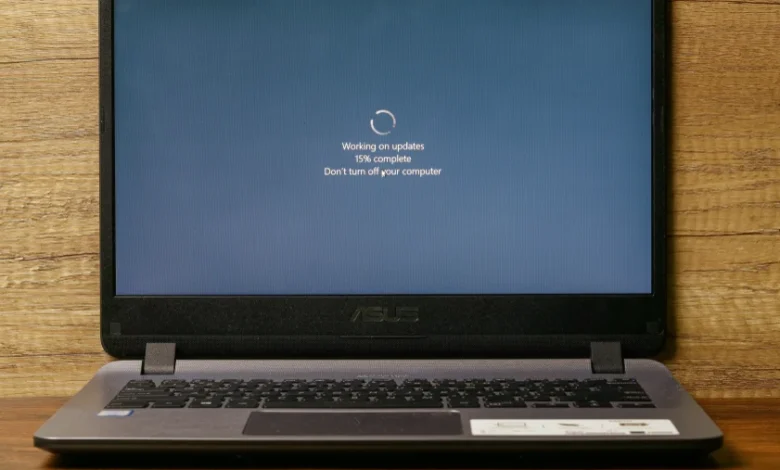
Microsoft Corp. today released software updates to plug at least 570 security holes in its Windows operating systems and other software, almost triple the number of vulnerabilities the software giant fixed in its record-smashing Patch Tuesday release last month. This unprecedented surge in security remediation marks a transformative moment in the cybersecurity landscape, as Microsoft officially attributes the burgeoning patch counts to vulnerability discoveries aided by artificial intelligence. The release underscores a fundamental shift in how software flaws are identified, analyzed, and mitigated, signaling an era where both defenders and attackers leverage machine learning to operate at scales previously thought impossible.
Nearly 60 of the bugs quashed in July’s Patch Tuesday earned a “critical” severity rating, the highest designation in Microsoft’s risk assessment framework. These vulnerabilities are particularly hazardous because they could allow miscreants or automated malware to seize full remote control over a Windows device with little to no interaction from the user. Beyond the critical ratings, the update addresses three high-profile zero-day flaws—vulnerabilities that were known to the public or actively exploited before a patch was available. Microsoft confirmed that two of these zero-day threats are already being leveraged by threat actors in the wild, necessitating immediate action from IT administrators and individual users alike.
The Zero-Day Landscape and Elevation of Privilege
Among the most pressing issues addressed in this month’s cycle are two zero-day weaknesses that allow attackers to elevate their user rights on a Windows system. These flaws are part of a massive subset of approximately 250 elevation of privilege (EoP) vulnerabilities fixed this month. Elevation of privilege is a critical stage in the cyber-attack lifecycle, often following an initial breach; it allows an attacker with limited access to gain administrative or "SYSTEM" level permissions, providing them with the keys to the kingdom.
The most notable of these include CVE-2026-56155, a significant bug within the Active Directory Federation Services (ADFS). ADFS is a cornerstone of modern enterprise identity management, providing single sign-on (SSO) capabilities across diverse platforms. A flaw here could potentially allow an attacker to bypass authentication hurdles or gain unauthorized access to sensitive corporate resources. Similarly, CVE-2026-56164 targets Microsoft SharePoint, a platform used by millions for collaboration and document management. This vulnerability represents a direct threat to data integrity and confidentiality within corporate environments.
Furthermore, Microsoft addressed CVE-2026-50661, a security feature bypass in Windows BitLocker. BitLocker is the primary encryption tool used to protect data on Windows drives. According to Microsoft, this specific bug could allow attackers to gain access to encrypted data, though it requires physical access to the device. While Microsoft noted that the details of this bug have been made public, they stated they are not yet aware of any active exploitation in the wild. Nevertheless, for organizations with high-security requirements or mobile workforces, the potential for data theft from lost or stolen hardware remains a significant concern.
AI as the Catalyst for "Machine Speed" Discovery
The sheer volume of patches—570 in a single month—is not merely a statistical anomaly but the result of a deliberate integration of artificial intelligence into Microsoft’s Secure Future Initiative. In a blog post published on July 9, Microsoft Executive Vice President Pavan Davuluri explained that Windows users should prepare for "a higher volume of security updates included in each security release" as AI becomes a permanent fixture in the discovery process.
"The pace of vulnerability discovery is changing with advances in AI making it possible to find more issues, faster, across more code, with new mechanisms that can accelerate both discovery and analysis," Davuluri wrote. This suggests that the "record-breaking" nature of recent Patch Tuesdays may soon become the new standard. By using AI to perform automated fuzzing—a process of injecting random data into software to find crashes and bugs—and utilizing LLMs (Large Language Models) to scan source code for patterns indicative of security flaws, Microsoft is able to identify vulnerabilities that human researchers might have overlooked for years.
However, this technological leap is a double-edged sword. While it allows Microsoft to harden its software more rapidly, it also equips attackers with similar capabilities. This "cat and mouse" game has moved from human speed to machine speed, creating a more volatile environment for cybersecurity professionals.
The Microsoft Copilot Threat: A New Frontier
As Microsoft continues to integrate AI into its product suite, those very AI tools are becoming targets. Jack Bicer, director of vulnerability research at Action1, highlighted CVE-2026-48561 as one of the most significant threats in this month’s release. This is a remote code execution (RCE) flaw in Microsoft Copilot, carrying a staggering 9.6 CVSS (Common Vulnerability Scoring System) threat score.
The vulnerability allows an unauthorized attacker to execute malicious code over a network. Microsoft’s advisory details a sophisticated yet highly plausible attack vector: an attacker could host a malicious website designed to interact with Microsoft Edge for Android. When a user visits the site, the browser could be forced to automatically send specially crafted prompts to Copilot. Because Copilot is deeply integrated into the operating system and user data, this could lead to the unauthorized execution of commands or the exfiltration of sensitive information. This vulnerability highlights the unique security challenges posed by the "AI-first" era, where the interface between browsers, AI assistants, and the underlying OS creates new, complex attack surfaces.
Challenging the Exploitability Index
The massive influx of patches has also sparked a debate regarding how Microsoft communicates risk. For years, the company has utilized an "exploitability index" to help IT teams prioritize which bugs to fix first. This index represents Microsoft’s best estimate of how likely it is that a vulnerability will be successfully exploited in the real world.
Satnam Narang, a senior staff research engineer at Tenable, argues that this system is becoming increasingly obsolete in the face of AI-driven discovery. Narang pointed out that Microsoft originally labeled this month’s SharePoint zero-day as "exploitation less likely," despite the fact that the Cybersecurity and Infrastructure Security Agency (CISA) had already added the flaw to its Known Exploited Vulnerabilities (KEV) catalog on July 1.
"Anthropic’s Red Team’s own findings for known vulnerabilities (n-days) revealed how fragile this system has become," Narang noted. He cited research where Anthropic’s Mythos Preview model was able to produce functional proof-of-concept exploits for 13 out of 14 vulnerabilities that Microsoft had rated as "Exploitation Less Likely" or "Exploitation Unlikely."
Narang’s analysis suggests that Microsoft’s risk assessments are still centered around human capabilities. "As these AI tools continue to improve, defense needs to improve alongside it," he said. The implication is clear: if an AI can generate an exploit for a "low-risk" bug in seconds, the traditional hierarchy of patching priority may need to be entirely reimagined.
A Broader Industry Trend: The Patching "Arms Race"
Microsoft is not alone in this sudden acceleration of security updates. Chris Goettl, Vice President of Security Product Management at Ivanti, observed that the record numbers from Redmond coincide with a broader industry shift. Other major software vendors are also increasing their patch cadence to keep up with the speed of discovery.
Adobe, for instance, announced today that it is moving to a twice-monthly security bulletin schedule, publishing updates on the second and fourth Tuesday of each month. Like Microsoft, Adobe cited the role of AI in accelerating their patch cycles. Other tech giants, including Cisco, Mozilla, and Oracle, are also shipping updates with increased frequency. Google has set an even more frantic pace; Goettl noted that Google’s total patch count for June 2026 exceeded 900 security fixes across its ecosystem.
This industry-wide trend suggests that the "Patch Tuesday" tradition—once a manageable monthly event—is evolving into a continuous stream of critical updates. For enterprise IT departments, this creates a significant "patch gap" risk, where the time required to test and deploy updates lags behind the speed at which attackers can weaponize newly disclosed flaws.
Chronology of the July 2026 Cycle
- July 1, 2026: CISA adds the SharePoint vulnerability (CVE-2026-56164) to the Known Exploited Vulnerabilities catalog, signaling active threats in the wild.
- July 8, 2026: Security researchers at Action1 and Tenable flag the high CVSS score for the Copilot RCE bug, warning of potential automated attacks via mobile browsers.
- July 9, 2026 (Morning): Microsoft officially releases the 570-patch payload. Executive VP Pavan Davuluri publishes a manifesto on the "AI-powered discovery" era.
- July 9, 2026 (Afternoon): Adobe announces its shift to a twice-monthly patching schedule, confirming the "new normal" for software maintenance.
- July 10-14, 2026: Expected window for initial reports of system stability issues or "patch collisions" as IT departments begin mass deployment.
Strategic Implications and Advice for Users
The sheer volume of 570 patches presents a logistical nightmare for system administrators. While the instinct in cybersecurity is to "patch early and patch often," the risk of a "broken" patch—one that causes system instability or software conflicts—is statistically higher when dealing with such a massive update.
Security experts recommend a tiered approach to this month’s release. Critical systems, particularly those running Active Directory or SharePoint, should be prioritized due to the active exploitation of their respective zero-days. For individual end-users, enabling automatic updates is generally the safest course of action, though backing up critical data before the installation process is more important now than ever.
The broader implication of this July release is that the "security debt" of the world’s most popular operating system is being called in by AI. As machine learning models become more adept at finding flaws in legacy code, the volume of patches will likely continue to climb. The challenge for the future will not just be finding the bugs, but developing the automated systems capable of deploying fixes at the same "machine speed" with which they are discovered. For now, the record-breaking July 2026 Patch Tuesday serves as a stark reminder that in the age of AI, standing still is the greatest security risk of all.
Related posts: