Michaels Launches ‘Ask Mike’ AI Assistant, Revolutionizing Personalized Shopping and Cementing Its Position in the Evolving Craft and Party Market

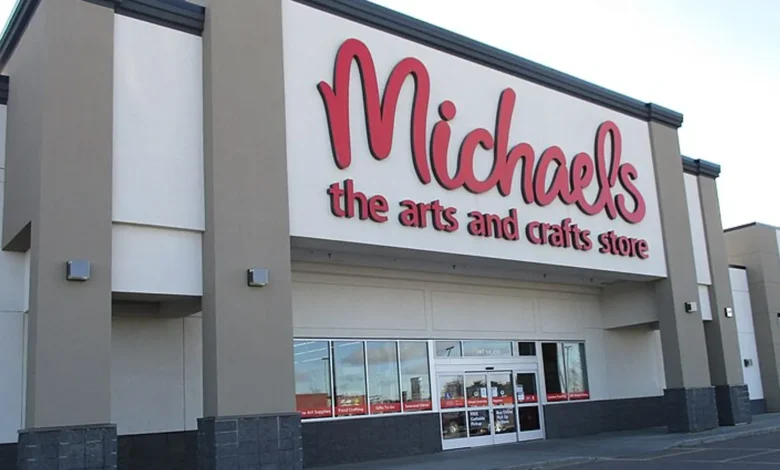
Michaels, the leading arts and crafts specialty retailer, has introduced "Ask Mike," an innovative artificial intelligence (AI) powered shopping assistant designed to transform the customer experience by moving beyond traditional keyword searches to deliver highly personalized recommendations. This strategic deployment marks a significant step in the retailer’s broader efforts to modernize its digital presence and solidify its market leadership amidst a dynamic retail landscape. The tool, developed in a remarkably swift six-week period in collaboration with Google Cloud, is already demonstrating substantial user engagement, signaling a pivotal shift in how consumers interact with online retail platforms, particularly within the specialized creative and party supplies sectors.
The Strategic Imperative: Personalization in Modern Retail
In an increasingly competitive retail environment, personalization has emerged as a critical differentiator for brands seeking to capture and retain customer loyalty. Modern consumers, accustomed to highly tailored experiences across various digital platforms, expect more than just static product listings or basic search functions. They seek guidance, inspiration, and solutions that cater to their unique needs and project ideas. Traditional keyword filtering, while foundational, often falls short when customers are embarking on creative projects that require multiple components, different techniques, or simply a spark of inspiration. For instance, a search for "red fabric" might yield thousands of results, but it doesn’t help a user who needs "a durable, machine-washable red fabric for outdoor patio cushions" or "a delicate red silk for a formal dress lining." This is precisely the gap conversational AI like "Ask Mike" aims to fill.
The advent of generative AI has provided retailers with unprecedented capabilities to simulate human-like interactions, understand complex queries, and provide contextually relevant responses. This technology allows for a conversational commerce experience where shoppers can articulate their needs in natural language, much like they would to a knowledgeable store associate. For Michaels, a brand deeply intertwined with creative expression and project-based shopping, this capability is not merely an enhancement but a strategic imperative. It promises to unlock new avenues for product discovery, foster deeper customer engagement, and ultimately drive sales by simplifying the creative process for its diverse customer base, ranging from hobbyists to professional artists and event planners.
Michaels’ Market Dominance and Expansion Amidst Industry Shifts
Michaels Companies, Inc., founded in 1973, has grown to become North America’s largest specialty provider of arts, crafts, framing, floral, wall décor, and seasonal merchandise for Makers and Do-It-Yourselfers. With hundreds of stores across the U.S. and Canada, it has long been a destination for creative supplies. However, the retail sector is in constant flux, and the arts and crafts market is no exception. Recent years have seen significant turbulence, particularly with the bankruptcies of key competitors.
The shuttering of Party City and Joann, two prominent players in the party supplies and fabric/crafts markets respectively, created a vacuum that Michaels has strategically moved to fill. These bankruptcies, while unfortunate for the businesses involved, presented a substantial opportunity for Michaels to consolidate market share and expand its offerings. Industry analysts noted that Michaels was well-positioned to absorb a significant portion of the displaced customer base, given its extensive store footprint and broad product assortment.
In response to these market shifts, Michaels has actively implemented initiatives to capture this leftover market share. Last year, the company introduced two new in-store concepts: "The Party Shop" and "The Knit & Sew Shop." These dedicated spaces are designed to provide a more focused and inspiring shopping experience for specific categories, directly targeting the segments previously served by Party City and Joann. Furthermore, in May, Michaels announced ambitious plans to grow its party product assortment by 60% this year, including popular licensed brands such as Hello Kitty, Stitch, and Bluey. This aggressive expansion into party supplies underscores Michaels’ commitment to becoming a one-stop destination for all creative and celebratory needs.
"Ask Mike" seamlessly integrates into this broader strategic pivot. By offering an intelligent assistant that can help customers plan entire events or source specific materials for complex projects, Michaels is not just selling products; it’s selling solutions and inspiration. This enhances the value proposition for customers seeking to plan a child’s birthday party or find the right fabric for DIY curtains – scenarios explicitly mentioned as early user queries. The AI tool acts as a digital concierge, guiding shoppers through the expanded inventory and making the vast selection manageable and accessible, thereby strengthening Michaels’ position as the go-to retailer in these increasingly important categories.
The Genesis of ‘Ask Mike’: A Six-Week Sprint with Google Cloud
The rapid development of "Ask Mike" from concept to a production-grade AI in just six weeks is a testament to the advancements in generative AI platforms and the agile methodologies employed by Michaels and Google Cloud. Paul Tepfenhart, global director of retail industry strategy and solutions at Google Cloud, highlighted this impressive timeline, underscoring the efficiency and power of modern cloud-based AI solutions. This speed to market is crucial in the fast-paced retail technology landscape, allowing Michaels to quickly respond to market demands and gain a competitive edge.
The collaboration with Google Cloud leverages the formidable capabilities of the Gemini platform. Google Gemini is a family of multimodal large language models (LLMs) developed by Google AI, known for its advanced natural language understanding, reasoning, and generation abilities. For retail applications, Gemini offers several key advantages:
- Multimodality: While "Ask Mike" currently focuses on text-based queries, Gemini’s inherent multimodal nature means it can process and understand different types of information, including text, code, audio, image, and video. This opens future possibilities for features like visual search (e.g., "Find me supplies to make this craft from a picture") or integrating video tutorials.
- Scalability: Google Cloud infrastructure provides the necessary scalability to handle thousands, potentially millions, of simultaneous user interactions without performance degradation, ensuring a smooth experience even during peak shopping seasons.
- Integration: Gemini’s architecture is designed for easy integration with existing e-commerce platforms, product catalogs, and customer relationship management (CRM) systems, allowing "Ask Mike" to access Michaels’ vast product data and customer insights effectively.
- Continuous Learning: As users interact with "Ask Mike," the underlying AI model can be continuously refined and improved through machine learning, becoming more accurate and helpful over time.
The development process likely involved training Gemini on Michaels’ extensive product catalog, customer service data, project ideas, and perhaps even craft-related forums and tutorials. This data would enable the AI to understand the nuances of creative projects, recommend suitable materials, suggest alternative solutions, and even offer step-by-step guidance. The short development cycle also suggests the use of pre-trained models and highly configurable AI services offered by Google Cloud, reducing the need for extensive custom coding and accelerating deployment. This agility is a hallmark of modern AI adoption, enabling businesses to innovate rapidly and experiment with new customer experiences.
Transforming Customer Engagement: From Keywords to Conversational Creativity
The initial success metrics and user feedback for "Ask Mike" highlight its potential to revolutionize customer engagement. In just a few weeks, the AI assistant fueled nearly 75,000 conversations. This figure is significant, demonstrating a strong appetite among Michaels’ community for a more interactive and personalized shopping tool. These conversations span a wide range of creative needs, from comprehensive event planning to specific material sourcing.
Heather Bennett, President and Chief Customer Officer at Michaels, aptly summarized the tool’s impact: "In just a few weeks, Ask Mike has fueled nearly 75,000 conversations, with our community using the tool for everything from party planning to finding the right materials for their first punch-needle pillow. Ask Mike is more than just a search tool; it’s a personalized creative partner for our customers so they can find what they need to bring their unique visions to life."
This description as a "personalized creative partner" encapsulates the core value proposition. Instead of simply listing products, "Ask Mike" can interpret complex, open-ended queries such as "help me plan my child’s birthday party." In response, the AI could potentially suggest themes, provide checklists for decorations, recommend specific craft activities for children, and link directly to relevant products like balloons, party favors, craft kits, and cake decorating supplies. Similarly, for "I need a fabric for DIY curtains," "Ask Mike" can ask clarifying questions about desired weight, texture, pattern, light-blocking properties, and even room décor, then recommend specific fabric types, yardage calculations, and complementary notions like curtain rods or sewing patterns.
This level of interaction moves beyond transactional searching to a more consultative and inspirational experience. It reduces decision fatigue, empowers customers to tackle ambitious projects, and fosters a sense of creative possibility. By simplifying the often overwhelming process of gathering materials and ideas for a creative endeavor, Michaels enhances customer satisfaction, strengthens brand loyalty, and positions itself as an invaluable resource rather than just a retail store. The engagement data suggests that customers are embracing this new way of interacting, finding genuine value in an AI that understands and assists with their creative journeys.
A Glimpse into the Future: Enhancements and Evolving Capabilities
Michaels’ commitment to "Ask Mike" extends beyond its current iteration, with plans already underway for future enhancements that promise to further deepen the AI’s utility and integration into the shopping journey. The retailer intends to release more features, including AI-generated product overviews and contextual prompts added to product pages.
AI-generated product overviews could transform how customers discover and understand products. Instead of relying solely on manufacturer descriptions or bullet points, the AI could synthesize information, highlight key features relevant to specific projects, and even compare products based on user needs. For example, an AI-generated overview for a particular type of paint might not only list its color and finish but also suggest ideal surfaces for its use, provide tips for application, and recommend complementary tools. This level of curated information can significantly improve purchasing decisions and reduce returns.
Contextual prompts added to product pages represent another powerful enhancement. Imagine browsing a specific type of yarn, and "Ask Mike" proactively suggests patterns suitable for that yarn weight, recommends complementary needle sizes, or even offers project ideas like "This yarn is perfect for a cozy winter scarf – want to see a free pattern?" These prompts could be personalized based on a customer’s browsing history, past purchases, or even the current contents of their shopping cart, creating a highly relevant and dynamic shopping experience.
Looking further ahead, the potential for "Ask Mike" is vast. It could evolve to include:
- Visual Search: Allowing users to upload images of crafts, décor, or fabric patterns and have "Ask Mike" identify similar products or recommend materials to replicate the look.
- Integrated Project Tutorials: Linking directly to Michaels’ vast library of project ideas, workshops, and instructional videos, providing a seamless transition from product discovery to creative execution.
- Virtual Workshops and Consultations: Potentially connecting users with human experts for more complex queries or offering AI-led virtual workshops based on popular craft trends.
- Personalized Promotions and Bundles: Leveraging AI to suggest product bundles for specific projects at a discount, or offering personalized promotions based on predicted future needs.
- Omnichannel Integration: Extending "Ask Mike’s" capabilities to in-store kiosks or mobile apps, allowing customers to use the AI for assistance while physically shopping, checking inventory, or locating items.
The long-term vision positions "Ask Mike" not just as a tool for online shopping, but as a central pillar of Michaels’ creative ecosystem, providing continuous support and inspiration throughout the customer’s creative journey.
The Broader Retail AI Landscape: A New Era of Competition

Michaels’ adoption of advanced conversational AI is not an isolated incident but part of a burgeoning trend across the retail industry. Major retailers are increasingly recognizing the transformative power of AI in enhancing customer experience, optimizing operations, and gaining a competitive edge. The race to integrate sophisticated AI assistants is on, with different retailers partnering with leading tech companies to develop their bespoke solutions.
Ulta Beauty, a prominent beauty retailer, has also tapped Google’s Gemini platform for its AI agent, focusing on personalized beauty recommendations and product discovery within its extensive catalog. Similarly, Macy’s, a department store giant, is leveraging Gemini for its "Ask Macy’s" conversational shopping assistant, aiming to guide customers through its diverse offerings and improve the online shopping experience. These examples underscore Google Cloud’s growing footprint in providing AI solutions for the retail sector, leveraging its powerful foundational models and cloud infrastructure.
However, Google is not the only player in this space. Lowe’s, the home improvement retailer, took a different approach by teaming up with OpenAI, the creator of ChatGPT, to develop its "Mylow" AI advisor. "Mylow" assists customers with complex home improvement projects, offering advice on materials, tools, and techniques, similar to how "Ask Mike" helps with craft projects. This diversified approach highlights the intense competition among tech giants to power the next generation of retail AI, offering retailers a range of options based on their specific needs and existing tech stacks.
The common thread among these initiatives is the shift towards more intuitive, conversational interfaces that mimic human interaction. Retailers are investing heavily because they understand that superior customer experience, driven by personalization and efficiency, is the key to loyalty and sustained growth in an increasingly digital-first world. The early success of "Ask Mike" reinforces this industry-wide belief that AI is no longer a futuristic concept but a present-day necessity for retailers striving to remain relevant and competitive. According to a recent report by Statista, the global market for AI in retail is projected to grow significantly, reaching an estimated value of over $30 billion by 2027, underscoring the scale of this technological transformation.
Data, Analytics, and Ethical Considerations
Beyond enhancing customer experience, "Ask Mike" generates an invaluable trove of data. Each of the 75,000 conversations provides Michaels with deep insights into customer needs, pain points, popular project ideas, and product preferences that traditional search analytics might miss. This data can be meticulously analyzed to:
- Inform Merchandising Decisions: Identify gaps in product assortment, highlight emerging trends, and optimize product placement online and in-store.
- Improve Inventory Management: Forecast demand more accurately for specific items or categories based on trending queries, reducing overstock or stockouts.
- Personalize Marketing: Create highly targeted marketing campaigns based on common project themes or product combinations discovered through AI interactions.
- Enhance Product Development: Identify unmet needs that could lead to the development of new products or craft kits.
However, the deployment of AI also necessitates careful consideration of ethical implications. Data privacy is paramount, requiring robust safeguards to protect customer information and ensure transparency in how data is collected and used. Preventing AI bias is another critical aspect; ensuring that the AI’s recommendations are fair and inclusive, and do not inadvertently perpetuate stereotypes or exclude certain demographics, requires continuous monitoring and refinement of the models. Michaels, like other responsible AI adopters, will need to navigate these complexities, prioritizing ethical AI deployment and maintaining customer trust.
Economic and Industry Implications
The widespread adoption of AI tools like "Ask Mike" carries significant economic and industry implications. For Michaels, it has the potential to drive increased sales by improving conversion rates, encouraging larger basket sizes through personalized recommendations, and fostering repeat business due to enhanced customer satisfaction. The efficiency gained from automated assistance can also free up human customer service agents to handle more complex issues, improving overall operational efficiency.
For the broader retail industry, this trend signifies a move towards a more intelligent, responsive, and customer-centric future. It highlights the evolving role of physical stores, which may become more experience-driven showrooms complemented by sophisticated digital tools. It also underscores the importance of continuous investment in technology and human capital to manage and leverage these advanced AI systems. The democratization of creativity, made possible by an AI that can guide even novice crafters through complex projects, could also expand the overall market for arts and crafts supplies.
As specialized retailers like Michaels embrace conversational AI, they are not just upgrading their search functionality; they are redefining the very nature of the shopping experience. They are transforming from mere product providers into partners in their customers’ creative journeys, offering inspiration, guidance, and a seamless path to bringing unique visions to life.
Michaels’ launch of "Ask Mike" is a forward-thinking move that not only addresses the immediate needs of its evolving customer base but also positions the company at the forefront of retail innovation. By leveraging advanced AI to deliver highly personalized and conversational shopping experiences, Michaels is not merely adapting to the digital age; it is actively shaping the future of specialized retail, setting a new standard for customer engagement and cementing its enduring relevance in the dynamic world of arts, crafts, and celebration.