Mexico Heavy Duty Truck Production and Exports Soar in October Driven by Accelerated US Demand

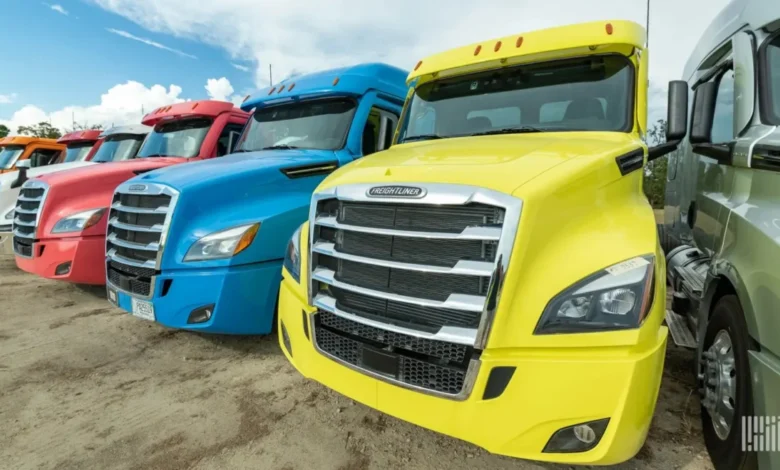
The heavy-duty truck manufacturing industry in Mexico experienced a dramatic and sweeping rebound in October, propelled primarily by accelerated economic growth and robust cross-border purchasing from the United States. According to official figures released by the National Institute of Statistics and Geography (INEGI), Mexican manufacturing facilities produced 16,375 heavy-duty commercial vehicles during the month, marking an astonishing 129.6% surge compared to the 7,131 units recorded during the corresponding period in the previous year. Export metrics mirrored this upward trajectory, climbing 158.9% to reach 13,518 vehicles exported, up significantly from 5,221 units in October of last year.
This sharp acceleration highlights a vital recovery for Mexico’s export-oriented commercial vehicle manufacturing sector. While the production lines hum with activity to satisfy foreign buyers, domestic market realities present a contrasting narrative. Industry leaders warn that local fleet modernization efforts continue to encounter severe roadblocks, creating a bifurcated commercial landscape where international markets thrive while the domestic foundation struggles under the weight of weak internal demand, aging commercial fleets, and intense competition from cheap imported used vehicles.
A Chronological Look at 2026 Production and Export Trends
To fully understand the magnitude of the October rebound, it is necessary to examine the operational trajectory of Mexico’s heavy-duty automotive sector throughout the first ten months of 2026. The year began with moderate stabilization following supply chain shifts in late 2025, but manufacturing momentum truly gathered pace heading into the spring and summer months.
During the first quarter of 2026, assembly plants navigated fluctuating international orders, yet year-to-date figures consistently outpaced prior baselines. By the end of October, cumulative production reached 133,496 heavy-duty vehicles, representing a solid 17.8% increase compared to the 113,299 units manufactured during the first ten months of 2025.
Exports followed a similarly constructive path across the broader calendar year. From January through October, total shipments abroad climbed to 111,912 vehicles, reflecting a 20.3% year-over-year increase from the 93,037 units exported during the same timeframe in 2025. October’s explosive month-over-month leap served as the primary catalyst for these accumulated gains, proving that North American freight networks continue to rely heavily on Mexican assembly plants for fleet replenishment and expansion.
The Dominance of the United States in Mexico’s Export Market
The United States remains the undisputed cornerstone of Mexico’s heavy-duty truck manufacturing ecosystem. Geographically positioned to feed the massive North American supply chain, Mexican assembly operations function as an extension of the broader U.S. freight and logistics network.
According to INEGI data, the United States accounted for 104,064 units—or roughly 93%—of total Mexican heavy-duty vehicle exports through the first ten months of the year. During ANPACT’s monthly press conference, Executive President Rogelio Arzate noted that exports destined specifically for the United States skyrocketed by 173.5% year over year in October alone, touching 13,097 units. Cumulative shipments to the U.S. market registered an 18.6% increase across the ten-month observation window.
Beyond the U.S. border, Canadian logistics operators also turn to Mexican manufacturing plants for commercial equipment, positioning Canada as Mexico’s second-largest export destination during the January-October period with 4,493 vehicles received. South American demand also plays a role, with Colombia securing the third spot by importing 2,138 heavy-duty units during the same timeframe.
Market Share and Manufacturer Breakdown
Mexico’s heavy-duty vehicle production is heavily concentrated among a handful of major multinational original equipment manufacturers (OEMs). Data compiled through the Administrative Registry of the Heavy Vehicle Automotive Industry (RAIAVP) demonstrates that three key brands—Freightliner, International, and Kenworth—control virtually the entire manufacturing and export output of the country.
In October, Freightliner maintained its position as the dominant industry leader, accounting for approximately 64% of Mexico’s total heavy-duty vehicle production and roughly 71% of all exports. Freightliner manufactured 10,457 units and exported 9,568 vehicles during the month, translating to year-over-year production and export spikes of 160.3% and 164.1%, respectively.
International secured the second-largest share of manufacturing activity, posting impressive operational figures. The company produced 4,208 heavy-duty trucks and exported 3,583 units in October, marking a 189.6% surge in production and a 205.2% jump in exports compared to October 2025.
Kenworth rounded out the major trio, registering 1,145 units in production and 366 units in exports for the month. While Kenworth’s production held relatively steady with a 5.8% year-over-year increase, its monthly exports contracted by 13.7%. Combined, these three dominant manufacturers accounted for approximately 97% of national production and virtually 100% of the export volume during the month, illustrating a consolidated industrial landscape capable of scaling rapidly to meet international demand.
Domestic Commercial Vehicle Market Faces Persistent Headwinds
While export metrics shattered records in October, the domestic market in Mexico continues to navigate a complex and challenging environment. Retail sales figures reveal an industry struggling to regain sustained momentum amid economic uncertainty and structural impediments.
Retail sales of heavy-duty vehicles in Mexico rose by a modest 5.1% in October, reaching 3,162 units compared to 3,009 vehicles sold in October 2025. However, this single month of modest growth does little to offset the broader contraction observed throughout the year. Cumulative retail sales for the first ten months of 2026 stood at 28,479 vehicles, representing a significant 15.4% decline from the 33,653 units sold during the corresponding period of the previous year.
Wholesale metrics painted a slightly more optimistic picture, rising 26.8% in October to 3,301 vehicles and bringing year-to-date wholesale totals to 26,912 units—a 10.5% increase. Within these figures, the tractor-trailer segment emerged as a standout performer. Wholesale sales of fifth-wheel tractors climbed 48.1% in October to 1,438 units, up from 971 units a year prior, indicating that certain segments of domestic long-haul carriers are willing to invest in modern heavy equipment.
Addressing reporters during a joint industry conference, Cristina Vázquez, economic studies coordinator for the Mexican Automotive Distributors Association (AMDA), emphasized that October represented only the second month of positive year-over-year retail sales growth recorded throughout the entirety of 2026. Vázquez pointed to widespread macroeconomic uncertainty and evolving trade policy dynamics across North America as primary factors dampening domestic fleet investment. Many Mexican transport operators, she noted, are choosing to delay capital expenditures and vehicle acquisitions until they gain greater long-term clarity regarding operating expenses and regulatory frameworks.
The Threat of Used Truck Imports and Fleet Aging
Beyond macroeconomic hesitation, industry associations argue that structural policy challenges are severely impeding the domestic market’s recovery. The National Association of Bus, Truck and Tractor-Trailer Producers (ANPACT) has repeatedly sounded the alarm regarding the unchecked influx of imported used heavy-duty vehicles from the United States.
According to ANPACT data presented by Rogelio Arzate, for every 100 new heavy-duty vehicles sold within Mexico during the January-September period, approximately 51.4 used vehicles were imported across the northern border. Industry advocates contend that this continuous wave of older, depreciated commercial vehicles distorts local pricing structures, discourages fleet owners from purchasing brand-new equipment, and actively undermines national initiatives aimed at modernizing Mexico’s aging commercial fleet.
Furthermore, ANPACT raised formal concerns regarding a rising volume of imported buses manufactured in foreign countries that do not maintain free trade agreements with Mexico, creating an uneven playing field for domestic assemblers. To combat these pressures, industry leaders are urging federal authorities to implement more robust vehicle scrappage programs, expand accessible commercial financing options for domestic carriers, and enact protective trade policies that encourage smaller trucking companies to phase out obsolete equipment in favor of modern, efficient, and environmentally friendly alternatives.
Broader Economic Implications and Industry Outlook
The stark divergence between Mexico’s booming export sector and its sluggish domestic market carries significant economic and geopolitical implications. As a critical manufacturing hub for North America’s commercial logistics industry, Mexico’s ability to rapidly scale production demonstrates the resilience and efficiency of its automotive supply chains. However, the heavy reliance on U.S. consumer and industrial demand leaves Mexican assembly plants vulnerable to economic shifts or trade policy adjustments north of the border.
Simultaneously, the stagnation of the domestic truck market poses long-term challenges for Mexican highway safety and environmental standards. Operating an aging domestic fleet increases maintenance costs for local carriers, elevates fuel consumption, and contributes to higher carbon emissions across Mexican transportation corridors. Without targeted interventions such as stricter regulation of used vehicle imports and enhanced financing mechanisms for domestic fleet operators, the local market risks remaining disconnected from the high-tech, modern equipment being manufactured within its own borders.
As the industry enters the final stretch of 2026, stakeholders across both manufacturing and distribution sectors will closely monitor trade discussions, regulatory developments, and cross-border demand patterns. While assembly lines will undoubtedly continue operating at a high capacity to satisfy North American logistics providers, achieving a balanced and resilient national industry will ultimately depend on the revival of domestic investment and the strategic modernization of Mexico’s commercial fleet.