Mark Lester Appointed as President and CEO of Northern Air Cargo to Lead Next Phase of Strategic Growth

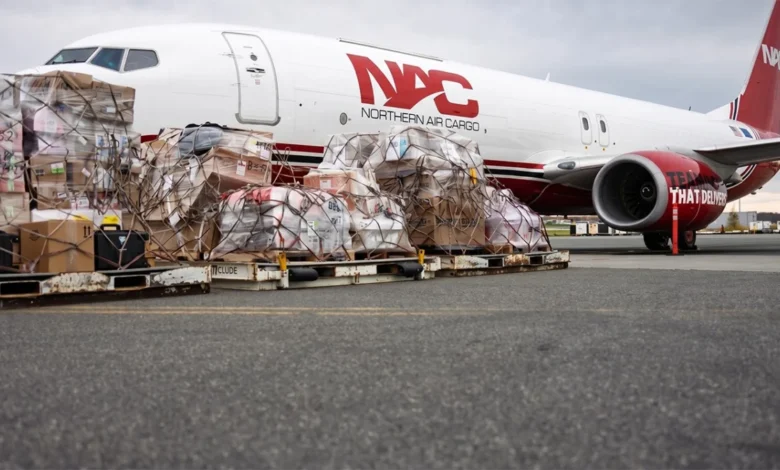
Northern Air Cargo (NAC), a prominent Alaska-based freight airline and subsidiary of Seattle-based Saltchuk Resources, has officially appointed Mark Lester as its new president and chief executive officer. Lester assumes the leadership mantle effective September 21, taking over from Interim President Dave Karp, who has steered the carrier through a critical transitional period since March 2025.
Lester steps into the role with an extensive background in managing highly regulated, safety-critical aerospace and aviation operations. His arrival signals a renewed focus on regional stabilization, operational efficiency, and community-centric growth for the 70-year-old cargo carrier, which remains a vital economic lifeline for remote communities across Alaska and the Pacific Northwest.
Background and Executive Leadership Transition
The leadership transition follows a rocky and transformative chapter for Northern Air Cargo. Dave Karp stepped into the interim chief executive role during a period of financial turbulence marked by mounting operational losses. Under Karp’s stewardship, the carrier executed a drastic strategic pivot: abandoning its long-haul operations, exiting the highly competitive Hawaii and Caribbean/Latin American markets (formerly serviced out of Miami), and returning a handful of converted Boeing 767-300 freighters to their lessors.
These bold contraction moves were designed to staunch financial bleeding and allow the company to refocus its core competencies on intra-island services in Hawaii—now managed exclusively by sister carrier Aloha Air Cargo—and its indispensable routes throughout Alaska. Following the handover to Lester, Karp will transition back to his permanent role as senior vice president and managing director of Alaska operations at Saltchuk Resources, NAC’s parent company.
Mike Thompson, president and CEO of Saltchuk Aviation, expressed strong confidence in the incoming executive. In an official corporate statement, Thompson noted that Lester’s leadership acumen and deep-rooted commitment to the Last Frontier will serve local communities exceptionally well. As NAC looks to deepen its service offerings and build upon more than seven decades of dependable logistics support for the state, Thompson emphasized that the company is primed for a stable and growth-oriented future.
Mark Lester’s Professional Pedigree
Lester enters the executive suite with a robust resume spanning nearly three decades of aerospace, defense, and aviation management. Prior to accepting the top job at Northern Air Cargo, he spent 18 months serving as the head of aerospace strategy at Merrick & Co., a prominent engineering, architecture, and technology firm.
Before his tenure at Merrick & Co., Lester served as the executive director and head of the Alaska Aerospace Corp., the state-backed organization that operates the Pacific Spaceport Complex on Kodiak Island. He held that leadership position for nearly three years until mid-2021, navigating the complexities of commercial space launch logistics and federal aerospace regulations.
Earlier in his career, Lester served as the chief executive officer of Doss Aviation, where he oversaw a major flight training academy for close to three years. In between these high-profile corporate posts, he has frequently lent his expertise as an independent aviation and logistics consultant.
Northern Air Cargo described Lester as a seasoned executive uniquely equipped to guide complex organizations through operational transformation. The airline’s board noted his proven ability to optimize safety-critical operations and sustain seamless service delivery during times of corporate restructuring—qualities that will be paramount as NAC consolidates its position in the Alaskan market.
Financial Performance and Fleet Realignment
Recent financial disclosures filed with the U.S. Bureau of Transportation Statistics illustrate the magnitude of the operational shifts Northern Air Cargo has undergone. For the 12-month period ending March 31, NAC reported a net income of $9 million. Operating profits demonstrated notable resilience, climbing 15% year-over-year to reach $15 million.
Most striking in the federal data is the explosive growth in gross revenue, which more than tripled to $144 million over the same timeframe. However, this revenue surge was accompanied by a commensurate spike in operational costs. Aviation analysts attribute the sharp escalation in expenditures primarily to one-time financial penalties and early termination fees associated with returning widebody Boeing 767 freighters to lessors and dismantling the airline’s unprofitable long-haul network.
Today, NAC’s streamlined active fleet consists of three dedicated freighters operating primarily within Alaska: one Boeing 737-400 and two Boeing 737-800 aircraft. Additionally, aviation databases indicate that a single Boeing 737-300 is currently leased out to another carrier. The airline maintains a consistent flight schedule linking Anchorage to Seattle, a critical gateway and transfer hub for outbound Alaskan exports—such as fresh seafood—and inbound essential supplies, consumer goods, and industrial equipment destined for remote Alaskan communities lacking road access.
Competitive Landscape in the Alaskan Freight Market
Although Northern Air Cargo is a relatively small player on the global aviation stage, leadership changes at the carrier carry significant weight for shippers, regional businesses, and competing airlines. NAC operates in a uniquely challenging and highly specialized market, going head-to-head with major regional heavyweights such as Alaska Airlines and Lynden Air Cargo, a key subsidiary of the Lynden Transport group.
The intra-Alaska air cargo sector operates under punishing environmental conditions, unpredictable weather patterns, and high operating costs. Because aviation is often the only year-round transportation mode capable of supplying remote villages, cargo carriers bear a profound social and economic responsibility.
Under Lester’s leadership, the immediate mandate for Northern Air Cargo will not be aggressive geographical expansion, but rather the fortification of its core Alaskan routes. By stabilizing its narrowbody Boeing 737 fleet, managing cost structures post-lease termination, and leveraging Saltchuk’s broader logistical network, NAC aims to cement its operational reliability. For customers dependent on timely deliveries of perishables, mail, and medical supplies, Lester’s arrival marks the beginning of a steady, reliability-focused era designed to ensure that Northern Air Cargo remains an indispensable pillar of the Alaskan economy for decades to come.