Lowe’s Elevates Chief Marketing Officer Jen Wilson to Executive Vice President with Expanded Digital Commerce Oversight

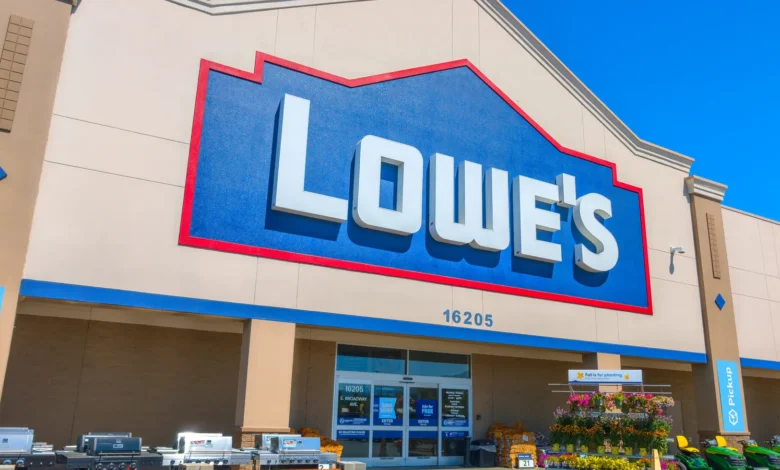
Lowe’s has officially promoted Chief Marketing Officer Jen Wilson to the role of Executive Vice President, a strategic realignment that consolidates digital commerce, retail media, loyalty programs, and personalization under a single leadership umbrella. This organizational shift, announced earlier this month, signals a departure from traditional siloed retail structures, positioning Wilson at the helm of the company’s end-to-end customer experience. As the home improvement giant navigates a complex macroeconomic environment characterized by dampened DIY consumer spending and high interest rates, the integration of digital sales—including the company’s robust website and third-party Marketplace—into the marketing portfolio serves as a blueprint for modern retail operations.
The promotion is more than a mere title change; it represents a fundamental pivot in how Lowe’s intends to address the "evaporating funnel" of the modern retail journey. By aligning digital commerce with marketing, Lowe’s aims to create a unified data ecosystem where advertising, loyalty, and actual transactions inform one another in real time.
A Chronology of Leadership and Digital Integration
Jen Wilson’s career at Lowe’s spans more than two decades, providing her with a granular understanding of the brand’s operational evolution. Her journey toward the executive suite has been defined by a transition from merchandising to marketing leadership.
- Pre-2024: Wilson held various leadership roles across merchandising and the paint business, gaining critical experience with profit and loss (P&L) management.
- June 2024: Wilson was appointed Chief Marketing Officer, tasked with modernizing the retailer’s brand presence and customer engagement strategies.
- Late 2025 – Early 2026: Lowe’s accelerated its digital transformation, focusing on the expansion of its third-party Marketplace and the launch of sophisticated creator networks to engage younger demographics.
- October 2026: Wilson is promoted to Executive Vice President, gaining direct oversight of digital commerce. This move formally integrates the website and marketplace performance into the broader marketing and customer acquisition strategy.
This progression highlights the increasing burden of responsibility placed on CMOs today. In the past, the marketing function was often restricted to brand awareness and upper-funnel activities. Wilson’s appointment reflects the new reality where the CMO is expected to be a revenue-generating engine, deeply involved in the technical architecture of digital storefronts and the analytical rigor of customer lifetime value.
The Macroeconomic Context and Digital Performance
The timing of this internal restructuring is inextricably linked to the current retail climate. Lowe’s, like many home improvement retailers, has faced significant headwinds as homeowners delay large-scale projects due to elevated interest rates and a stagnant housing market. In recent earnings calls, the company has had to adjust its full-year outlook, reflecting the pressure on the discretionary DIY segment.
Despite these challenges, digital commerce has emerged as a critical growth engine. While Lowe’s reported a modest 0.2% increase in comparable sales during the second quarter of 2026, the online segment surged by 15.7%. This divergence underscores a vital shift in consumer behavior: even when foot traffic in physical stores faces pressure, the digital channel remains a consistent point of engagement. By bringing digital commerce under Wilson’s purview, Lowe’s is betting that the synergy between personalized marketing and a frictionless digital shopping experience will help insulate the company from the volatility of the broader market.
Unified Data and the End of Channel Silos
A recurring theme in Wilson’s management philosophy is the elimination of "channel-specific" thinking. Historically, many retailers have operated with disjointed teams: one group managing CRM, another handling paid social, and a third overseeing e-commerce. Wilson argues that this fragmented approach is a relic of the past that prevents true personalization.
"Real transformation is going to happen when we’re creating omnichannel, end-to-end personalization, and to do that, we have to have it all in one place," Wilson stated.
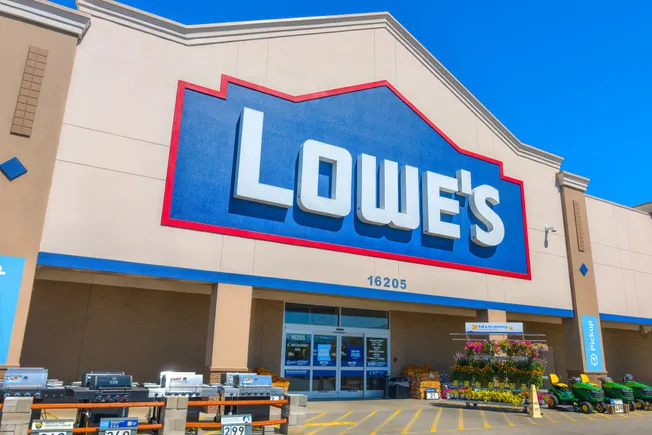
The logic behind this consolidation is data-driven. More than 80% of home improvement projects begin with online research. If the marketing team knows a customer is researching kitchen renovations online but the digital storefront experience is disconnected from the personalized offers they see in their inbox or on social media, the company misses a vital opportunity to capture that share of wallet. By unifying the customer view, Wilson aims to ensure that every touchpoint—from a creator network video on social media to a checkout process on the website—is part of a cohesive narrative.
The Role of the Marketplace in Strategic Growth
Beyond the operational efficiencies, the inclusion of the Lowe’s Marketplace in Wilson’s portfolio provides a strategic tool for market expansion. The Marketplace has allowed the retailer to extend its assortment into categories that were previously difficult to stock in physical stores, such as high-end fixtures, specialized lighting, and large-scale outdoor amenities like above-ground pools.
From a marketing perspective, the Marketplace acts as a powerful SEO engine. By increasing the number of products and SKUs available online, Lowe’s naturally increases its visibility in organic search results. This, in turn, reduces the reliance on expensive paid search advertising. Furthermore, the Marketplace provides the company with real-time data on consumer demand for premium products. Wilson noted that the Marketplace has helped identify a high-end customer segment that the retailer was previously missing, as these shoppers are willing to purchase expensive, specialized items online that simply aren’t suited for traditional retail floor space.
Modernizing the CMO Mandate
The shift at Lowe’s is symptomatic of a broader trend across the retail sector. As AI, social media commerce, and retail media networks disrupt the industry, the CMO role is evolving into a "CMO Plus" position. This new iteration of the role demands proficiency in data science, supply chain visibility, and financial modeling.
Wilson’s focus on breaking down organizational silos is particularly significant. She has expressed that when a marketing leader takes ownership of the entire customer journey, they are better equipped to advocate for the consumer. If marketing data reveals that a specific digital process is causing friction, the CMO is now empowered to work directly with technical and operations teams to resolve those issues. This "horizontal" view of the organization is seen as the key to moving beyond brand advertising and into total experience management.
Looking Ahead: Navigating Cyclical Change
While the integration of digital commerce is a long-term strategic play, the immediate goal remains weathering the current economic cycle. The expansion of the Marketplace and the focus on data-backed personalization are designed to maintain momentum until the macroeconomic environment for home improvement stabilizes.
Industry analysts suggest that this organizational change may provide Lowe’s with a competitive edge in agility. By removing the wall between the team that brings the customer to the site and the team that manages the transaction on the site, the retailer can iterate more quickly. Whether it is refining an ad campaign based on real-time conversion rates or adjusting inventory displays on the homepage to reflect current trends in social media, the new reporting structure is designed for speed.
As Lowe’s looks toward the future, the success of this new leadership structure will be measured by the ability to harmonize these diverse functions. Wilson’s challenge will be to prove that by "championing the customer" through an end-to-end lens, the company can sustain its online growth even as it waits for the broader DIY market to return to form. For now, the move stands as a clear signal that at Lowe’s, the future of marketing is inseparable from the future of digital commerce.