Kylian Mbappé Joins Growing List of Global Figures and Brands Facing Severe Backlash in the Chinese Market

The intersection of global celebrity culture, corporate sponsorship, and geopolitics has once again claimed a high-profile casualty. French soccer sensation Kylian Mbappé has become the latest international star to face severe commercial and institutional fallout in China, following controversial remarks made during a popular French online talk show. Mbappé’s description of a meme figure as a "Chinese dictator"—a comment widely interpreted by audiences as a reference to Mao Zedong—has ignited a firestorm across Chinese state media and social networks, resulting in canceled sponsorships, suspended sports broadcasts, and an urgent diplomatic scramble by European sports executives.
The incident underscores the high-stakes, volatile nature of the Chinese consumer market for international athletes, luxury labels, and multinational corporations. In an era hyper-sensitive to cultural slights, historical reverence, and national dignity, a single unscripted remark or branding misstep can obliterate years of market penetration and brand equity within a matter of days. As Mbappé and his club, Real Madrid, scramble to repair the damage, industry analysts are once again evaluating the precarious balance global enterprises must maintain when operating within the world’s second-largest economy.
Anatomy of a Diplomatic and Commercial Crisis
The controversy erupted after Mbappé appeared as a guest on a widely viewed French online talk show. During a segment discussing internet culture and viral memes, the Real Madrid forward referenced a specific meme figure, offhandedly labeling it a "Chinese dictator." While the comment passed relatively unnoticed in Western media circles, translation and dissemination across Chinese social media platforms—such as Weibo and Douyin—triggered immediate and widespread indignation.
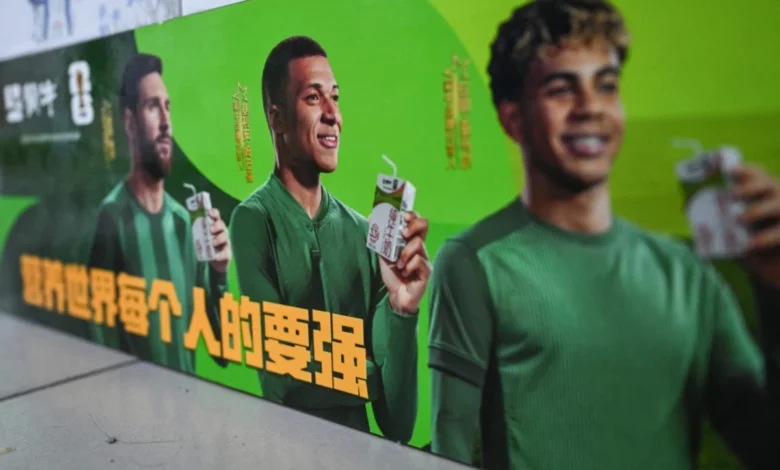
Within days, the backlash materialized into tangible economic and institutional penalties. Three major Chinese sponsors swiftly severed their commercial ties with the French World Cup winner: beverage manufacturer Dongpeng, dairy giant Mengniu, and cheese maker Milkground. Concurrently, the China Media Group, the nation’s state-owned broadcaster, announced it was indefinitely suspending broadcasts of Spain’s LaLiga—where Mbappé plays—as well as any other sporting events involving the player.
Recognizing the severity of the economic and reputational threat, damage control efforts began at the highest levels. LaLiga President Javier Tebas flew to Madrid for an urgent meeting with the Chinese ambassador to Spain, aiming to negotiate a diplomatic resolution that would insulate the broader soccer league from the fallout of an individual player’s comments.
"Our commitment is to keep working together so that an individual episode does not harm the important advances achieved nor affect the millions of Chinese fans who follow our competitions," Tebas stated in a public address following the meeting.
Real Madrid issued a formal apology on Wednesday, distancing the institution while emphasizing its long-standing ties to the region. "Our club maintains a deep respect for China, its history, its culture, and its citizens, as well as for the millions of Chinese fans who feel affection and admiration for Real Madrid," the club’s official statement read.
For his part, Mbappé took to social media platform X to issue a direct and unequivocal apology to his global fanbase, acknowledging the gravity of the offense.
"My comment was ill-judged, and I now understand that it hurt many people in China and in Chinese communities around the world," Mbappé wrote. "I apologize to everyone my words have upset. This was absolutely not my intention. I have deep respect for the Chinese people and their history, and I am sincerely sorry."
A Precedent of Peril: Navigating the Chinese Market Minefield
Mbappé’s ordeal is far from an isolated incident. Over the past decade, the Chinese market has proven to be a treacherous landscape for international brands, sports leagues, and celebrities who stumble across political red lines, historical sensitivities, or cultural norms. The modern history of corporate and celebrity relations in China is littered with high-profile conflicts that demonstrate how quickly commercial goodwill can evaporate.
In October 2019, the National Basketball Association (NBA) experienced a massive diplomatic and financial crisis when Daryl Morey, then the general manager of the Houston Rockets, posted a brief message on social media expressing support for pro-democracy protests in Hong Kong. The tweet triggered immediate fury from Chinese state media, corporate sponsors, and fans. The China Central Television (CCTV) network immediately pulled all NBA games off the air. The resulting blackout cost the league hundreds of millions of dollars in lost revenue and corporate partnerships, with NBA broadcasts remaining banned in the country until March 2022.
Similarly, the fashion and retail sector has faced severe disruptions. In early 2021, Swedish retail giant H&M faced a coordinated consumer boycott across China after publicly expressing concerns over alleged human rights abuses and forced labor involving Uyghur Muslims in the Xinjiang region, alongside a decision to stop sourcing cotton from the area. The ensuing nationalist backlash caused H&M’s sales in China to plummet precipitously, forcing the retailer to downsize its physical store footprint and embark on multi-year efforts to rebuild its consumer base.
Even aesthetic and promotional missteps, devoid of explicit political commentary, can ignite nationalist fervor. In June 2026, activewear powerhouse Lululemon found itself embroiled in a public relations crisis after hosting a promotional event on the Great Wall of China. During the event, the brand mistakenly featured a Japanese taiko drum rather than a traditional Chinese dagu drum. Chinese netizens quickly identified the cultural error on social media, prompting an avalanche of criticism. Lululemon promptly removed all imagery associated with the drum event from its global and local channels and issued a formal apology to appease the domestic consumer base.
The complexities of operating in China extend deeply into corporate legal and financial disputes as well. In June 2026, luxury titan Louis Vuitton achieved a legal victory in a Chinese court, winning a trademark infringement lawsuit against domestic milk tea chain Molly Tea. A local court ruled that Molly Tea’s four-petaled logo infringed upon a protected Louis Vuitton trademark, ordering the Chinese chain to pay 10.3 million yuan (approximately $1.5 million) in damages.
While legally sound under intellectual property law, the ruling deeply polarized Chinese social media users. Many consumers viewed the judgment as heavy-handed corporate bullying by a Western luxury conglomerate against a beloved local brand, sparking localized boycotts. LVMH, the parent company of Louis Vuitton, subsequently reported that the controversy had weighed heavily on its regional performance, contributing to a 5% organic revenue decline in its fashion and leather goods division for that quarter.
Interestingly, the phenomenon of nationalist consumer protectionism is not exclusively directed at foreign entities. Domestic brands can also fall victim to public scrutiny if they misjudge cultural aesthetics. In 2024, Nongfu Spring, China’s largest bottled-water brand, faced a fierce public boycott when social media users accused the company of utilizing Japanese-style architectural imagery on its product packaging. The backlash grew so intense that certain retail franchises, including select 7-Eleven convenience stores, temporarily pulled Nongfu Spring products from their shelves to distance themselves from the controversy.
Broader Economic and Strategic Implications
The repeated recurrence of these controversies highlights a permanent structural shift in how international brands must approach the Chinese market. Gone are the days when Western companies could operate under the assumption that commercial success could remain insulated from geopolitical tensions, cultural miscommunications, or personal indiscretions by brand ambassadors.
For sports organizations like LaLiga, the NBA, and international governing bodies, the economic dependence on Asian broadcasting rights, merchandising, and sponsor activations represents a critical pillar of long-term revenue growth. However, this financial reliance creates profound institutional vulnerability. When a top-tier athlete like Mbappé makes an unscripted remark on a foreign talk show, the ripple effects instantly threaten the collective commercial ecosystem of entire leagues.
From a corporate governance perspective, multinational companies are increasingly forced to implement rigorous compliance, cultural sensitivity training, and pre-screening protocols for endorsers and marketing campaigns. Yet, as the Mbappé case demonstrates, human error, unscripted remarks, and spontaneous media appearances remain virtually impossible to completely control.
Furthermore, the hardening of consumer sentiment in China reflects a broader global trend toward economic nationalism and heightened cultural awareness. Chinese consumers, empowered by robust domestic alternatives across industries ranging from apparel and beverages to technology and entertainment, are increasingly willing to vote with their wallets when they perceive a slight against national dignity or historical reverence.
As Kylian Mbappé and Real Madrid work to mend fences through diplomatic outreach, official apologies, and corporate reassurances, the broader international business community is left to digest a familiar yet stark reminder. In the world’s most dynamic and sensitive consumer market, the margin for error is razor-thin, and the cost of a misplaced word can be measured in millions of dollars and years of lost progress.
Related posts: