North Carolina Voters Decide on Sweeping Constitutional Amendment to Cap Income Tax Rates as Affordability Dominates Midterms

The debate over taxation and economic relief reaches a critical juncture on Tuesday as North Carolina voters head to the polls to decide the fate of a high-stakes constitutional amendment. Officially titled "Lower Taxes for All NC," the ballot measure asks voters whether to enshrine a hard ceiling on state income taxes by lowering the maximum allowable rate from 7% to 3.5%. While proponents frame the amendment as a necessary safeguard against future government overreach and fiscal expansion, critics argue that the policy is largely symbolic in the short term and could severely hamstring the state’s ability to fund essential public services during future economic downturns.
The referendum arrives as affordability remains a defining issue of the midterm elections. According to recent polling from Reuters/Ipsos, roughly 48% of registered voters identify the rising cost of living as their primary concern. Across the United States, economic anxieties are driving a wave of competing ballot initiatives, ranging from wealth taxes in progressive strongholds to aggressive tax-capping measures in conservative states. As North Carolinians weigh the constitutional amendment, the outcome will have profound implications not only for the state’s fiscal architecture but also for the broader national conversation on taxation, economic equity, and government accountability.
A Decade of Conservative Tax Reform in North Carolina
To understand the weight of Tuesday’s vote, it is necessary to examine the steady evolution of North Carolina’s tax policy over the past decade and a half. For decades, the state’s legislature operated under Democratic control. However, a seismic shift occurred in the 2010 midterms, when Republicans won majorities in both chambers of the North Carolina General Assembly for the first time in over a century. Taking power in 2011, the Republican-led legislature embarked on a systematic overhaul of the state’s tax code.
In 2013, lawmakers enacted landmark tax reform that fundamentally restructured how individuals and corporations were taxed. The state transitioned away from a progressive, graduated income tax bracket system—which levied higher rates on higher earners—toward a flat tax structure designed to simplify compliance and boost economic competitiveness. Over subsequent legislative sessions, lawmakers steadily chipped away at both individual and corporate income tax rates, utilizing their legislative majorities to override or bypass resistance from successive Democratic governors elected after 2017.
This multi-year strategy achieved a major milestone in 2018, when North Carolina voters approved a constitutional amendment that lowered the maximum allowable income tax rate cap from 10% to 7%, albeit with less than 60% voter approval. Having successfully driven the actual tax rates down well below that threshold, the Republican-dominated General Assembly advanced the current 2026 ballot measure to halve the constitutional ceiling once more, bringing the absolute maximum down to 3.5%. Because the initiative is framed as a constitutional amendment, it bypassed the desk of Democratic Governor Josh Stein, as North Carolina governors lack veto power over proposed constitutional changes.
Decoding the Mechanics of the Amendment
Despite the optimistic branding of the ballot measure, economists and policy analysts point out that a "yes" vote will not immediately lower taxes for North Carolina residents. The state’s individual income tax rate currently stands at 3.99%. Under previously enacted statutory legislation, that rate is already scheduled to decline to 3.49% in 2027, before dropping further to 3.24% in 2030 and reaching 2.99% by 2033.
Instead of enacting an immediate tax cut, the primary function of the 2026 amendment is to establish a high procedural hurdle for any future legislature wishing to raise income taxes. Should the measure pass, any future effort to lift the individual or corporate income tax rate above 3.5% would require a cumbersome two-step process: passage by a three-fifths supermajority in both chambers of the state legislature, followed by approval from a majority of voters via a statewide referendum.
Supporters of the amendment argue that this structural rigidity is vital for long-term economic stability. State Senator Michael Lee, a key sponsor of the legislation, contends that the measure locks in the fruits of a decade of successful fiscal policy. "Our tax reforms have produced more than a decade of strong revenue growth while letting people keep more of what they earn, and this amendment locks in that progress," Lee stated earlier this year. Proponents argue that by permanently capping the income tax ceiling, North Carolina will continue to attract businesses, retirees, and workers fleeing high-tax states like California, New York, and Illinois.
Fiscal Implications and Public Services at Risk
Conversely, opponents of the amendment argue that permanently restricting income tax revenue limits the state’s fiscal flexibility and forces a shift in the tax burden onto middle- and lower-income families. The stakes for the state budget are substantial. During the 2024–2025 fiscal year, North Carolina collected approximately $17 billion in individual income taxes, representing nearly half of the state’s total $34.6 billion General Fund revenue. This revenue stream is the financial backbone of essential public services, including public education, the university system, health and human services, and public safety.
While the amendment does not cut existing rates below current statutory schedules, critics warn that freezing the income tax ceiling at 3.5% will severely limit revenue generation during economic downturns, forcing lawmakers to choose between draconian spending cuts or regressive alternative revenue sources. Governor Josh Stein has been an outspoken critic of the initiative, warning that it offers no immediate financial relief while exposing regular citizens to future tax shifts.
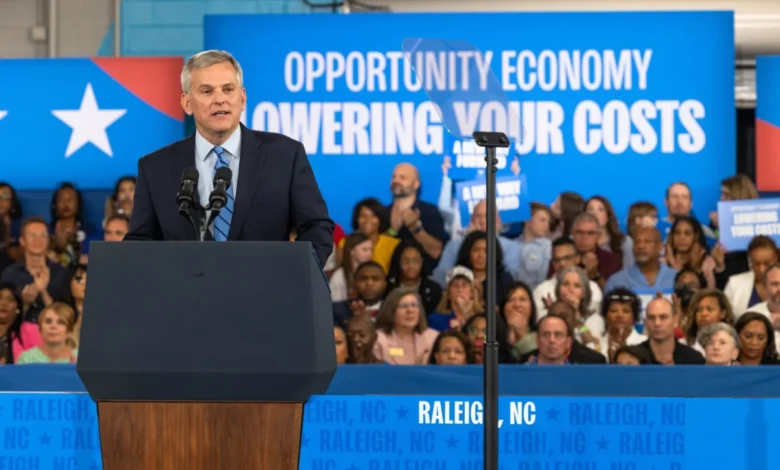
"It will not put any more money in anyone’s pockets," Governor Stein said during a press conference in May. "But what it will do is make regular people pay the consequences of it next year and years into the future because it will insulate the very wealthy from ever having an increase in their income tax."
Alexandra Sirota, executive director of the NC Budget & Tax Center, echoed these sentiments in a September policy statement. Sirota cautioned that the constitutional cap would tie the hands of future lawmakers, making it mathematically and politically nearly impossible to adjust tax rates progressively to fund growing infrastructure, education, and healthcare needs. "These tax amendments won’t cut anyone’s taxes," Sirota stated, "but they would make it more difficult for future lawmakers to fairly raise the revenue needed to meet costs through a higher rate on millionaires, billionaires, and highly profitable corporations."
A Broader Constitutional Package on the Ballot
The income tax cap is not the only fiscal measure facing North Carolina voters on Tuesday. As part of a broader Republican legislative strategy to address local and state tax burdens, voters are also deciding on a separate constitutional amendment that would empower the state legislature to impose strict statutory limits on how much local governments can raise property taxes.
This dual-track approach reflects a concerted effort by conservative lawmakers to place structural boundaries on both state and local revenue collection. While local government associations and municipal leaders have raised concerns that property tax caps could degrade funding for local law enforcement, fire departments, and public schools, proponents maintain that property owners deserve robust protections against surging property valuations and assessment increases driven by the state’s rapid population growth.
The National Landscape: Competing Visions of Taxation
North Carolina’s tax debate is part of a much larger national referendum on economic policy taking place during the 2026 midterms. Across the country, voters in multiple states are confronting diametrically opposed tax philosophies as households grapple with persistent inflation and elevated living costs.
According to data from the Commerce Department, consumer inflation ticked up to 3.6% in September, driven in part by international supply chain pressures and volatile energy markets, including a roughly 68% surge in global oil prices over the past year. In response to these economic strains, state-level ballot measures have emerged as a primary battleground for voters seeking relief.
In Colorado, voters are weighing competing ballot proposals: one that would replace the state’s flat 4.4% income tax with a progressive graduated rate reaching up to 8.4%, and a rival measure designed to constitutionally lock the flat income tax rate at 4.4%. In Iowa, voters are deciding whether to require a two-thirds supermajority in the legislature to enact any future income tax increases. Meanwhile, Washington voters are determining the fate of a recently enacted 9.9% income tax targeting individual household incomes exceeding $1 million.
Perhaps the most nationally watched fiscal showdown is occurring in California, where voters are deciding on Proposition 40—a contentious ballot measure that would levy a one-time 5% wealth tax on state residents with a net worth exceeding $1 billion. Backed by progressive activists but heavily condemned by Silicon Valley entrepreneurs and business leaders, the California proposal underscores the stark ideological divide over wealth and income taxation in modern American politics.
Political Dynamics and the Midterm Landscape
The intensity of these state-level fiscal debates reflects a shifting political environment where affordability and economic security have become decisive electoral factors. National polls indicate that Democrats have successfully leveraged voter anxieties over the cost of living, gaining traction even in traditionally conservative regions by arguing that governing parties have failed to deliver adequate relief.
In Texas, traditionally safe Republican strongholds have seen unexpectedly competitive races, while high-profile Senate contests in states like Michigan have highlighted voter fatigue with ongoing economic pressures. In response, national and state Republicans have sought to pivot toward pro-growth solutions, pointing to federal achievements such as the bipartisan 21st Century Road to Housing Act—designed to alleviate housing costs through zoning reform and accelerated construction—as evidence of their commitment to structural economic relief.
Conclusion: A Definitive Choice for North Carolina
As North Carolina precincts prepare to close on Tuesday night, the outcome of the income tax cap amendment will signal the trajectory of the state’s fiscal policy for generations to come. A victory for proponents will cement a historic conservative tax regime into the foundational law of the state, ensuring that low income tax rates remain a permanent fixture of North Carolina’s economic identity. Conversely, a rejection by voters would signal public apprehension regarding the long-term sustainability of state finances, preserving legislative flexibility to navigate future economic crises. Regardless of the result, the vote marks a watershed moment in the ongoing national debate over the balance between taxpayer protection, wealth distribution, and the funding of public infrastructure.