DirecTV to Acquire Dish TV and Sling TV in Landmark $1 Consolidation Deal Amidst Rapid Industry Transformation

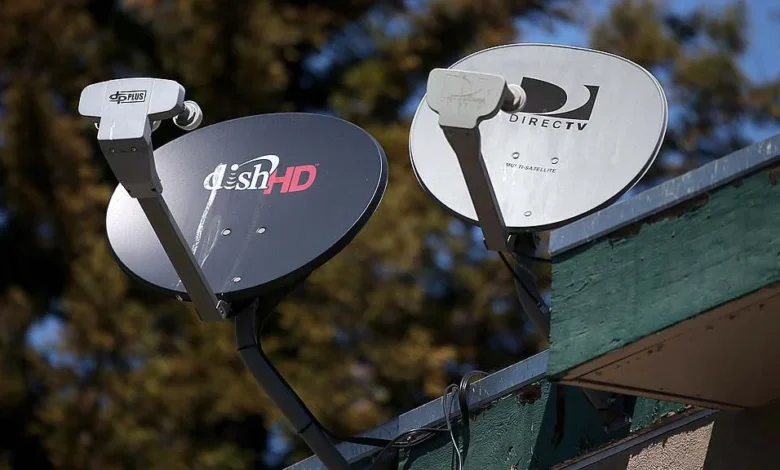
In a seismic shift for the American telecommunications and media landscape, DirecTV has officially announced an agreement to acquire the video business assets of EchoStar, including the satellite giant Dish TV and the streaming-first platform Sling TV. The transaction, which carries a nominal purchase price of $1, is contingent upon DirecTV assuming EchoStar’s substantial existing debt. This deal marks the culmination of decades of industry speculation regarding a potential merger between the two largest satellite television providers in the United States. By combining their operations, the companies aim to create a singular, robust entity capable of navigating the existential challenges posed by the mass migration of consumers from traditional linear pay-TV to streaming-exclusive ecosystems.
The agreement comes at a pivotal moment for both organizations. Both DirecTV and Dish have faced persistent, multi-year declines in their subscriber bases as "cord-cutting"—the act of canceling traditional cable or satellite subscriptions in favor of over-the-top (OTT) streaming services—has accelerated. By merging, the companies will consolidate their remaining customer bases to form an entity with approximately 20 million subscribers. This scale is intended to provide the necessary leverage to negotiate more favorable carriage agreements with content providers and to streamline operations in a segment of the market that has been characterized by dwindling margins and shrinking viewership.
A Long-Awaited Convergence: Historical Context
The possibility of a DirecTV-Dish merger has been discussed by market analysts and industry insiders for nearly two decades. The two companies, which revolutionized home entertainment in the 1990s and early 2000s, have long been viewed as the natural partners for a final consolidation play. In 2002, a merger was famously proposed but ultimately blocked by the Federal Communications Commission (FCC) and the Department of Justice on antitrust grounds, as regulators feared the resulting monopoly would significantly reduce competition in the satellite sector.
However, the regulatory and competitive environment of 2024 is fundamentally different from that of 2002. Today, the "video distribution industry" is no longer confined to satellite and cable providers. Instead, the market is dominated by tech giants and streaming platforms—including Netflix, Amazon Prime Video, Disney+, and YouTube TV—which have rendered the traditional antitrust concerns regarding satellite market share somewhat obsolete. Regulators are now viewing the industry through the lens of a broader media landscape where traditional pay-TV operators are struggling to remain relevant against diversified, global digital competitors.
Corporate Realignment and Ownership Changes
The transaction is part of a broader corporate restructuring. AT&T, which previously spun off DirecTV into a separate entity while maintaining a 70% ownership stake, has officially divested its interest. AT&T has sold its stake to the private equity firm TPG, which will now become the sole owner of the combined DirecTV entity. This exit marks the end of AT&T’s long and often turbulent venture into the video distribution business, an effort that included the costly and ultimately unsuccessful acquisition of Time Warner.
Under the terms of the deal, the combined organization will remain under the leadership of DirecTV CEO Bill Morrow and Chief Financial Officer Ray Carpenter. The headquarters for the merged operation will be consolidated in El Segundo, California. The shift toward a private equity-backed model suggests that the focus for the new entity will be on aggressive cost-cutting, debt management, and operational efficiency rather than the expansionist strategies that characterized the industry during the early 2010s.
Strategic Rationale and Financial Synergies
The core of the deal hinges on the promise of operational synergies. DirecTV has publicly estimated that the combination of the two entities could yield at least $1 billion in cost savings annually. These efficiencies are expected to be fully realized by the third anniversary of the deal’s closing, with the transaction itself anticipated to conclude in late 2025, pending regulatory approval and customary closing conditions.
The realization of these synergies will likely involve the consolidation of back-office operations, redundant technical infrastructure, and, potentially, the decommissioning of certain legacy satellite hardware as the industry transitions toward hybrid delivery models. Furthermore, to facilitate the deal, TPG Angelo Gordon and a group of co-investors, along with DirecTV, have provided a $2.5 billion financing package. This capital is specifically earmarked to fully refinance the debt maturity of Dish DBS scheduled for November 2024, providing the necessary liquidity to stabilize the balance sheet ahead of the integration.
Implications for the Consumer and the Market
For the average subscriber, the immediate impact of the merger is expected to be minimal, though long-term implications are significant. The acquisition of Sling TV provides DirecTV with a well-established, low-cost streaming alternative to its traditional satellite offerings, which is crucial for retaining younger, price-sensitive consumers who are unwilling to sign long-term contracts.
Bill Morrow, in his official statement, emphasized that the merger is about more than just scale. "With greater scale, we expect a combined DirecTV and Dish will be better able to work with programmers to realize our vision for the future of TV," Morrow stated. He described this vision as the ability to "aggregate, curate and distribute content tailored to customers’ interests." Essentially, the goal is to position the new DirecTV as a "super-aggregator"—a platform that simplifies the increasingly fragmented streaming market by offering a unified interface where users can access both linear satellite channels and a variety of third-party streaming services.
However, analysts warn that the move does not solve the fundamental problem of declining linear TV viewership. While the $1 billion in synergies will help stabilize the company’s bottom line, the long-term viability of a satellite-heavy business model remains in question as fiber-optic internet and 5G wireless broadband continue to expand, offering more reliable and flexible delivery methods for high-definition content.
Challenges Ahead: The Road to Integration
The integration of two massive, historically competing satellite networks is a gargantuan technical and cultural undertaking. Dish and DirecTV utilize different orbital slots, different compression standards, and disparate subscriber management systems. Successfully merging these into a single, cohesive platform without alienating the remaining 20 million subscribers will be a primary focus for Morrow and his team.
Furthermore, the deal will face intense scrutiny from the Federal Communications Commission (FCC) and the Department of Justice. While the "cord-cutting" narrative supports the argument that these companies are no longer the dominant players they once were, regulators will still be concerned about the impact of the merger on rural customers, who rely on satellite TV as their only viable source of broadcast television. If the combined company chooses to raise prices or eliminate specific channels in these under-served regions, it could face significant pushback.
The Future of Pay-TV
The collapse of the traditional satellite duopoly into a single entity is a defining moment in the history of telecommunications. It signals a tacit admission that the industry has reached its "sunset" phase as a growth market and has entered a "harvesting" phase. In this phase, the primary objective is to extract as much value as possible from the remaining loyal customer base while managing the inevitable transition to an all-digital, all-streaming future.
As the industry looks toward 2025 and beyond, the success of the new DirecTV will likely depend on its ability to evolve beyond the satellite dish. If the combined entity can successfully pivot to become a technology-agnostic platform—one that delivers content regardless of whether it arrives via satellite or broadband—it may defy the current downward trends. Conversely, if it remains tethered to the legacy infrastructure of the 20th century, the $1 billion in annual synergies may simply serve as a buffer against a slow, inevitable decline.
Ultimately, the acquisition of Dish and Sling by DirecTV is a pragmatic response to a reality that no amount of marketing can change: the way people consume television has been irrevocably altered. By consolidating, these companies are attempting to buy time, secure capital, and create a leaner, more resilient business that can survive in a world where content is king, but the medium is increasingly irrelevant. Whether this strategy will be enough to satisfy investors and retain consumers remains one of the most compelling questions in the modern media industry.