From Screen to Table: How the Chef’s Table Festival is Redefining Culinary Immersion

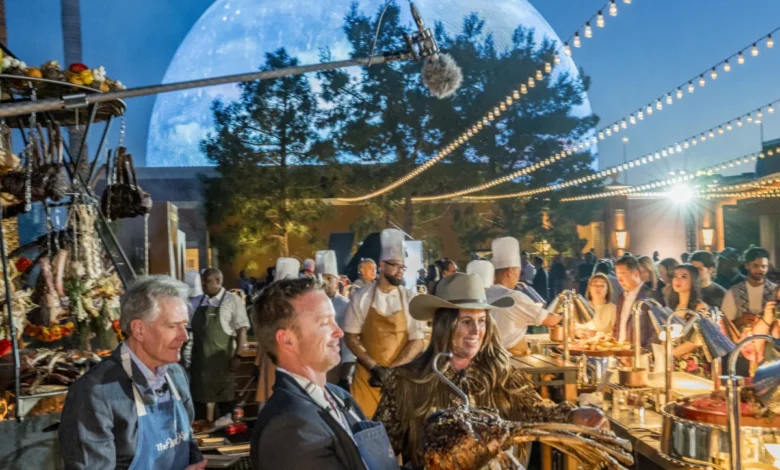
The inaugural Chef’s Table Festival, which debuted this past August in the picturesque mountain enclave of Park City, Utah, marked a pivotal evolution for the Emmy-nominated Netflix series. By transposing the intimate, cinematic storytelling of the show into a tangible, high-stakes physical environment, creators David Gelb and Andrew Fried effectively shattered the "fourth wall" that has separated viewers from their culinary idols for over a decade. This transition from a purely digital medium to an experiential, multi-sensory platform represents a significant trend in modern media: the "360-degree" content expansion.

The festival’s genesis was rooted in a long-standing observation by Gelb: audiences were deeply invested in the personal narratives of the chefs profiled on the screen but remained fundamentally disconnected from the actual product—the food. For years, fans of the series, which premiered in 2015 with Massimo Bottura as its inaugural subject, expressed a collective desire to cross the threshold from passive observation to active participation.
A Spectacle of Culinary Spontaneity
The spirit of the festival was best captured during a moment in Park City when Italian culinary icon Massimo Bottura, appearing alongside pizza visionary Franco Pepe, intervened to save a pie that failed to meet the rigorous standards of the kitchen. Rather than discarding the dough, Bottura intuitively repurposed it into a calzone, saucing and slicing it for the gathered attendees. For Gelb, who has spent his career curating the narratives of the world’s most disciplined chefs, the scene felt almost scripted—a living embodiment of the improvisational genius that the series attempts to document.

This ethos of spontaneity carried over into the follow-up event, the "Wynn Revelry by Chef’s Table," held in Las Vegas from September 18–20. In the neon-lit heart of the Strip, the atmosphere transitioned from the serene mountain aesthetic of Utah to the high-octane energy of the Encore Beach Club. Here, Bottura traded his chef’s coat for a DJ booth, orchestrating an event titled "The Feast" that culminated in the dramatic, theatrical breaking of a massive wheel of Parmigiano Reggiano. The display served as a metaphor for the festival’s broader goal: to strip away the pretense of fine dining and replace it with the visceral joy of human connection.
The Evolution of the Culinary Brand
The shift toward live, in-person events is not merely a marketing exercise; it is a calculated response to the "digital fatigue" that has begun to permeate modern entertainment. Justin Connor, president of Chef’s Table Projects, argues that audiences are increasingly seeking tangible experiences that offer more than the standard circuit of tasting tents and plastic-utensil events. By modeling the festival after Italy’s renowned "Ein Prosit"—where chefs embed themselves within local restaurant ecosystems—the organizers created a framework where guests choose their own culinary path rather than navigating a homogenized, high-volume buffet.

The data surrounding these events underscores their success. Across the two-city, seven-day run, the festival encompassed over 100 distinct activations. Park City hosted more than 80 visiting chefs, while the Wynn Revelry featured 30 culinary stars from five continents. The logistical complexity of such an undertaking required not just the endorsement of Netflix, but the support of high-level partners like United Airlines and Resy. The collaboration with United, which features chef-designed menus on long-haul flights, acts as an extension of the "Chef’s Table" ecosystem, ensuring the brand maintains a presence in the lives of its audience even at 30,000 feet.
The Human Element: Why They Cook
The core philosophy of the "Chef’s Table" brand has always been the "why" rather than the "how." Gelb’s original pitch to Netflix—a show devoid of a celebrity host, reliant on high-end cinematic lenses, and driven solely by the emotional weight of a chef’s life—has proven remarkably durable. When applied to the festival format, this focus on the human story has profound implications for how the industry engages with the public.

Sarah Thompson, executive chef of Casa Playa at Wynn Las Vegas and a 2026 James Beard Award recipient, noted that the series has fundamentally altered the expectations of her diners. "People aren’t just there for the food," she observed. "They want to feel like they’re part of the story." This sentiment was echoed by Serigne Mbaye, the chef-owner of Dakar NOLA, who viewed the festival not as a chore, but as a rare opportunity for cross-pollination among peers. For Mbaye, who usually remains tethered to the demanding operations of his New Orleans kitchen, the chance to share the Senegalese ataya tea ritual with an intimate group in a private villa offered a level of connection that digital media simply cannot replicate.
Star Power and the "Unscripted" Moment
The presence of high-profile fans, such as actor Aaron Paul, highlighted the cultural cachet the series has achieved. Paul, a self-described "obsessive" of the show, traveled to the festivals to support various initiatives, including his own mezcal brand, Dos Hombres, and to witness the culinary theatrics of peers like Bryan Cranston and fire-cooking expert Sarah Glover. Such moments of celebrity engagement, while inherently theatrical, served to elevate the prestige of the event without overshadowing the technical mastery of the chefs involved.

However, the festival was careful to maintain a distinction between established series alumni and emerging talent. While the show’s subjects, such as Nancy Silverton and Kwame Onwuachi, served as pillars of the festival, the roster also included figures like Ukrainian pastry artist Dinara Kasko and the team behind New York’s Lucali. This diverse mix ensures that the "Chef’s Table" brand functions as an amplifier for talent across the global culinary spectrum, regardless of whether they have yet appeared on a Netflix screen.
Analysis of Future Projections
The inaugural festivals were not without their experimental phases. The team utilized the events to record podcasts, host roundtables, and film content for "Plates," a shorter-form video format developed in conjunction with American Express and Resy. This indicates a long-term strategy for the "Chef’s Table" brand: to act as a permanent, multi-platform media powerhouse that exists independently of the Netflix release schedule.

The success of the "Chef’s Table Honors" ceremony—an invitation-only event where chefs recognized their own—signals a move toward industry institutionalization. By involving icons like Mashama Bailey and Thomas Keller in the selection and celebration of peers, the festival is positioning itself as a central clearinghouse for culinary merit in the United States.
As the team looks toward the summer of 2027, when the festival returns to Park City, the challenge will be scaling the "unscripted, emergent moments" that defined the initial outings. Gelb’s cautious optimism—asking whether one can have "too much of a good thing"—suggests a disciplined approach to future growth. The goal is to avoid the pitfalls of over-commercialization, which can quickly dilute the intimacy that made the series successful in the first place.

Ultimately, the Chef’s Table Festival represents a successful pivot in the lifecycle of a prestige television brand. By moving from the screen to the table, the creators have managed to bridge the gap between myth and reality, transforming the abstract concept of "culinary greatness" into a shared, tangible, and deeply human experience. As long as the food remains the primary focus and the stories remain authentic, the potential for this "360-degree" model to influence the future of food media is significant. For now, the takeaway is clear: the audience is no longer satisfied with watching the story—they want to sit at the table.