FBI Investigates Apparent Breach of National Crime Information Center Database

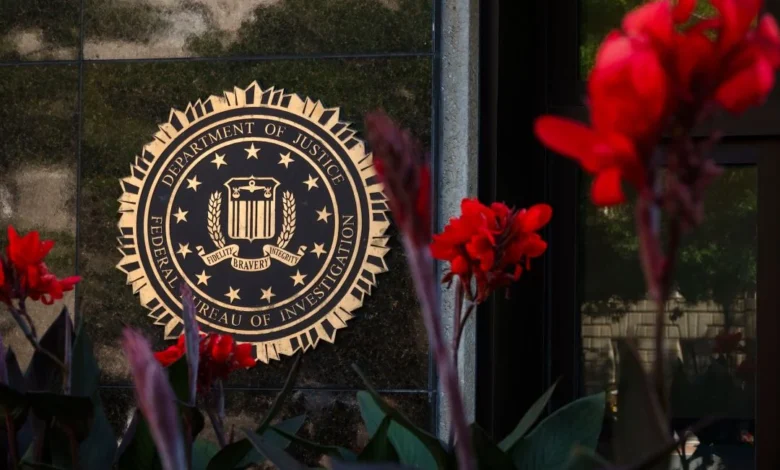
The Federal Bureau of Investigation has launched an urgent, high-priority investigation into an apparent cyberattack targeting the National Crime Information Center, one of law enforcement’s most critical and sensitive digital infrastructures. The breach, which has drawn immediate concern from national security experts and lawmakers alike, compromises a foundational database utilized daily by thousands of federal, state, and local law enforcement agencies across the United States.
News of the incident first surfaced through reports from major news organizations, including CNN and the Associated Press, revealing that unauthorized actors may have breached the core networks housing sensitive law enforcement intelligence. The National Crime Information Center, commonly referred to as NCIC, operates as a centralized clearinghouse for vital criminal justice data. It tracks everything from active arrest warrants and protection orders to missing persons cases, stolen vehicles, and comprehensive background check records.
While the exact mechanics of the intrusion and the full volume of exfiltrated data remain under intense evaluation by cybersecurity teams within the Bureau, the early indicators point to a systemic vulnerability. The incident underscores a deeply troubling trend of escalating cyber threats aimed directly at federal law enforcement agencies, arriving just months after a separate, highly damaging breach compromised the personal data of numerous FBI agents and support personnel.
Understanding the National Crime Information Center
To fully grasp the gravity of the unfolding situation, it is necessary to examine the central role that the NCIC plays in the daily operations of the American criminal justice system. Established in the late 1960s under the administration of the FBI, the NCIC was designed to bridge communication gaps between fragmented municipal, county, state, and federal law enforcement agencies.
Operated out of the FBI’s Criminal Justice Information Services (CJIS) Division in Clarksburg, West Virginia, the database is available 24 hours a day, 365 days a year. Millions of queries are processed through its secure channels every single day. When a police officer conducts a routine traffic stop and runs a driver’s license or a vehicle license plate, that query is routed through the NCIC to instantly check if the individual is wanted on an outstanding warrant or if the vehicle has been reported stolen.
Because officers routinely make split-second, life-or-death tactical decisions based on the information returned by the NCIC, the integrity of the database is paramount. A compromise of this system does not merely threaten the confidentiality of government files; it poses a direct, immediate operational risk to every law enforcement officer patrolling communities nationwide.
Chronology of Recent Cyber Incidents at the FBI
The late-November revelation represents the second major cybersecurity crisis to hit the nation’s premier law enforcement agency within a span of roughly two months. The timeline of events highlights a vulnerable posture within federal cybersecurity architectures:
- Late September: The FBI formally declares a serious cybersecurity incident after unauthorized hackers successfully breach internal networks and steal sensitive personal data belonging to Bureau agents and support staff.
- Mid-November: Suspicious network activity and anomalies are detected within systems linked to the CJIS division and the NCIC database, prompting internal red flags and immediate forensic containment efforts.
- November 20: Initial investigative findings are leaked to journalists, indicating a potential deep penetration of law enforcement databases.
- November 21: Major news outlets, including CNN and the Associated Press, publicly break the story, confirming that the FBI is actively investigating the NCIC hack.
- November 22: President Donald Trump addresses the unfolding crisis during an interview with Fox News, publicly acknowledging the breach and commenting on its broader political and security implications.
The Spectrum of Risk: Data Theft Versus Data Manipulation

In the wake of the breach, cybersecurity analysts and former law enforcement officials have rushed to categorize the potential damage. While data exfiltration—the theft of sensitive files—is the most common outcome associated with high-profile hacks, experts emphasize that the NCIC breach carries a uniquely dangerous dimension.
A former senior FBI official, speaking anonymously to media outlets regarding the ongoing investigation, highlighted the duality of the threat. The official expressed deep concern not merely over whether hackers gained unauthorized access to sensitive criminal histories and investigative files—though that in itself represents a severe breach of privacy and operational security—but rather whether malicious actors could systematically compromise the accuracy of the data itself.
If sophisticated adversaries possess the capability to alter, inject, or delete records within the NCIC, the consequences could paralyze law enforcement operations. For instance, the fraudulent creation of false warrants could lead to wrongful arrests or dangerous confrontations in the field. Conversely, the deletion of legitimate warrants could allow high-risk fugitives to move through traffic stops and international borders completely undetected. This potential for active data manipulation transforms the incident from a standard data breach into a critical threat to public safety and national security.
Political Reactions and Official Responses
The incident has quickly transcended the realm of technical cybersecurity, drawing sharp commentary from the highest levels of government. President Donald Trump addressed the reports during a Saturday interview with Fox News, offering an initial assessment of the situation.
"We just heard about it and I will say that it’s not good," Trump remarked during the broadcast. However, the president also offered a characteristic, unorthodox perspective on the breach, suggesting that the fallout from the cyberattack might yield unexpected intelligence revelations. "Maybe we’ll learn things that we would have never learned otherwise because, you know, you had the Russia, Russia, Russia hoax," Trump added, linking the digital intrusion to ongoing political narratives surrounding federal investigations.
Meanwhile, official statements from the Department of Justice and the FBI have been tightly controlled as forensic investigators comb through server logs and access control lists. Leadership within the Bureau has assured internal stakeholders that identifying the vector of the attack, expelling any persistent threats from the network, and locking down the core architecture of the NCIC remain the absolute top priorities.
Broader Implications for Federal Cybersecurity
The repeated targeting of the FBI highlights a troubling reality: no institution, regardless of its technological sophistication or statutory authority, is immune to determined state-sponsored or elite criminal cyber syndicates. Over the past several years, federal agencies have faced an onslaught of advanced persistent threat (APT) groups, many suspected of operating with the tacit approval or direct backing of foreign adversaries such as Russia, China, Iran, and North Korea.
The September breach, which compromised the personal information of FBI personnel, exposed underlying vulnerabilities in how the Bureau manages internal credentialing and peripheral network security. The November NCIC incident suggests that these vulnerabilities may extend deeper into core operational environments. Lawmakers on Capitol Hill are already signaling plans to summon FBI cybersecurity leadership for closed-door briefings and open congressional hearings to demand accountability and transparency regarding how these breaches occurred.
As the investigation progresses, the Bureau faces the monumental task of restoring trust in a system that forms the absolute bedrock of American policing. Ensuring that officers on the street can trust their digital tools is vital; any lingering doubt regarding the veracity of NCIC data could fundamentally undermine the efficiency and safety of law enforcement across the United States. For now, the digital forensics teams remain locked in a high-stakes race against time to determine the full scope of the breach, identify the perpetrators, and permanently secure the nation’s most vital law enforcement database.