Elevating Holiday Innovation: How NVIDIA Technology is Redefining Personal Computing, Creativity, and Robotics

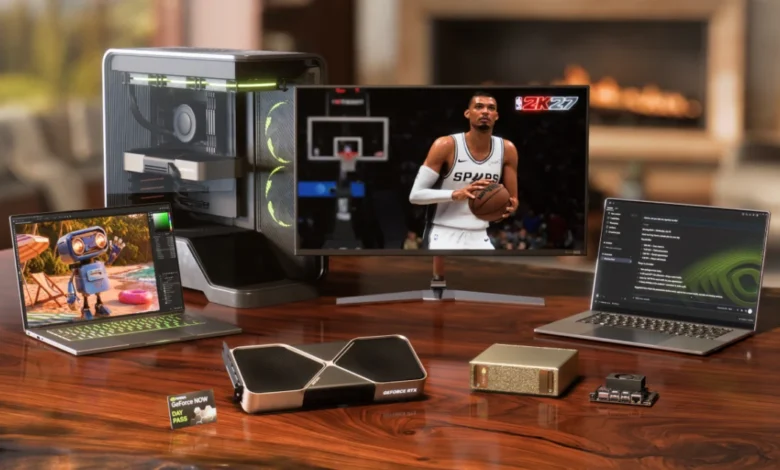
The holiday season traditionally serves as a period for reflection and domestic activity, but in the modern era, it has increasingly become a catalyst for technological exploration and professional development. While the imagery of seasonal workshops is often reserved for folklore, current market trends indicate a significant shift toward consumers utilizing year-end downtime to invest in high-performance hardware. For hobbyists, gamers, and aspiring engineers, the latest innovations in graphics processing and artificial intelligence are providing a unique opportunity to transition from passive consumption to active creation. As NVIDIA continues to roll out its latest suite of GeForce RTX 50 Series processors and Jetson edge AI platforms, the barrier to entry for complex workflows—such as real-time 3D rendering, sophisticated video editing, and autonomous robotics—has lowered substantially.
The Evolution of Personal Computing and Gaming Performance
The demand for high-performance computing during the holiday season is not merely a retail trend; it reflects a broader shift in how households utilize domestic technology. Over the past decade, the gaming industry has evolved from a niche pastime into a primary form of interactive entertainment, characterized by high-fidelity graphics and massive multiplayer environments. NVIDIA’s current push into the consumer market centers on the integration of DLSS (Deep Learning Super Sampling) 5, a technology that utilizes AI to upscale image quality and maintain frame rates that were previously impossible on standard consumer hardware.
Market analysis shows that the "gaming laptop" category has seen a compound annual growth rate of approximately 12% over the last five years, driven by the desire for portability without sacrificing desktop-level performance. This shift allows users to maintain high-end workflows while traveling, a critical factor for the holiday demographic. For those tethered to a home office, the focus remains on the RTX 50 Series architecture, which leverages massive parallel processing power to handle the intensive demands of modern gaming engines. Industry experts note that the hardware refresh cycles have shortened as AI-accelerated features become standard in software titles, forcing a faster adoption rate among enthusiast consumers.
Accelerating the Creative Workflow: From Concept to Production
Beyond entertainment, the holiday season offers a unique window for independent creators to tackle long-term projects that are often sidelined by professional obligations. The democratization of creative tools—ranging from professional video editing suites to 3D modeling software—has created a surge in content production. However, the bottleneck for most creators remains hardware limitations.
NVIDIA Studio, a specialized platform designed to bridge the gap between consumer hardware and professional-grade performance, provides the necessary infrastructure to manage these bottlenecks. By utilizing Studio Drivers, which undergo extensive multi-app testing for creative applications like Adobe Premiere Pro, DaVinci Resolve, and Blender, creators can achieve significant time savings. For instance, AI-accelerated encoding in video production can reduce render times by as much as 40% compared to non-optimized hardware.
This efficiency is crucial for the burgeoning "prosumer" market, where creators are producing high-quality content that rivals professional studio output. The ability to deploy generative AI tools locally—without the latency of cloud-based processing—allows for a seamless transition from the "backburner" idea to a finished product. As platforms like YouTube and Twitch continue to reward consistent, high-fidelity content, the investment in RTX-accelerated systems is increasingly viewed as a professional necessity rather than a luxury purchase.
The Rise of Edge AI: Bringing Robotics into the Home
Perhaps the most significant shift in the technological landscape is the transition of robotics from industrial manufacturing floors to the home workspace. Historically, building a robot required significant engineering expertise, specialized hardware, and a substantial budget. Today, the NVIDIA Jetson platform has effectively commoditized advanced robotics, providing a pathway for hobbyists to build machines that can "think" and interact with their environment.
The chronology of this development is rooted in the miniaturization of AI chips. When the first Jetson modules were introduced, they were primarily targeted at academic research and industrial automation. With the subsequent release of the Jetson Orin Nano series, NVIDIA has provided a platform that fits in the palm of a hand while possessing the computational power required for real-time computer vision and natural language processing.
This capability allows for projects that were once the domain of university laboratories. For example, developers are now using the Jetson Orin Nano to power autonomous robotic arms—such as the SO-101—that can interpret natural language commands, plan multi-step physical tasks, and learn from past attempts through agentic software like OpenShell. These systems leverage the ASPIRE framework, which enables the robot to "re-learn" skills based on prior iterations, effectively mimicking a rudimentary form of iterative machine learning.
Fact-Based Analysis: The Implications of Agentic Robotics
The deployment of these technologies has broader implications for the future of human-computer interaction. The current trend toward "agentic" robotics—where a machine is given a goal rather than a specific set of programmed instructions—represents a paradigm shift. In an agentic system, the user provides a high-level request, such as "clean this desk," and the robot must use its visual sensors to identify objects, plan a route, and execute the physical manipulation.
This shift relies heavily on the integration of Large Language Models (LLMs) with physical hardware. By running models like Nemotron 3.5 locally on a Jetson device, users can maintain data privacy and eliminate the latency associated with internet connectivity. This is a critical development for the future of home automation, as it moves the industry away from "if-then" scripting toward intelligent, responsive environments.
From an economic perspective, the proliferation of these development kits is fostering a new generation of engineers. By providing accessible entry points through platforms like the Jetson AI Lab, NVIDIA is effectively building a pipeline of talent that is already familiar with the software-defined architecture of modern robotics. Industry observers suggest that this "bottom-up" approach to AI development is one of the most effective ways to accelerate the integration of autonomous machines into the consumer market.
Looking Ahead: The Intersection of Hardware and Purpose
As the year concludes, the convergence of high-end gaming, professional content creation, and autonomous robotics highlights a maturing tech ecosystem. The common denominator across these fields is the shift toward AI-accelerated local computing. Whether a user is looking to improve their frame rate in a virtual environment or teach a robot to identify a holiday decoration, the fundamental requirement is a platform that can process vast amounts of data in real time.
Official responses from the developer community suggest that the current ease of access to documentation and community-driven tutorials is a key factor in this growth. With resources like the Jetson AI Lab, individuals are no longer working in isolation; they are contributing to an open-source culture that shares code, logic, and hardware configurations. This collaborative environment ensures that the technologies developed during the holiday season often result in innovations that remain relevant throughout the following calendar year.
In summary, the integration of RTX and Jetson technologies into the home environment is more than a seasonal retail push; it is part of a multi-year trend toward decentralized, AI-driven computation. As hardware continues to become more efficient and software more intuitive, the boundary between "consumer" and "developer" will continue to blur, empowering individuals to build the next generation of digital and physical tools from the comfort of their own homes. The focus for the coming year will likely be on the refinement of these models, specifically regarding how robots navigate complex, unstructured home environments. For those embarking on these projects during the current break, the tools available today represent a significant milestone in the history of personal technology, providing a tangible glimpse into a future where autonomous, intelligent assistance is an accessible reality for everyone.