As generative artificial intelligence transforms the digital discovery landscape, content and search engine optimization (SEO) marketers are facing a critical evolution in how brands maintain visibility. The traditional reliance on organic search rankings is increasingly being supplemented—and in some cases superseded—by Answer Engine Optimization (AEO). At the core of this transition is the AEO keywords gap, a metric representing the disparity between the questions and prompts that AI engines process and the specific, authoritative answers a brand provides. Unlike traditional SEO, which focuses on securing a position within a list of blue links, AEO focuses on the ability of a brand’s content to be cited directly within the summarized responses generated by models like ChatGPT, Gemini, and Perplexity.

The shift toward AI-driven search is not merely a technical adjustment; it represents a fundamental change in buyer behavior. Data from 2025 indicates that 42% of CRM software purchase decision-makers now incorporate AI search into their evaluation process. This demographic shift makes AI visibility one of the strongest predictors of purchase intent currently tracked by industry analysts. Furthermore, referral traffic from AI tools has tripled year-over-year, establishing a clear trend that brands ignoring the nuances of AEO risk being systematically excluded from the customer shortlist before they ever have the chance to engage with a potential lead.
Understanding the Mechanics of the AEO Gap
An AEO keywords gap exists when a brand possesses the authority to answer a user’s query but fails to format its content in a way that AI models find suitable for extraction. A significant challenge for modern marketers is the disconnect between traditional SEO and AEO. Research conducted by BrightEdge reveals that approximately 17% of sources cited in AI Overviews also rank in the top ten organic search results. This means that five out of every six citations generated by AI are pulled from content that does not necessarily hold a prime position on the first page of traditional search engine results.

The implication is clear: a robust SEO strategy is no longer a proxy for AI visibility. An organization can dominate page one of a search engine for a specific term while simultaneously being invisible to an AI-driven query on the exact same topic. The gap is not defined by keyword volume alone, but by a complex interplay of entity recognition, question-answering format, and the trustworthiness of the source material as evaluated by large language models (LLMs).
Chronology and Evolution of Search Behavior
The rise of the AEO gap follows a distinct timeline. Throughout 2024 and 2025, the industry witnessed a steady migration of users from static search engines to generative engines. January 2025 served as a baseline for AI referral traffic, which saw consistent month-over-month growth throughout the year. By December 2025, aggregate referral traffic had surged to three times the volume recorded at the beginning of the year.

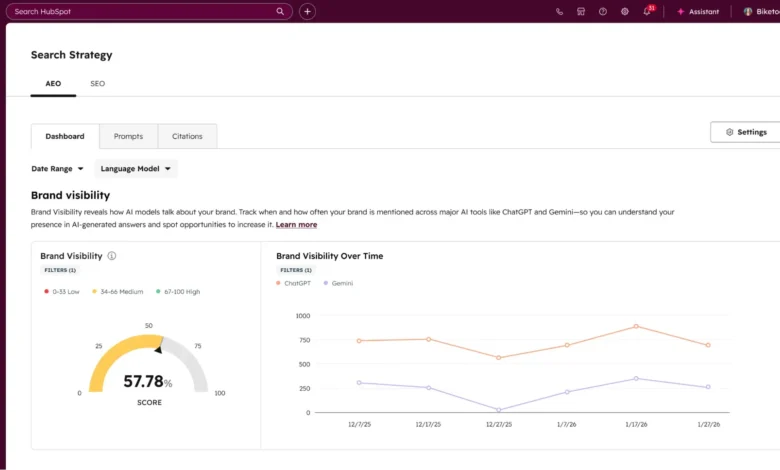
This rapid adoption forced marketers to move beyond legacy tactics. In the early stages of this transition, companies relied on manual audits—a process that was both labor-intensive and inherently flawed due to the transient nature of AI responses. As LLMs updated their training data and retrieval methods, the "right" answer for a prompt could shift weekly, rendering static SEO audits obsolete. Consequently, the industry is now moving toward automated, continuous monitoring tools that treat AEO not as a one-time project, but as a dynamic performance metric.
Conducting an Effective AEO Audit
To close the AEO keywords gap, marketers must adopt a four-pillar auditing strategy. The first step involves inspecting Google Search Console (GSC) and identifying SERP patterns. While GSC is rooted in traditional SEO, the query data it provides remains the most reliable indicator of a brand’s existing authority. By exporting this data and applying linguistic filters to identify question-based queries, teams can begin to map which topics they own and where they are failing to provide a definitive answer.

The second pillar involves the collection of first-party data. Sales calls, customer support tickets, and community forum discussions are rich with the colloquial phrasing users employ when querying AI. These sources often contain the specific "long-tail" questions that AI engines prioritize. When a brand’s website lacks a page that directly addresses these specific phrasing patterns, an AEO gap is confirmed.
Third, a comprehensive competitor analysis is required. Because the competitive landscape in AI search differs significantly from traditional SERPs, brands must run category-level prompts through various AI engines to see which domains are being cited. Often, these citations favor third-party listicles, comparison sites, or specialized review platforms over corporate product pages. Identifying these winning formats—whether they are pricing tables, pros-and-cons lists, or definitional summaries—is essential for content recalibration.

Finally, the review of current content must be rigorous. A page that covers a topic broadly but lacks a concise, "liftable" answer to a specific question will inevitably fail to be cited. Optimizing for AEO requires "front-loading" direct answers immediately following a header that mirrors the user’s search query, followed by supporting evidence and internal links that bolster the page’s authority.
Implications and Strategic Prioritization
Not every gap identified is worth the resources required to close it. Marketing teams must apply a filter of business relevance, focusing on gaps that align with their Ideal Customer Profile (ICP) and revenue goals. As companies use tools such as the AI Search Grader to benchmark sentiment and share of voice, they gain the ability to make data-backed decisions on which topics deserve investment.

The broader impact of failing to address these gaps is a loss of "top-of-funnel" control. When an answer engine provides a definitive answer or a shortlist of vendors, it is effectively acting as the initial gatekeeper for the buyer journey. Brands that are not present in these responses are effectively removed from the consideration set.
Industry experts argue that the most successful companies will be those that integrate AEO into their core marketing stack. By utilizing automated platforms to track visibility, citations, and prompt coverage in real-time, firms can transition from reactive content creation to proactive market positioning. This allows for the measurement of "assisted business impact," where leads and revenue are directly attributed to AI-referred traffic. As search continues to evolve into a conversational interface, the ability to close the AEO keywords gap will likely become a primary determinant of long-term digital market share.