AWS Launches Amazon Bedrock Managed Agents Powered by OpenAI to Bridge Enterprise Governance with Advanced AI Capabilities

The recent unveiling of Amazon Bedrock Managed Agents powered by OpenAI marks a significant inflection point in the enterprise artificial intelligence landscape. By integrating OpenAI’s Agents API into the AWS-native ecosystem, Amazon Web Services is effectively addressing the long-standing tension between the rapid deployment of high-performance frontier models and the rigorous security, compliance, and governance requirements inherent in corporate environments. This public preview, announced in late September 2026, signals a strategic shift toward a hybrid model where developers can harness the reasoning capabilities of advanced models while maintaining full control over data residency and identity management.
The Evolution of Managed AI Agents
The rise of autonomous agents—software systems capable of executing multi-step tasks to achieve specific goals—has transformed how businesses approach automation. However, for large-scale enterprises, these agents have historically presented significant integration hurdles. Deploying AI agents typically involves managing complex infrastructure, handling secure API keys, and ensuring that the models adhere to internal data protection policies.
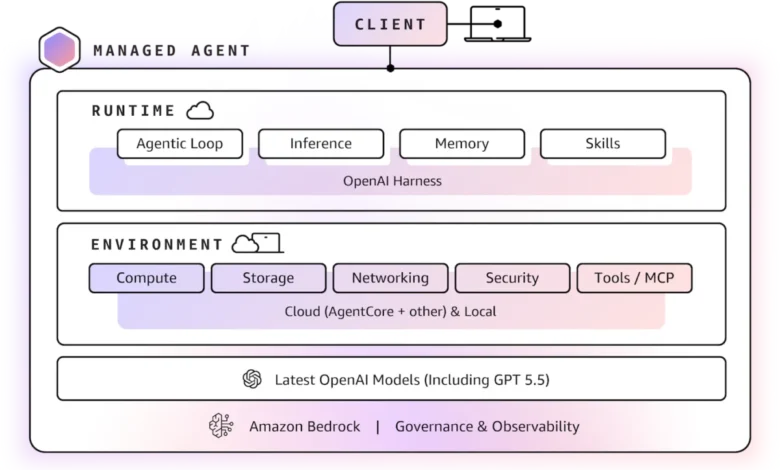
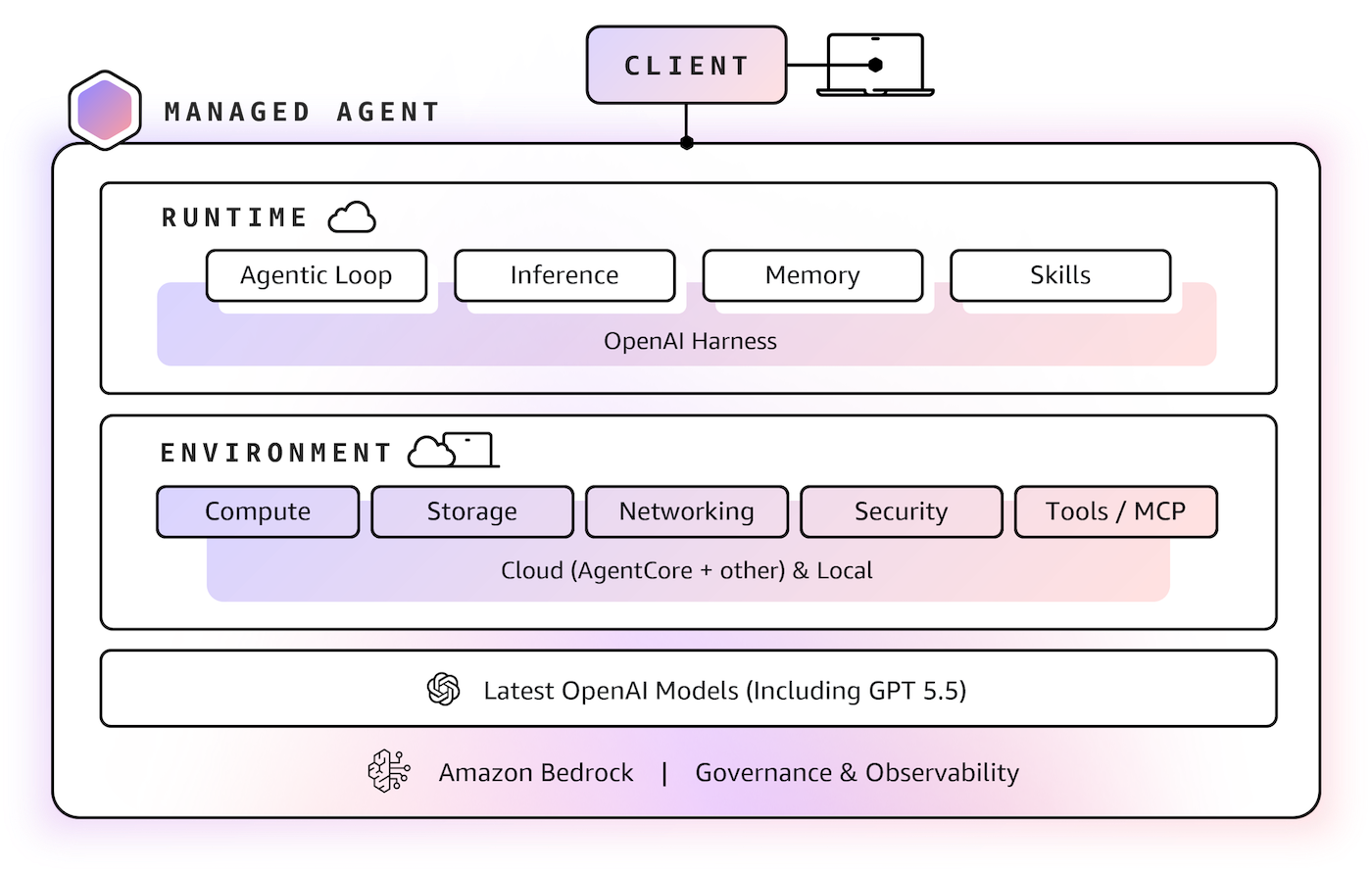
Amazon Bedrock Managed Agents powered by OpenAI are designed to alleviate these operational burdens. By engineering a customized version of the OpenAI Agents API specifically for AWS, Amazon allows developers to utilize existing AWS Identity and Access Management (IAM) controls, VPC configurations, and encryption standards. This means that an AI agent operating within the Bedrock ecosystem is treated as a first-class citizen of the AWS cloud, governed by the same organizational policies that protect traditional cloud workloads.
Architectural Flexibility and Deployment Models
A critical feature of the new offering is the flexibility provided in the execution environment. Recognizing that developers have varying requirements for latency, data control, and resource management, AWS has introduced two primary deployment paths:
- Self-Hosted Compute: This option is tailored for teams that require granular control over the underlying infrastructure. Developers can deploy the agent logic on their own machines, containerized environments, or existing AWS compute instances. This provides maximum transparency and integration with bespoke software stacks.
- Amazon Bedrock AgentCore Runtime: For organizations seeking a fully managed experience, the AgentCore Runtime offers an abstracted environment. It provides automated lifecycle management, configurable storage, and session handling within the user’s AWS account. This reduces the administrative overhead associated with scaling and maintaining the state of long-running agentic workflows.
By decoupling the model intelligence from the execution runtime, AWS allows companies to scale their agentic operations without re-architecting their backend systems, a move that is expected to accelerate the adoption of AI-driven automation in highly regulated sectors such as finance, healthcare, and logistics.
Strategic Context and Industry Implications
The partnership between AWS and OpenAI, mediated through the Bedrock platform, reflects a broader trend toward the commoditization of AI model delivery. Previously, enterprises were often forced to choose between the proprietary ecosystems of AI model providers and the cloud infrastructure providers. This siloed approach created friction in enterprise-grade production environments.
The move also serves as a defensive and offensive strategic maneuver for AWS. By embedding OpenAI’s models into Bedrock, Amazon ensures that it remains the primary platform for AI development, regardless of which model provider a customer prefers. This interoperability is likely to increase the stickiness of the AWS platform, as developers can swap models or integrate new ones without migrating their entire governance framework.
Industry analysts observe that this move provides a "best-of-both-worlds" scenario for enterprise CTOs. They gain access to the leading-edge logic of OpenAI’s newest models while retaining the auditability, uptime guarantees, and security features of the AWS Cloud. This is particularly relevant as enterprises move past the "chatbot" phase of AI and into the "agentic" phase, where AI is expected to perform complex, multi-step tasks like managing supply chains or debugging codebases.
AWS Service Lifecycle and Governance
Alongside the introduction of new AI capabilities, AWS continues to refine its service portfolio through a rigorous lifecycle management program. As of September 29, 2026, the company updated its Product Lifecycle Changes, highlighting the importance of maintaining an agile infrastructure.

The transition of services to "Maintenance" status—where they are no longer accessible to new customers—is a standard operational procedure designed to focus engineering resources on modern, higher-performance alternatives. This process is critical for preventing "technical debt" within the AWS ecosystem. For businesses, these notifications serve as a prompt to review their current architecture and ensure they are utilizing the most robust and secure versions of AWS services.
The lifecycle updates, which involve services moving into Sunset and End of Support phases, underscore the velocity of innovation at AWS. While these changes can introduce temporary operational friction, they are intended to provide customers with a clear roadmap for migrating to more efficient tools. AWS recommends that organizations monitor the "What’s New with AWS" page and consult service documentation to minimize disruptions during these transition periods.
The Path Forward for Builders
The announcement also emphasizes the importance of community and developer education. With the upcoming AWS re:Invent and various Community Day events, the company is positioning these new tools not just as products, but as components of a larger ecosystem. The AWS Builder Center, in particular, has become a hub for sharing best practices on how to integrate agents into existing CI/CD pipelines and security architectures.
Looking toward the remainder of 2026, the focus for many development teams will be on "agentic safety"—the ability to ensure that autonomous agents behave predictably when interacting with corporate data. The integration of Bedrock with existing governance controls is a major step in that direction, but organizations must still be diligent in implementing their own guardrails, including human-in-the-loop validation and fine-grained permissions.
Market Outlook
The introduction of Bedrock Managed Agents powered by OpenAI suggests that the next phase of the cloud war will be won by the provider that offers the most seamless integration of third-party AI models. By positioning Bedrock as an "agnostic" layer that brings the intelligence of any model into the rigorous security envelope of AWS, the company is effectively lowering the barrier to entry for enterprise AI adoption.
As more organizations move toward this hybrid model, we can expect to see a surge in the deployment of autonomous systems that are capable of handling sensitive data with high levels of compliance. The challenge, however, will remain in the complexity of these agentic workflows. As agents gain more autonomy, the demand for better monitoring, logging, and observability tools within the AWS console will likely increase.
In conclusion, the launch of these managed agents is a testament to the maturation of the AI industry. The shift from "testing" AI in sandboxes to "integrating" AI into core business processes requires the kind of infrastructure-level support that AWS is currently providing. For developers, the goal now is to leverage these new capabilities to build agents that are not only intelligent but also resilient, secure, and fully aligned with organizational objectives. As the ecosystem continues to evolve, developers are encouraged to engage with the AWS documentation and join the builder community to stay at the forefront of these technological advancements. The "Weekly Roundup" from AWS continues to be a vital resource for staying informed in this rapidly accelerating field, reflecting the company’s commitment to transparency and continuous improvement in the face of constant technological change.