AWS Elastic Beanstalk Launches New Cluster Mode to Revolutionize Managed Application Infrastructure

Since its inception in 2011, AWS Elastic Beanstalk has served as a foundational pillar for developers looking to offload the complexities of infrastructure management. Designed to streamline the deployment of full-stack applications across diverse runtimes—including Java, .NET, Python, Node.js, PHP, Ruby, and Go—the service has spent the last fifteen years evolving alongside the shifting demands of modern cloud-native development. Today, Amazon Web Services marks a significant milestone in this trajectory by announcing the general availability of "Cluster Mode," a sophisticated, fully managed deployment engine designed to provide enterprise-grade operational autonomy for application portfolios.
A Legacy of Operational Evolution
When Elastic Beanstalk first launched, the primary challenge for developers was the manual provisioning of virtual machines, load balancers, and scaling policies. The service solved this by abstracting those layers, allowing teams to focus on business logic rather than server maintenance. Over the subsequent decade and a half, AWS has continuously refined this model.
The transition from early, monolithic deployment models to the current, highly automated infrastructure reflects the broader shift in the technology industry toward "Day 2" operational excellence. Recent updates, such as the integration of AI-powered environment analysis—which proactively diagnoses health issues—and the introduction of native GitHub Actions for CI/CD, have set the stage for the platform’s most significant architectural shift: the move toward a container-orchestrated backbone. By adopting this new operational engine, AWS is effectively positioning Elastic Beanstalk not just as a deployment tool, but as a comprehensive, self-healing application lifecycle management service.
The Strategic Value of Cluster Mode
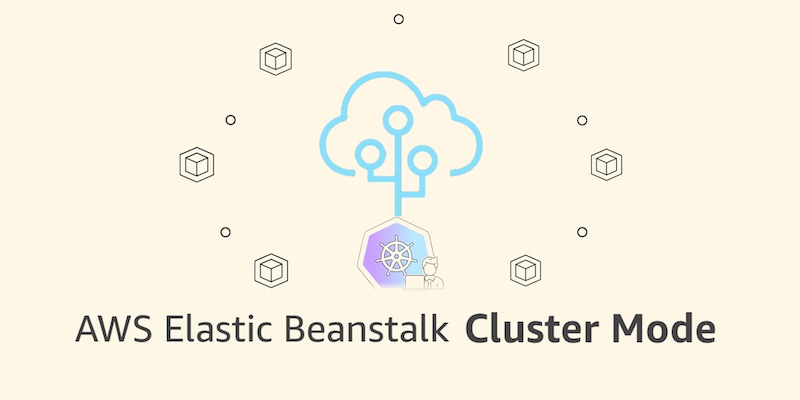
The newly introduced Cluster Mode represents a fundamental departure from the traditional one-to-one relationship between applications and their underlying EC2 instances. Instead, it leverages the robustness of Amazon Elastic Kubernetes Service (EKS) to create a shared, multi-tenant infrastructure layer.
For organizations managing large portfolios of microservices, this transition addresses several critical pain points:

- Resource Efficiency: By consolidating multiple applications onto a shared EKS-powered cluster, organizations can significantly reduce overhead costs. Idle resources that were previously siloed within individual environments are now dynamically reallocated, leading to higher density and improved cost-efficiency.
- Operational Uniformity: Regardless of the number of applications deployed—whether ten or one hundred—the operational baseline remains consistent. This "single pane of glass" approach reduces the cognitive load on DevOps teams, as they no longer need to manage disparate infrastructure configurations for every microservice.
- Enterprise-Grade Compliance: With features such as automatic secrets management via AWS Secrets Manager and default HTTPS termination through AWS Certificate Manager, Cluster Mode ensures that security best practices are baked into the infrastructure from the moment of deployment.
Implementation and Workflow
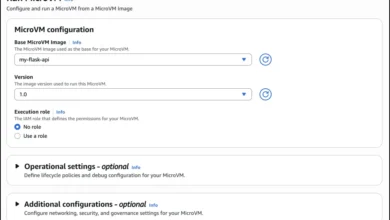
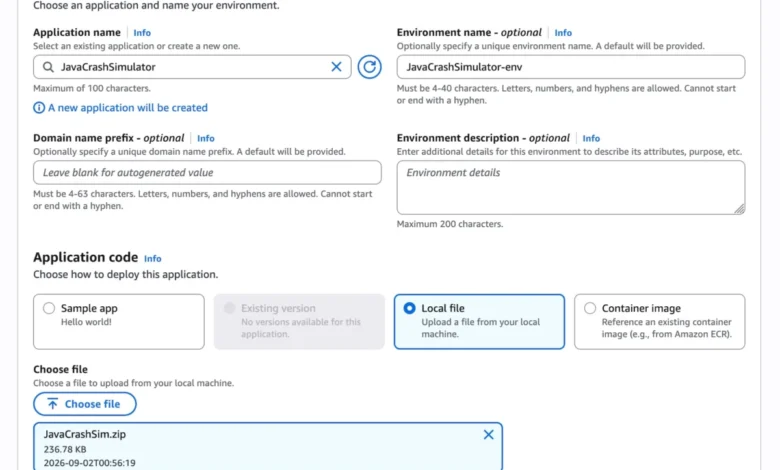
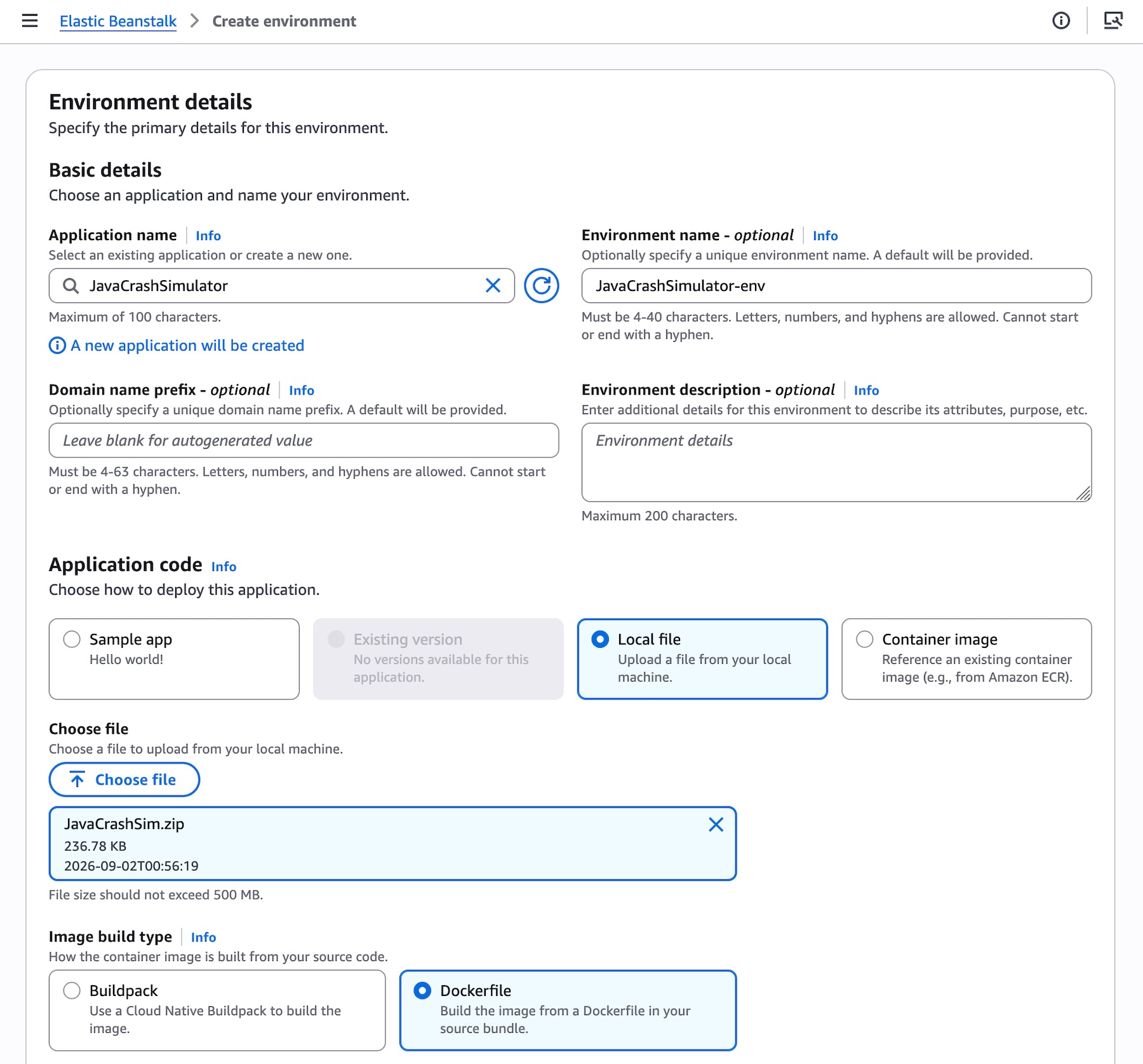
The deployment process for Cluster Mode has been designed for accessibility, catering to both legacy developers and modern SRE teams. Upon entering the Elastic Beanstalk console, users can select "Cluster" as their deployment type. Once selected, the service initiates the provisioning of an EKS cluster—a process that takes approximately ten minutes for the initial setup. Subsequent deployments are substantially faster, as the system intelligently reuses the pre-provisioned EKS environment.
The flexibility of the service extends to its input methods. Developers can provide source code directly, utilize existing Dockerfiles, or pull pre-built container images from the Amazon Elastic Container Registry (ECR). For those who prefer programmatic control, the AWS CLI and EB CLI offer comprehensive support, allowing for the definition of microservices through YAML configurations and JSON option sets. This level of granularity enables teams to specify resource limits (CPU/Memory), health check paths, and load balancer schemes with precision, ensuring that each microservice receives exactly the compute it requires.
Contextualizing the Infrastructure Shift
The integration of Amazon EKS into the Elastic Beanstalk ecosystem signals a maturation of the platform. By decoupling the application logic from the underlying cluster management, AWS is enabling a "platform engineering" experience where developers gain the power of Kubernetes without needing to become Kubernetes experts.
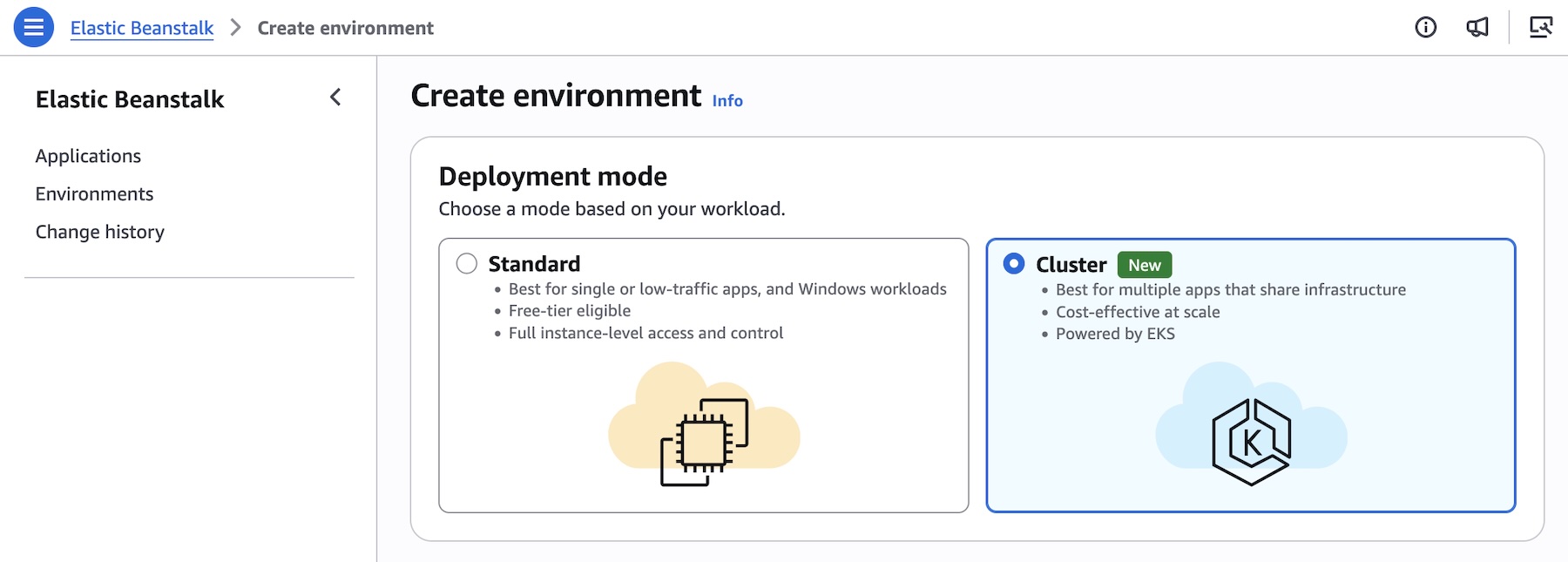
In the past, the "Standard Mode" of Elastic Beanstalk relied on Auto Scaling groups of EC2 instances. While effective for traditional web applications, this model often struggled with the rapid-fire deployment cycles required by modern microservice architectures. The new Cluster Mode provides a more resilient alternative. By utilizing EKS, the service benefits from native Kubernetes features like event-driven autoscaling, rolling updates, and traffic-splitting deployments—the latter of which allows for safer, canary-style releases with automatic rollback capabilities.
Coexistence and Migration Strategy
AWS has been careful to emphasize that the transition to Cluster Mode is not mandatory. Elastic Beanstalk Standard Mode remains a fully supported and highly effective option for many workloads, particularly those that do not require the container-orchestration capabilities provided by EKS.
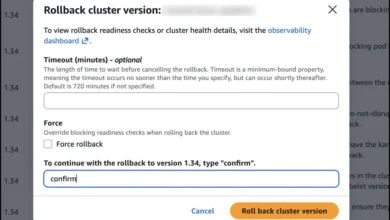
The two modes are designed to run side-by-side within the same application framework. This allows organizations to adopt a "migrate-at-your-own-pace" strategy. Validation checks are built into the console to ensure compatibility, providing a safety net for teams transitioning from legacy EC2-based deployments to the new container-based infrastructure. This backward compatibility is essential for enterprise customers who need to modernize their infrastructure without incurring unnecessary downtime or technical debt.
Economic and Operational Impact
From a financial perspective, Cluster Mode is structured to align with modern cloud-native consumption models. There is no additional "management fee" for the service itself. Instead, users pay for the underlying AWS resources, including the EKS control plane, Auto Mode compute, ECR storage, and CloudWatch monitoring. While this means the service is not eligible for the AWS Free Tier, the increased efficiency of shared resources typically results in a lower total cost of ownership (TCO) as a portfolio scales.
Industry analysts suggest that this move will likely accelerate the adoption of Kubernetes among mid-market firms that previously found the learning curve of container orchestration too steep. By wrapping EKS in the familiar, user-friendly interface of Elastic Beanstalk, AWS is effectively commoditizing complex infrastructure patterns.
Future Outlook and Support
The general availability of Cluster Mode across all AWS regions where Elastic Beanstalk is supported marks a significant expansion of the AWS "managed-everything" philosophy. For those seeking to integrate this into existing workflows, AWS has provided extensive documentation, including integration guides for the AWS MCP (Model Context Protocol) Server, which allows AI-assisted coding tools to interact directly with the Elastic Beanstalk API.
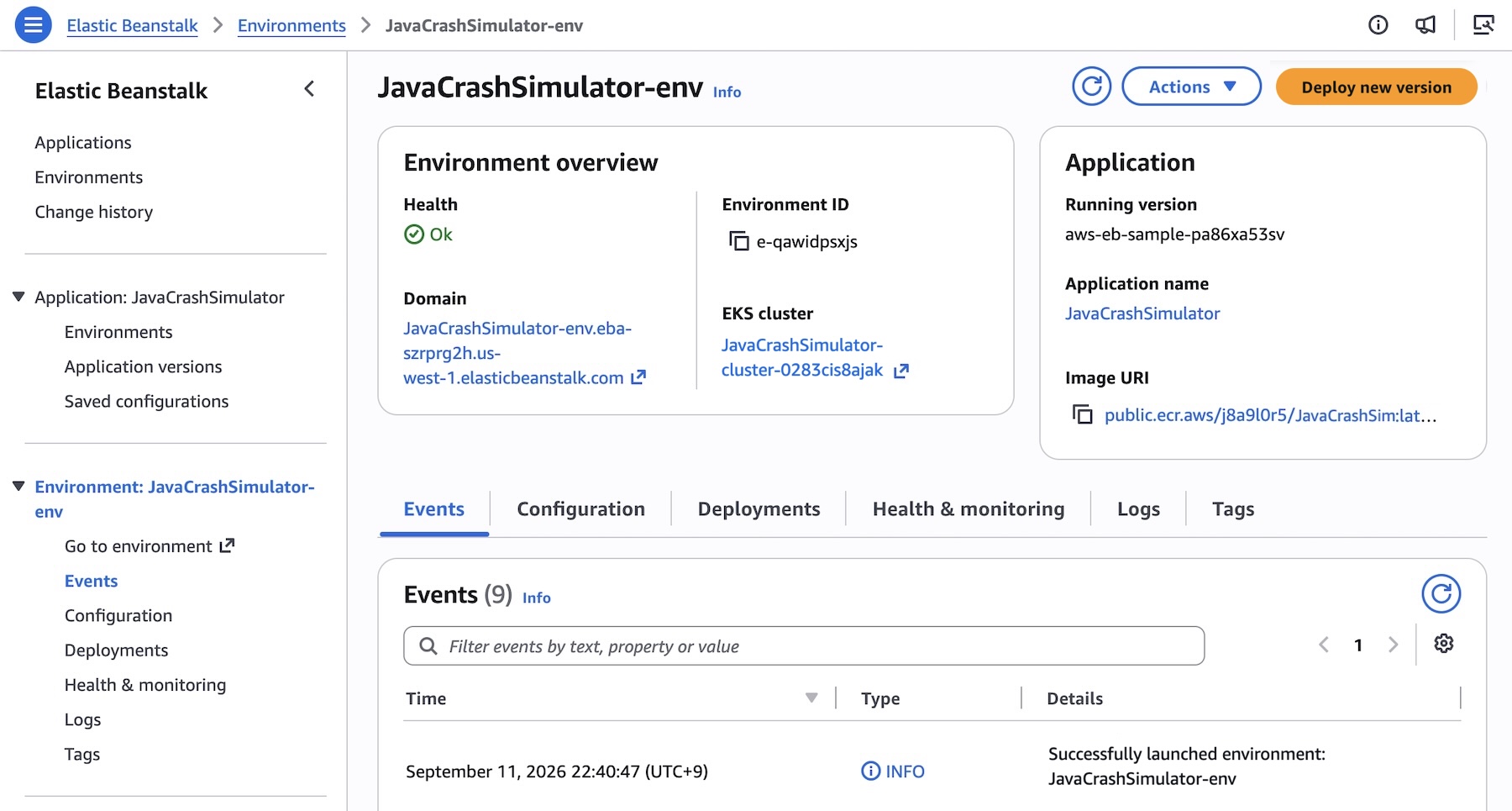
As organizations continue to grapple with the increasing complexity of distributed systems, the value of managed services that abstract away "undifferentiated heavy lifting" cannot be overstated. By evolving Elastic Beanstalk into a container-native, cluster-aware platform, AWS is providing a clear pathway for businesses to focus on innovation rather than infrastructure. The future of the platform, as indicated by current trends, will likely continue to emphasize deeper integration with AI-driven observability and automated policy enforcement, further solidifying Elastic Beanstalk’s role as a cornerstone of the modern AWS developer experience.
For developers and system architects, the directive is clear: the era of manual infrastructure management is rapidly drawing to a close, replaced by a new standard where the platform itself takes responsibility for the performance, scaling, and security of the code it hosts.