American Hostage: Jon Hamm and the Evolution of Media in a Fractured Age

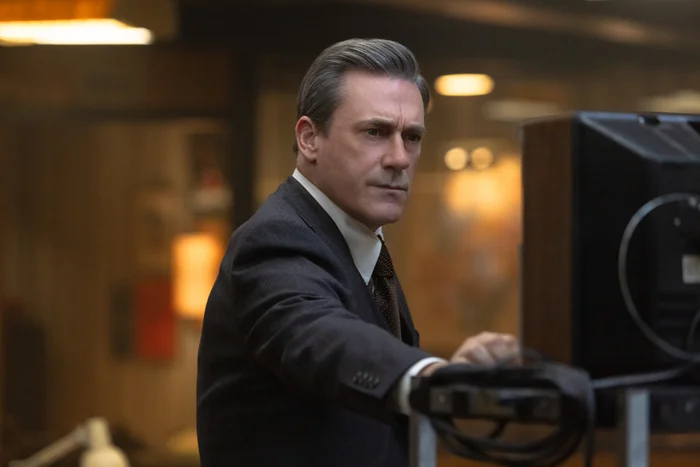
The 1977 abduction of a mortgage broker by a disgruntled borrower in Indianapolis remains a chilling case study in the intersection of criminal justice and the American media landscape. Now adapted into a psychological thriller, American Hostage, the series stars Emmy winner Jon Hamm as Fred Heckman, a revered radio broadcaster who found himself thrust into the role of involuntary negotiator during a live, high-stakes standoff. As the production prepares for its September 20 premiere on MGM+, it serves as a stark reminder of how the media’s role in public crises has shifted from a source of collective information to a catalyst for polarized consumption.
The 1977 Crisis: A Flashpoint in Broadcasting History
The events that form the narrative core of American Hostage center on Tony Kiritsis, a man whose grievances against a mortgage broker boiled over into a violent, public seizure of power. On February 8, 1977, Kiritsis held a mortgage broker hostage at gunpoint, wiring a shotgun to the victim’s neck. His primary demand was not money or a vehicle, but airtime. He insisted on speaking directly to the public through Fred Heckman, a prominent Indianapolis radio personality whose voice was a staple in local households.
This event was a seminal moment in local journalism. In the 1970s, the authority of the local broadcaster was significant, often acting as a stabilizing, trusted voice in times of civil unrest or crisis. By leveraging Heckman’s platform, Kiritsis effectively bypassed traditional law enforcement negotiation channels, forcing the media to become an active participant in the crisis rather than a neutral observer. This blurred line between reporting the news and participating in the event is a central theme of the upcoming series.
Chronology of a Nationalized Crisis
The evolution of the media’s role in the Kiritsis standoff mirrors broader trends in the American news cycle:
- February 8, 1977: Tony Kiritsis kidnaps Richard Hall, a mortgage broker, in Indianapolis, Indiana. The standoff begins, drawing immediate local attention.
- The Broadcast: Kiritsis demands to be interviewed by Fred Heckman on the radio. The resulting broadcast becomes a landmark in live crisis reporting.
- The Resolution: After hours of tense negotiation and a public ultimatum, the standoff concludes without the loss of life, though the psychological impact on the community was profound.
- 1994 (Contextual Pivot): The O.J. Simpson police chase marks the next major leap in the nationalization of local crime stories, shifting from radio-based reporting to the 24-hour televised spectacle.
- Present Day: The rise of digital news, social media, and the decline in institutional trust fundamentally alters how audiences perceive such events.
The Intersection of True Crime and Political Commentary
During an appearance at The Hollywood Reporter’s Studio at the 2024 Toronto International Film Festival (TIFF), Jon Hamm discussed the uncomfortable parallels between the 1977 standoff and the contemporary sociopolitical climate. Hamm argues that the title of the series carries a dual meaning: while the story is literally about a man held against his will, it also metaphorically addresses the "hostage" state of the American Dream for segments of the population who feel marginalized or ignored.
"I think the idea of a certain segment of the population being overlooked, or feeling under-addressed in their wants and needs and desires, is very much the bedrock of this story," Hamm noted. "Is Kiritsis a hostage-taker, or is he a hostage to his own American Dream?"
This sentiment is echoed by co-creator Shawn Ryan, who noted that the show’s focus on the burden of the journalist is particularly relevant. The protagonist, Heckman, spent decades cultivating a reputation for integrity, only to have that reputation weaponized during the standoff. He was required to be both a purveyor of truth and a life-saving negotiator, a position that would be nearly impossible to navigate in today’s fragmented media environment.
Data and the Erosion of Institutional Trust
The relevance of American Hostage is bolstered by recent shifts in public sentiment regarding the media. According to data from the Gallup organization, public trust in mass media has hit record lows in recent years. This contrasts sharply with the era depicted in the series, where regional broadcasters were often considered pillars of community truth.
The fracturing of the information ecosystem has resulted in what Shawn Ryan describes as an "à la carte" news experience. "Back then, I’m old enough to remember what it was like for journalists to be trusted and for the news to be something that was sacred," Ryan stated. Today, audiences are more likely to select news outlets that confirm their pre-existing biases, a phenomenon that has fundamentally altered the role of the reporter.
In 1977, the nationalization of a local story was a rare, shocking event. Today, the 24-hour news cycle ensures that every incident—from a local police chase to a violent crime—is instantaneously available for global consumption. This constant availability has, ironically, led to a decrease in the credibility of the information provided, as the speed of delivery is often prioritized over the depth of investigation.
Analytical Perspectives: The Salaciousness of Tragedy
Beyond the historical narrative, American Hostage acts as a critique of how modern society consumes tragedy. Jon Hamm points to the O.J. Simpson case as the tipping point where the "local" car chase became a "national" spectator sport. "If you go back in time, the Kiritsis case is one of the first times we see a local story explode nationally," Hamm said. "It was the beginning of where we are now. Everything is maximized for the salaciousness of its content."
This evolution has deep implications for the ethical responsibility of news organizations. When the media becomes an active participant in a hostage situation—as Heckman was forced to be—the goal of reporting (informing the public) conflicts with the goal of crisis management (saving lives). In the late 70s, this tension was largely managed through professional ethics and individual discretion. In the current era, the pressure to maintain ratings and engagement often overrides these traditional ethical constraints.
Production and Creative Vision
The series, which originated as a narrative podcast before its adaptation for MGM+, was crafted to maintain the claustrophobic tension of the original radio broadcast. By focusing on the interplay between the hostage-taker and the broadcaster, the show strips away the artifice of modern television production, forcing the viewer to confront the raw, unedited reality of the situation.
Eileen Myers, co-creator alongside Ryan, emphasized that the series is not a glorification of the event, but a psychological exploration of the pressures placed upon the individual. For Hamm, portraying a man who was a fixture of the Indianapolis airwaves required a delicate balance of professional distance and human empathy.
"The journalistic aspect to the show is very pertinent today," Ryan concluded. "We are asking the audience to look back at a time when we still believed in a common reality, and to compare that to the world we occupy now."
As audiences prepare for the premiere, American Hostage stands as a mirror to contemporary society. By revisiting a 50-year-old crime, it forces a re-evaluation of the media’s power, the burden of truth, and the dangerous consequences of a society that has lost its shared sense of reality. The show does not offer easy answers, but it provides a necessary platform to examine how the American public became, in many ways, hostage to its own information consumption.