AWS Elastic Beanstalk Launches New Fully-Managed Cluster Mode to Modernize Application Orchestration

Since its inception in 2011, AWS Elastic Beanstalk has served as a cornerstone of the Amazon Web Services ecosystem, abstracting the complexities of infrastructure management for developers working in Java, .NET, Python, Node.js, PHP, Ruby, and Go. Over the past fifteen years, the service has evolved from a simple deployment utility into a comprehensive application management platform. Today, AWS marks a significant milestone in this evolution by announcing the general availability of a new "Cluster Mode," a fully-managed environment designed to consolidate infrastructure management for high-density application portfolios.
A Legacy of Abstraction and Operational Growth
When Elastic Beanstalk was first introduced, the primary objective was to minimize the "undifferentiated heavy lifting" associated with provisioning, configuring, and scaling cloud resources. By allowing developers to upload code while the service handled the underlying EC2 instances, load balancers, and scaling groups, AWS effectively democratized access to scalable web architecture.
However, the modern application landscape has shifted toward containerization and microservices, necessitating a more robust orchestration layer. Over the last several years, AWS has incrementally updated the operational engine of Elastic Beanstalk to meet these modern demands. Notable upgrades include the integration of AI-powered environment analysis for proactive health diagnosis, the deployment of official GitHub Actions for streamlined CI/CD pipelines, and the implementation of OpenTelemetry-based observability. These enhancements reflect a strategic shift: AWS is moving away from basic environment hosting toward a model of continuous, automated operational responsibility for the entire lifecycle of a production workload.
The Strategic Shift to Cluster Mode
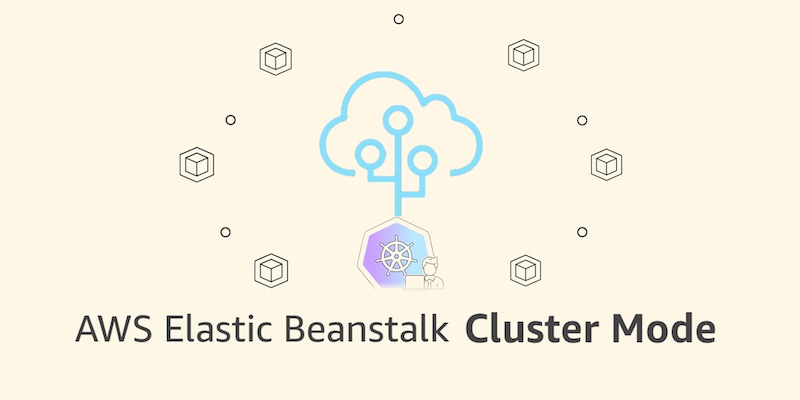
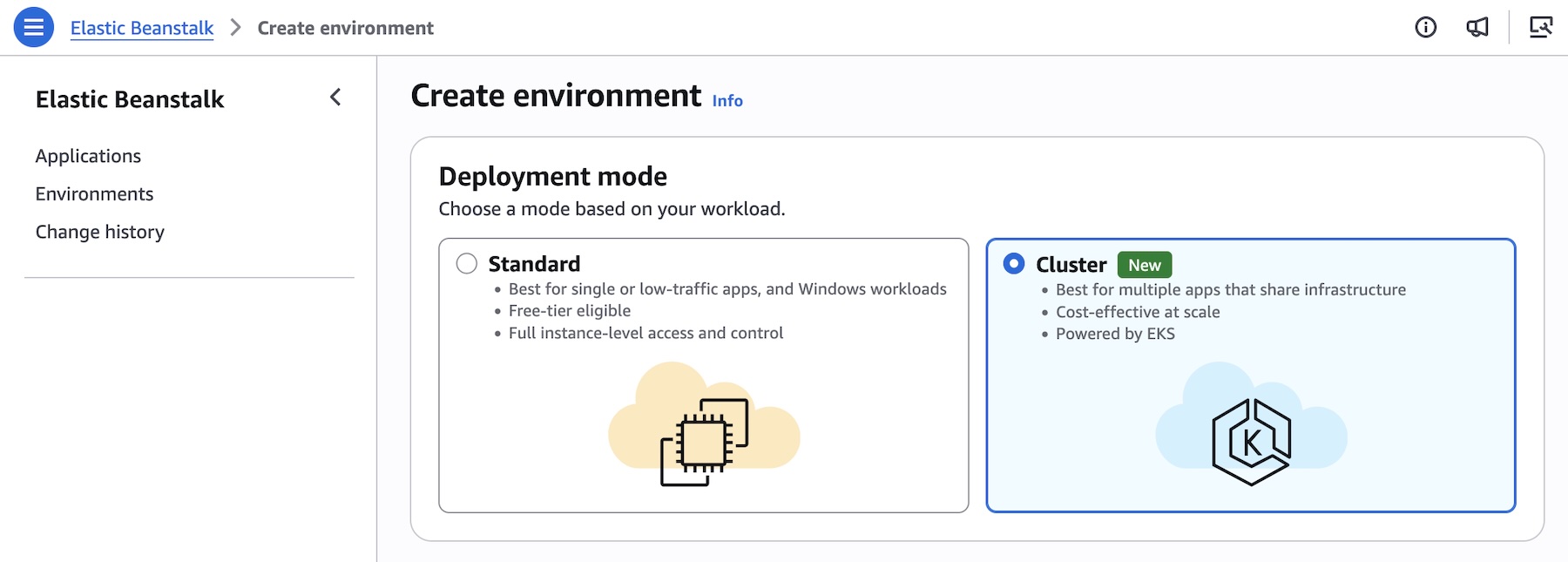
The introduction of Cluster Mode represents the next chapter in this journey. While the traditional Elastic Beanstalk experience—now referred to as "Standard Mode"—operates applications in isolation, Cluster Mode leverages the power of Amazon Elastic Kubernetes Service (Amazon EKS) to provide a shared, centralized infrastructure baseline.
For enterprises managing a portfolio of applications, the primary challenge has historically been operational sprawl. Managing dozens or hundreds of individual environments often leads to configuration drift, security gaps, and inefficient resource utilization. Cluster Mode addresses this by enabling multiple applications to share a single, managed EKS cluster. By decoupling the application logic from the underlying orchestration, organizations can achieve a higher density of workloads, significantly reducing per-application overhead costs as the portfolio scales.
Chronology of the Elastic Beanstalk Evolution
To understand the magnitude of this release, it is necessary to view it within the broader timeline of AWS infrastructure services:
- 2011: Launch of AWS Elastic Beanstalk, providing the first streamlined interface for developers to deploy applications without managing underlying server configurations.
- 2016–2020: AWS expands support for Docker and containerized deployments, acknowledging the industry-wide shift toward portable, immutable infrastructure.
- 2024: AWS begins integrating native AI-driven diagnostic tools, enabling the platform to automatically identify and rectify common performance bottlenecks.
- February 2026: Release of official GitHub Actions, further integrating Beanstalk into modern DevOps workflows.
- September 2026: General Availability of Cluster Mode, transitioning the backend architecture to an EKS-powered orchestration layer.
Technical Implications and Operational Efficiencies
Cluster Mode is engineered to provide a consistent operational experience regardless of the scale of the deployment. By utilizing EKS, the service inherits advanced capabilities, including sophisticated traffic-splitting deployments, automatic rollbacks, and secrets management via AWS Secrets Manager.

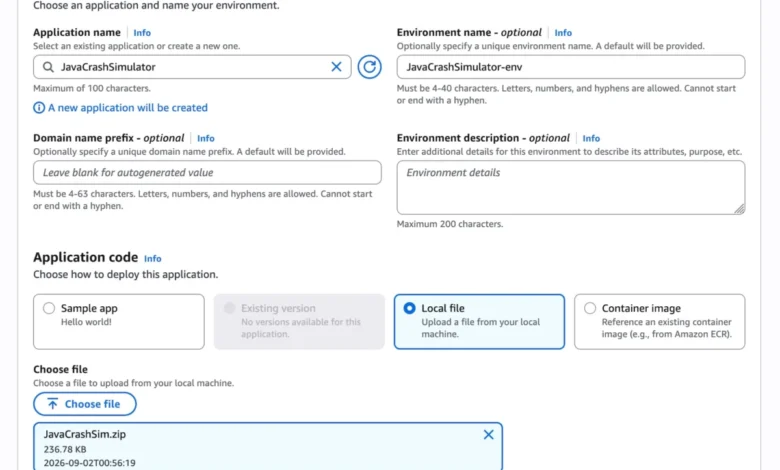
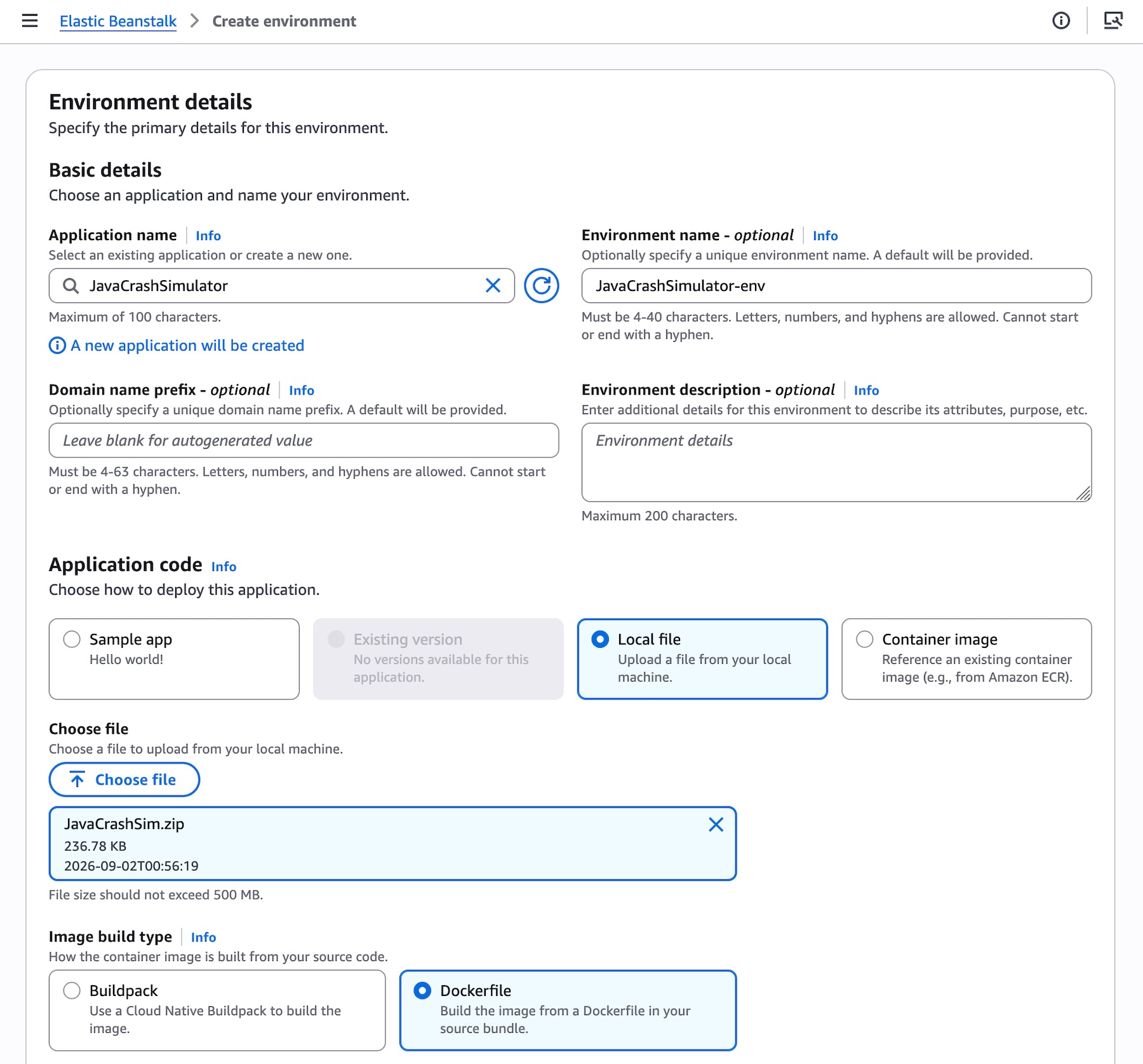
The integration with EKS also facilitates a more robust security posture. By defaulting to HTTPS through AWS Certificate Manager and enforcing structured role-based access control, Cluster Mode aligns with modern "security-by-default" industry standards. For developers, the transition is intended to be seamless; whether they are providing source code, a Dockerfile, or a pre-built container image, the service abstracts the Kubernetes-specific configurations that often intimidate those focused purely on application logic.
Data-Driven Scaling and Cost Management
One of the most compelling aspects of the new Cluster Mode is its economic model. In a traditional setup, the overhead costs associated with maintaining distinct environments—such as individual control planes and load balancers—can aggregate quickly. By pooling resources within an EKS-managed cluster, organizations can realize significant economies of scale.
AWS has confirmed that there is no additional "premium" fee for using the Elastic Beanstalk Cluster Mode service itself. Instead, users pay for the underlying infrastructure consumption. This includes the standard EKS control plane fee, EKS Auto Mode compute resources, Amazon ECR storage, and Amazon CloudWatch monitoring. AWS estimates that the EKS Auto Mode compute carries an approximately 12% premium over standard EC2 costs, a trade-off that many enterprises are expected to accept in exchange for the drastically reduced operational burden.
Implementation and Migration Strategies
For organizations currently utilizing the Standard Mode of Elastic Beanstalk, the path forward is one of flexibility. AWS has confirmed that Standard and Cluster modes are designed to run side-by-side within the same application. This allows engineering teams to adopt a phased migration strategy, moving microservices into the new Cluster Mode environment incrementally.
Compatibility checks are performed automatically before any migration is initiated, ensuring that environment requirements align with the capabilities of the new infrastructure. This approach minimizes the risk of service disruption and allows teams to test the performance of their applications in an EKS-based environment without abandoning their existing stable infrastructure.
Industry Impact and Future Outlook
The launch of Cluster Mode is likely to have a ripple effect on how mid-to-large-sized enterprises manage their application stacks. By abstracting the complexity of EKS, AWS is positioning Elastic Beanstalk as a viable "middle ground" between serverless platforms like AWS Lambda and fully-managed Kubernetes orchestration.
Industry analysts suggest that this move is a direct response to the increasing complexity of managing containerized environments at scale. By providing a "managed-managed" service, AWS is effectively reducing the barriers to entry for companies that need the power of Kubernetes but lack the specialized headcount to maintain a complex, custom-built K8s implementation.
As the cloud landscape continues to mature, the focus is shifting from "how to build" to "how to operate." The introduction of Cluster Mode is a clear signal that AWS intends to continue taking on the operational burden of the infrastructure layer, allowing developers to remain focused on the value-add activities of coding and product innovation.
Official Guidance and Resources
AWS has made comprehensive documentation available for developers looking to transition to the new mode. The documentation covers API-driven deployments via the AWS CLI, SDK integration, and best practices for configuring microservices within a shared cluster.
The service is currently available in all AWS Regions that support Elastic Beanstalk. Organizations are encouraged to review the AWS Capabilities by Region map to confirm availability in their specific geographic deployments. Furthermore, AWS is soliciting feedback through the AWS re:Post community forum, signaling a commitment to iterative improvement as this new architecture is adopted by the broader developer community.
In summary, the transition to Cluster Mode signifies that AWS Elastic Beanstalk has successfully transitioned from a utility service to an enterprise-grade orchestration platform. By embracing the power of Amazon EKS while maintaining the simplicity of the Beanstalk interface, AWS has provided a compelling path forward for developers and operators alike, promising a more efficient, secure, and scalable future for cloud-native application management.
Related posts: