NVIDIA and Microsoft Accelerate the Local AI Revolution with New RTX Spark PCs and Streamlined Agentic Frameworks


The landscape of personal computing is undergoing a fundamental shift as artificial intelligence moves from remote data centers directly to the desktop. At IFA 2026, held in Berlin, NVIDIA and Microsoft unveiled a comprehensive suite of hardware and software innovations designed to bring high-performance, local agentic AI to the mainstream market. The centerpiece of this announcement is the upcoming launch of NVIDIA RTX Spark Windows PCs, scheduled for release in October 2026, which promises to transform standard workstations into potent hubs for local, secure, and private AI computation.
The initiative addresses a critical bottleneck in the current AI ecosystem: the complexity of deploying and maintaining local agents. Previously, running sophisticated models required significant technical proficiency, involving the manual selection of quantization settings, the configuration of inference servers, and the maintenance of complex software dependencies. NVIDIA’s new "one-click" setup experience, integrated into major agent applications, effectively removes these barriers, allowing users to harness the power of local hardware with minimal intervention.
The Evolution of Local Agent Deployment
The democratization of local AI has been a central focus for NVIDIA throughout the summer of 2026. By building on the foundation of llama.cpp and incorporating proprietary NVIDIA inference optimizations, developers are creating a more cohesive ecosystem. Three primary agent applications—Perplexity’s Portable Computer, the Hermes Agent by Nous Research, and the open-source project OpenClaw—are leading this charge.
Perplexity’s Portable Computer, which recently debuted for Linux-based systems like the NVIDIA DGX Spark, is now expanding to Windows. This application allows users to execute complex workflows locally, completely bypassing the need for cloud-based credits for the majority of tasks. When high-level reasoning is required, the system allows for the selective escalation of data to cloud-based frontier models, provided the user grants explicit permission. This "local-first" architecture is designed to satisfy the growing demand for data privacy, ensuring that sensitive information remains on the user’s device.
Similarly, the Hermes Agent has been optimized for rapid deployment. By automating the detection of local NVIDIA GPUs and pre-configuring the necessary environment variables, Hermes provides a seamless bridge between user intent and model execution. As users interact with the agent, it develops a historical context and builds reusable skills, essentially evolving into a personalized digital assistant that improves in capability the longer it is utilized.
OpenClaw, recognized as one of the largest open-source AI projects with over 380,000 stars on GitHub, has also been streamlined for the Windows environment. The partnership between NVIDIA, Microsoft, and the OpenClaw community has resulted in a dedicated Windows app that simplifies the onboarding process, specifically targeting systems equipped with at least 24GB of VRAM to ensure optimal performance.
Performance Benchmarks and Inference Acceleration
The viability of local agents relies heavily on low-latency inference. To maintain responsiveness, NVIDIA has doubled down on its collaborations with the vLLM and llama.cpp open-source communities. Recent technical refinements have yielded significant performance gains. On the GeForce RTX 5090, kernel optimizations have resulted in a 1.9x increase in throughput for llama.cpp. Meanwhile, vLLM has seen a 1.2x performance boost on the RTX PRO 6000 Blackwell Workstation Edition and an impressive 1.4x improvement on multi-node DGX Spark clusters.
These gains are largely attributed to the implementation of new XQA attention kernels within the FlashInfer framework and backend optimizations that reduce prefill times. By accelerating these inferencing backends, NVIDIA is ensuring that popular applications like LM Studio and Ollama can provide near-instantaneous responses, even when running large-parameter models locally.
NVIDIA PAIR: Distributed Compute for the Modern Household
One of the most innovative announcements at IFA 2026 is the introduction of NVIDIA Personal AI Router (PAIR). Recognizing that modern households often contain multiple computing devices with significant idle capacity, NVIDIA has developed PAIR as an open-source solution to unify these resources.
PAIR functions as an intelligent load balancer. When a user initiates an agentic workflow—such as a complex research task requiring multiple sub-agents—PAIR automatically identifies compatible PCs across the local network and distributes the computational burden. This prevents any single GPU from becoming a bottleneck and allows for parallel task execution. The software is compatible with a broad range of hardware, including GeForce RTX 20 Series GPUs and newer, as well as the latest Apple M4 silicon, making it a highly accessible tool for both enthusiasts and professional developers.
Creative AI: Cyberlink and the RTX Spark Integration
Beyond productivity, the integration of AI is transforming professional creative software. CyberLink’s new "AI PC Mode" for PhotoDirector 365 represents a significant shift in how diffusion models are deployed. Instead of relying on web-based interfaces, PhotoDirector integrates these models directly into the software suite, utilizing TensorRT-RTX and FP8 quantization to facilitate high-speed, local image generation and manipulation.
This allows artists to perform generative object removal, background replacement, and portrait refinement without the "token anxiety" associated with cloud-based subscription models. By keeping the processing local, CyberLink ensures that creative work remains proprietary and private, a major selling point for professional studios and independent creators alike.
The Rise of the RTX Spark Platform
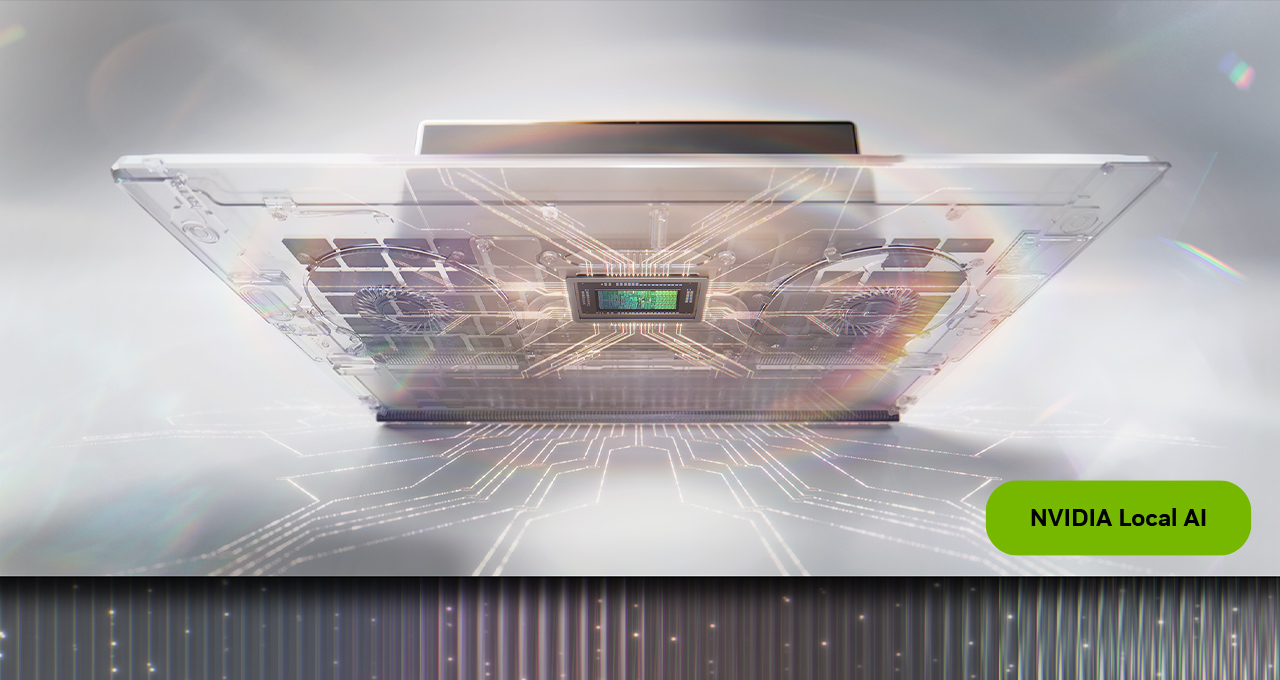
The NVIDIA RTX Spark Windows PC, which will begin shipping in October 2026, is engineered to serve as the flagship for this new era of local AI. The hardware architecture represents a significant departure from traditional PC design. Powered by a 1 Petaflop RTX Blackwell GPU, a 20-core Grace CPU, and up to 128GB of unified memory, these machines are built to sustain the "always-on" nature of modern AI agents.
Major OEMs, including Acer and Lenovo, are already signaling strong support for the platform. Acer’s compact desktop concept and Lenovo’s new Yoga Pro 9n series highlight the versatility of the architecture, which manages to deliver high performance in both mobile and desktop form factors. The inclusion of the new Windows Agent framework within these systems allows agents to run securely in the background, governed by the operating system’s security protocols.
Industry Implications and Future Outlook
The broader impact of these developments cannot be overstated. By moving AI from the cloud to the edge, NVIDIA and its partners are effectively decentralizing the intelligence infrastructure. This shift carries profound implications for data sovereignty, latency, and the cost of AI deployment.
Analysts suggest that the "Local-First" approach will be the catalyst for the next wave of enterprise AI adoption. For corporations that have been hesitant to embrace AI due to data privacy concerns, the ability to run proprietary, fine-tuned models on local, hardened hardware provides a viable pathway to compliance and security.
Furthermore, the integration of gaming hardware with enterprise-grade agentic capabilities positions NVIDIA as a gatekeeper of the AI transition. With titles from developers like Electronic Arts, Embark, and Ubisoft already announcing support for the RTX Spark platform, the convergence of gaming and professional AI work is accelerating.
As the industry looks toward the remainder of 2026, the focus will undoubtedly be on the adoption rates of the RTX Spark platform and the stability of the new agentic frameworks. The recent release of MLPerf Client v2.0, which includes specific benchmarks for agentic AI and image generation, underscores the industry’s commitment to standardizing performance metrics.
In conclusion, the announcements from IFA 2026 represent a deliberate, synchronized effort to move past the experimental phase of local AI. By providing the hardware foundations, the software middleware, and the open-source tools required for seamless operation, NVIDIA and Microsoft are effectively standardizing the next generation of personal computing. Whether for creative professionals, software developers, or casual users, the promise of a powerful, private, and always-available AI agent is rapidly becoming a standard feature of the Windows ecosystem. As these technologies reach the consumer market in October, the shift toward a local-first AI paradigm will likely redefine the expectations of what a personal computer can achieve.
Related posts: