Amazon EC2 R9g and R9gd instances powered by AWS Graviton5 processors are now generally available to provide enhanced memory-optimized performance

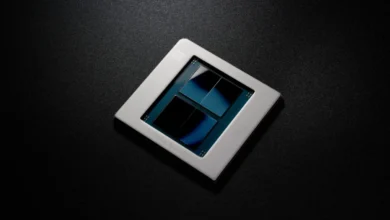
The cloud computing landscape witnessed a significant evolution today as Amazon Web Services (AWS) officially announced the general availability of its new Amazon EC2 R9g and R9gd instances. These instances represent the latest iteration of the company’s internal hardware development efforts, featuring the fifth-generation Graviton5 processor. Designed specifically for memory-intensive workloads, the R9g series aims to address the growing demand for higher compute efficiency, reduced energy consumption, and superior price-performance ratios for enterprises managing large-scale database and analytics operations.
The Evolution of Graviton: A Chronological Overview
To understand the significance of the R9g launch, one must look at the trajectory of the AWS Graviton program. AWS first introduced its custom Arm-based processors in 2018 with the original Graviton chip, signaling a departure from the traditional reliance on x86-based CPUs from Intel and AMD.
The Graviton2, released in 2020, marked a turning point where Arm-based instances became a viable, high-performance alternative for general-purpose workloads. By the time Graviton3 arrived in 2021, AWS had proven that its custom silicon could deliver significant performance gains over comparable x86 instances. The Graviton4, introduced in late 2023, further solidified this lead by incorporating advanced cache architectures and high-speed memory interfaces. The launch of the Graviton5-powered R9g instances represents a 25% compute performance leap over the R8g series, continuing a cycle of innovation that has seen AWS consistently refresh its silicon every 12 to 18 months.
Technical Specifications and Performance Metrics
The R9g instances are engineered as memory-optimized units, making them the primary choice for applications where data access speed is the primary bottleneck. The core architecture of the Graviton5 processor includes a larger L3 cache, which directly correlates to faster processing times for databases and in-memory caching systems such as Redis, Valkey, and Memcached.
Key technical improvements in the R9g series include:
- Compute Efficiency: A 25% increase in compute performance per vCPU compared to the predecessor R8g instances.
- Memory Throughput: Faster memory bandwidth that facilitates lower latency for high-concurrency workloads.
- Networking and EBS Bandwidth: Higher throughput ceilings for Amazon Elastic Block Store (EBS) and Amazon Virtual Private Cloud (VPC) networking, allowing for more data to be processed concurrently.
- Instance Bandwidth Configuration (IBC): A flexible feature that allows users to reallocate 25% of their bandwidth between storage and networking, providing fine-grained control for specific workload needs.
The R9gd variant distinguishes itself through the inclusion of local NVMe-based SSD storage. This is a critical addition for scenarios requiring high-speed scratch space, such as distributed real-time big data analytics or temporary caching layers where the latency of network-attached storage would be suboptimal.
Security at the Core: The Nitro Isolation Engine
A central pillar of the R9g launch is the integration of the AWS Nitro System, specifically the enhanced Nitro Isolation Engine (NIE). In an era where multi-tenant cloud security is paramount, the NIE provides a hardware-level assurance of isolation between virtual machines.
Unlike traditional virtualization, which relies heavily on software-defined hypervisors that can be susceptible to side-channel attacks, the Nitro Isolation Engine uses formal verification. This mathematical technique proves that the hardware behaves exactly as intended, ensuring that memory, CPU registers, and I/O devices remain strictly segregated. By moving this logic to dedicated, formally verified silicon, AWS is setting a new industry standard for cloud infrastructure security, effectively creating a "mathematically proven" boundary between instances.

Industry Implications and Workload Suitability
The deployment of Graviton5 is expected to have a ripple effect across the DevOps and cloud-native software development sectors. Because R9g instances are compatible with the Arm64 architecture, most applications written in languages such as Java, Rust, Go, Python, and Node.js require little to no code modification for migration.
For containerized environments, the shift to Graviton5 is particularly impactful. Kubernetes-based clusters running on Amazon EKS or ECS can benefit from the increased density of the R9g instances, allowing organizations to run more containers per instance while maintaining the same performance metrics. This increased density often leads to lower total cost of ownership (TCO) for large-scale microservices architectures.
Furthermore, the introduction of the Graviton Savings Dashboard and the AWS Transform tool demonstrates that AWS is focused on reducing the friction of migration. By automating code transformations—specifically for legacy Java applications transitioning from x86 to Arm—the company is actively removing the technical barriers that often prevent enterprises from switching to more energy-efficient hardware.
Economic and Environmental Considerations
From a financial perspective, the R9g series is positioned to provide a compelling price-performance value proposition. AWS has made these instances available across a wide range of purchasing options, including Savings Plans, On-Demand, and Spot Instances. The energy efficiency of the Graviton5 processor also aligns with the broader corporate sustainability goals of AWS customers. As organizations face increasing pressure to report on their Scope 3 emissions, the ability to achieve higher compute throughput while consuming less electricity per unit of work makes the R9g instances an attractive choice for ESG-conscious IT departments.
Regional Availability and Deployment
As of the general availability date, the R9g and R9gd instances are deployed across key AWS regions, including US East (N. Virginia, Ohio), US West (Oregon), and Europe (Frankfurt). The initial rollout covers 11 distinct sizes, ranging from the lightweight r9g.medium for small-scale testing to the r9g.metal-48xl for high-performance computing (HPC) and massive, monolithic database clusters.
Future-Proofing the Data Center
The release of these instances signifies that AWS is moving away from a "one-size-fits-all" approach to server hardware. Instead, the company is leaning into specialized silicon that caters to the specific architectural requirements of modern, memory-intensive software.
For industry observers, the R9g launch is a testament to the maturation of the Arm architecture in the data center. What was once considered a niche or experimental technology is now the backbone of the world’s largest cloud provider. By formalizing the verification of its Nitro hypervisor and doubling down on the memory-optimized R-series, AWS is signaling to the market that it intends to lead the next decade of cloud computing not just through scale, but through the granular optimization of the hardware-software interface.
For developers and systems architects, the path forward is clear: the transition to Graviton5 is a proactive measure to improve performance and security while simultaneously optimizing cloud expenditure. As the industry shifts toward more complex, data-heavy applications, the R9g instances provide the necessary headroom to scale efficiently without the traditional trade-offs associated with legacy hardware architectures. The integration of the AWS MCP Server and the re:Post community channels further ensures that users have the necessary support infrastructure to navigate this transition effectively.