The Rise of Together Tech and the Multi-Billion Dollar AI Arms Race: A Deep Dive into Silicon Valley’s Divergent Future

The global technology sector is currently witnessing a profound ideological and financial schism, as massive investments in artificial intelligence continue to shatter records while a burgeoning counter-movement, dubbed "together tech," gains significant momentum among founders and consumers alike. As the Silicon Valley fundraising machine funnels unprecedented capital into large language models and autonomous systems, a distinct class of entrepreneurs is pivoting toward experiences that prioritize physical presence, tactile hardware, and human-centric interaction. This divergence marks a pivotal moment in the evolution of the digital economy, suggesting that the future of innovation may not be a monolithic march toward automation, but rather a dual-track development of hyper-intelligent systems and deeply human social infrastructures.
The AI Financial Behemoth: Alphabet and the $85 Billion Milestone
At the center of the current investment frenzy is Alphabet’s record-breaking $85 billion raise for its dedicated artificial intelligence business. This capital infusion represents one of the largest single-entity funding rounds in the history of the technology sector, signaling a "helluva good signal" for the broader AI ecosystem. The scale of this investment underscores the immense resource requirements necessary to maintain a competitive edge in the AI race. Developing, training, and deploying frontier models like Gemini requires not only elite engineering talent but also massive expenditures on specialized hardware—specifically NVIDIA’s H100 and Blackwell GPUs—and the construction of hyper-scale data centers.
The $85 billion raise is not merely about staying relevant; it is a defensive and offensive maneuver designed to secure Alphabet’s dominance in the search and cloud computing markets. As competitors like OpenAI and Microsoft continue to integrate AI into every facet of the productivity suite, Alphabet’s massive war chest ensures it has the liquidity to out-scale and out-compute its rivals. However, this level of spending has raised questions among analysts regarding the eventual return on investment. While the "AI fundraising machine" remains robust, the pressure to monetize these multi-billion dollar models is intensifying.
Anthropic’s Strategic Pivot: The Confidential IPO Filing
Parallel to Alphabet’s massive raise is the news of Anthropic’s confidential IPO filing. Anthropic, founded by former OpenAI executives and backed by substantial investments from Amazon and Google, has long positioned itself as the "safety-first" alternative in the generative AI space. By filing for an initial public offering confidentially, the company can test market appetites and share sensitive financial data with the U.S. Securities and Exchange Commission (SEC) without immediately exposing its internal metrics to the public or competitors.
The timing of Anthropic’s filing is significant. It occurs against a backdrop where the market is beginning to wonder if the lion’s share of AI capital is simply flowing back to the "big guys"—the cloud providers and chip manufacturers. Anthropic’s move to go public suggests a desire to establish a permanent, independent capital structure that allows it to compete with the likes of Meta and OpenAI without being entirely beholden to the whims of its primary cloud-provider investors. If successful, the Anthropic IPO could set a valuation benchmark for the next generation of AI "decacorns."
The Counter-Movement: "Together Tech" and the Return to Tangibility
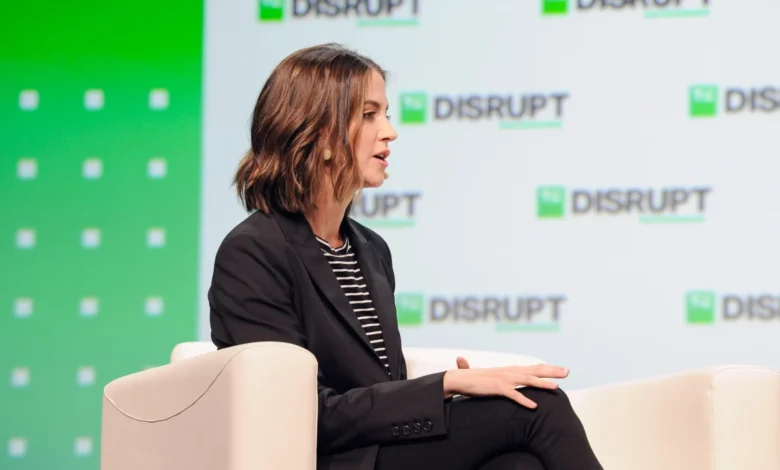
While the headlines are dominated by the sheer scale of AI capital, a quieter but equally significant trend is emerging: "together tech." This movement is characterized by a rejection of the isolating nature of screen-based social media and the perceived "inhumanity" of algorithmic interaction. Leading this charge is Brynn Putnam, the founder of Mirror (the fitness tech startup acquired by Lululemon for $500 million in 2020).
Putnam’s new venture, Board, recently raised $20 million to develop a platform focused on bringing people together through in-person games and social experiences. Unlike the digital-first gaming industry, Board leverages technology to facilitate physical gatherings, emphasizing the "human" element of play. The startup has already reported the sale of thousands of units, indicating a strong market demand for products that encourage offline social cohesion. This "together tech" wave is a direct response to the "loneliness epidemic" and the burnout associated with the hyper-digitization of the COVID-19 era.
The Cyberdeck Phenomenon: DIY Hardware and "Touching Grass"
Further evidence of this shift can be found in the viral success of "Cyberdecks." These are whimsical, DIY computers crafted by enthusiasts that often feature retro aesthetics, mechanical keyboards, and non-standard displays. Unlike the sleek, sterilized design language of modern MacBooks or tablets, Cyberdecks are intentionally clunky, tactile, and personal.
The trend, which has gained significant traction on platforms like TikTok and YouTube, encourages users to "touch grass"—a colloquialism for disconnecting from the internet and interacting with the physical world. These creators are not necessarily anti-technology; rather, they are "tech-critical," choosing to build devices that prioritize the joy of creation and the physical experience of computing over the efficiency of the "black box" smartphone. This movement suggests that for a growing segment of the population, the value of technology is increasingly tied to its ability to feel "real" and "human."
Privacy and the "No-AI" Niche: DuckDuckGo’s Market Strategy
The backlash against the AI-heavy status quo is also manifesting in the software and search sectors. DuckDuckGo, the privacy-focused search engine, has recently made its "no-AI" search engine easier to access, catering to a demographic that finds AI-generated summaries intrusive or unreliable. As Google and Bing integrate AI-generated "Overviews" that often hallucinate or push organic search results further down the page, DuckDuckGo has seen a boom in traffic from users seeking a traditional, predictable search experience.
This "AI-free" crowd represents a lucrative market niche. These are users who prioritize data privacy and human-curated information over automated synthesis. The growth of DuckDuckGo suggests that the "AI-everything" approach may be alienating a significant portion of the user base, creating an opening for platforms that market themselves as "human-powered" or "AI-neutral."
Expert Analysis: Where the Capital is Flowing
On the latest episode of TechCrunch’s Equity podcast, hosts Kirsten Korosec, Anthony Ha, and Sean O’Kane dissected these diverging trends. A central question raised during the discussion was whether the massive influx of capital into AI is truly fostering a diverse ecosystem, or if the money is ultimately circulating back to the established tech giants.
The analysis suggests a "closed loop" of capital. When a startup like Anthropic receives billions from Amazon, a significant portion of that capital is immediately returned to Amazon in the form of cloud computing fees (AWS). Similarly, Alphabet’s $85 billion raise for its AI business largely funds internal infrastructure and hardware purchases from vendors like NVIDIA. This creates a high barrier to entry for smaller players who do not have the backing of a major cloud provider, potentially stifling the very innovation the funding is meant to spur.
Conversely, the "together tech" and hardware movements represent a different capital model. Startups like Board or the independent creators of Cyberdecks are not reliant on massive compute clusters. Their growth is driven by consumer sales and community engagement, offering a more traditional—and perhaps more sustainable—path to profitability that isn’t dependent on the "GPU arms race."
Chronology of the 2026 Tech Landscape
The current state of the industry is the result of several years of accelerating trends:
- 2023-2024: The initial Generative AI explosion leads to massive VC interest and the birth of "The Big Three" AI startups (OpenAI, Anthropic, Mistral).
- Late 2024: Public fatigue with "algorithmic" social media begins to manifest in declining engagement metrics for major platforms.
- 2025: Brynn Putnam exits her post-acquisition role and begins stealth development of Board, identifying a gap in the "physical social" market.
- Early 2026: Alphabet announces its $85 billion AI restructuring; simultaneously, "Cyberdeck" culture moves from niche hobbyist forums to mainstream social media.
- June 2026: Anthropic files for a confidential IPO, and DuckDuckGo reports record-breaking traffic as a result of its "AI-Optional" search features.
Broader Impact and Implications
The tension between the AI fundraising machine and the "together tech" movement reflects a broader societal debate about the role of technology in human life. As AI becomes more integrated into the workplace and the digital economy, the value of "human-only" spaces and experiences is likely to appreciate.
For investors, this presents a dual opportunity. There is the high-risk, high-reward path of funding the AI infrastructure that will power the global economy. Simultaneously, there is a growing market for "analogue-plus" products—technologies that enhance physical reality rather than replacing it.
The success of ventures like Board and the resilience of privacy-first platforms like DuckDuckGo indicate that the market is not a monolith. While the "big guys" continue to consolidate power through AI, the "human" direction of technology is providing a fertile ground for a new generation of founders who believe that the most important connection isn’t a high-speed data link, but a face-to-face interaction. As we move deeper into the 2020s, the most successful companies may be those that find a way to balance the incredible efficiency of AI with the irreplaceable value of the human touch.
Related posts: