AWS Unveils Major AI Expansions Across Quick, Connect, and Bedrock, Solidifying Agentic AI Leadership and Strategic OpenAI Partnership


The relentless pace of technological advancement, a stark contrast to the enduring legacy of ancient structures that have stood for millennia, was vividly underscored last week as Amazon Web Services (AWS) launched a comprehensive suite of artificial intelligence innovations. These developments, unveiled during a pivotal event featuring AWS CEO Matt Garman, SVP Amazon Applied AI Solutions Colleen Aubrey, CMO Julia White, and leaders from OpenAI, highlight a significant leap forward in agentic AI solutions designed to redefine business operations. The announcements, primarily centered around Amazon Quick, Amazon Connect, and an expanded partnership with OpenAI, position AWS at the forefront of the enterprise AI landscape, promising to empower businesses with more intelligent, autonomous, and integrated capabilities.
The Broader AI Landscape and AWS’s Strategic Imperative
The global artificial intelligence market is experiencing unprecedented growth, with projections indicating it will reach trillions of dollars within the next decade. Enterprises worldwide are grappling with the imperative to integrate AI into their core operations to enhance efficiency, drive innovation, and maintain competitive advantage. Agentic AI, characterized by systems that can perceive, reason, plan, and act autonomously to achieve specific goals, represents the next frontier in this evolution. This paradigm shift moves beyond simple task automation to intelligent systems capable of complex decision-making and workflow orchestration.
AWS, as the dominant cloud infrastructure provider, has been strategically investing in AI and machine learning for years, offering a broad portfolio of services from foundational models to specialized applications. The recent announcements reflect a deepening commitment to this domain, addressing the escalating demand for intelligent automation and personalized experiences across various industries. By focusing on agentic AI, AWS aims to provide solutions that not only automate tasks but also intelligently manage complex processes, from supply chain optimization to customer engagement and talent acquisition. This strategic push is also a response to a fiercely competitive market where other cloud providers and specialized AI firms are vying for market share, making continuous innovation critical.
Key Announcements from the ‘What’s Next with AWS’ Event (April 28, 2026)
On April 28, 2026, AWS hosted its "What’s Next with AWS" event, which served as a platform for a packed slate of announcements. The focus was unequivocally on agentic AI, with particular emphasis on enhancing productivity, streamlining operations, and fostering deeper collaboration through intelligent systems.
Amazon Quick: Extending AI to the Desktop and Beyond
Amazon Quick, AWS’s AI assistant for work, received substantial enhancements designed to integrate AI more seamlessly into daily workflows. Previously accessible primarily through a browser, Quick now expands its utility with a dedicated desktop application (Preview). This desktop integration signifies a critical step towards embedding AI directly into the user’s operating environment, allowing the assistant to connect with local files, calendars, and communication tools without requiring a separate browser window. This move aims to reduce context switching, enhance data accessibility, and provide a more fluid, integrated user experience, thereby boosting productivity across various professional roles.
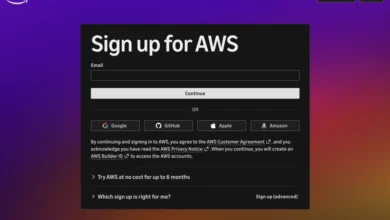
A notable feature introduced is the ability for users to sign up for Quick within minutes using personal email addresses or existing Google, Apple, GitHub, or Amazon credentials, removing the prior requirement for an AWS account. This significantly lowers the barrier to entry, making Quick accessible to a broader audience beyond traditional AWS customers.
Furthermore, Amazon Quick now boasts advanced visual asset generation capabilities. Users can directly generate polished documents, presentations, infographics, and images from the chat interface. This functionality democratizes content creation, allowing individuals without specialized design skills to produce high-quality visual assets rapidly. The expansion of native integrations to include widely used platforms such as Google Workspace, Zoom, Airtable, Dropbox, and Microsoft Teams further solidifies Quick’s position as a central hub for enterprise productivity, enabling it to act across a diverse ecosystem of business applications.
Perhaps one of the most transformative new features is the Build custom apps with Quick capability (Preview). This allows users to create intelligent applications, dashboards, and web pages connected to their business data using natural language commands. This low-code/no-code approach empowers business users and developers alike to rapidly prototype and deploy specialized AI-powered tools tailored to their unique operational needs, fostering an era of bespoke AI solutions driven by intuitive interaction.
Analysis of Implications: Amazon Quick’s expansion reflects a strategic push to make AI ubiquitous and user-friendly within the enterprise. The desktop app and simplified onboarding address key friction points for adoption. The visual asset generation and custom app building capabilities empower a wider range of users, from marketing professionals to data analysts, to leverage AI for creative and operational tasks, potentially disrupting traditional software development and content creation workflows. This move positions Quick as a direct competitor to other AI assistants and productivity suites, emphasizing AWS’s intent to capture the "last mile" of AI integration into daily work.
Amazon Connect’s Agentic Evolution: Four Specialized AI Solutions
Amazon Connect, traditionally known for its cloud-based contact center services, has undergone a significant transformation, evolving from a single product into a suite of four specialized agentic AI solutions. These solutions are meticulously designed to integrate seamlessly into existing workflows, extending Connect’s capabilities far beyond customer service to address critical enterprise functions. This diversification underscores AWS’s commitment to leveraging its operational expertise and AI prowess across a broader spectrum of business challenges.
The newly introduced solutions include:
-
Amazon Connect Decisions: This supply chain planning and intelligence solution aims to revolutionize how businesses manage their supply chains. By combining 30 years of Amazon’s proprietary operational science with over 25 specialized supply chain tools, Decisions shifts teams from reactive crisis management to proactive, predictive planning. It leverages AI to analyze vast datasets, identify potential disruptions, optimize inventory, and improve logistics, offering a significant competitive advantage in an increasingly volatile global economy.
-
Amazon Connect Talent (Preview): Addressing the complex challenges of talent acquisition, this agentic AI hiring solution delivers AI-led interviews, science-backed assessments, and consistent evaluation criteria for talent acquisition leaders managing scaled hiring processes. Talent aims to streamline candidate screening, reduce bias, and improve the quality of hires by providing objective, data-driven insights throughout the recruitment lifecycle. This is particularly relevant in today’s competitive labor market, where efficient and fair hiring practices are paramount.
-
Amazon Connect Customer: Formerly known simply as Amazon Connect, this solution continues to deliver personalized customer experiences across voice, chat, and digital channels. New configuration capabilities have been introduced, enabling organizations to set up sophisticated conversational AI interfaces in weeks rather than months. This accelerated deployment time allows businesses to rapidly adapt to evolving customer expectations, providing consistent, high-quality interactions that enhance customer satisfaction and loyalty.
-
Amazon Connect Health: This specialized solution targets the healthcare sector, offering agentic patient verification, appointment management, patient insights, ambient documentation, and medical coding. By automating these administrative tasks, Connect Health aims to give patients faster access to care and free up clinicians to dedicate more time to direct patient interaction, ultimately improving healthcare delivery efficiency and patient outcomes. The implications for reducing healthcare costs and improving access are substantial.
Analysis of Implications: The expansion of Amazon Connect into four distinct agentic AI solutions signifies a strategic pivot from a contact center product to a comprehensive enterprise AI platform. This move leverages AWS’s deep operational knowledge, particularly from Amazon’s own vast e-commerce and logistics operations. By offering specialized solutions for supply chain, HR, customer service, and healthcare, AWS is directly addressing major pain points across industries. This holistic approach not only strengthens Connect’s market position but also establishes AWS as a pivotal player in enterprise resource planning (ERP) and human capital management (HCM) domains through AI-powered agents, potentially disrupting existing software vendors in these sectors.
Strengthening the Alliance: AWS and OpenAI’s Expanded Partnership
A significant highlight of the event was the announcement of an expanded partnership between AWS and OpenAI, bringing the latest OpenAI models and agentic capabilities to Amazon Bedrock. This collaboration is set to provide developers and enterprises with even greater access to cutting-edge generative AI models within the secure and scalable AWS environment.
The key aspects of this partnership include:
-
OpenAI Models on Amazon Bedrock (Limited preview): This integration brings the latest OpenAI models, including GPT-5.5 and GPT-5.4, directly to the Bedrock APIs. This means customers can access these advanced models with the unified security, governance, and cost controls they already utilize within Bedrock. Crucially, it eliminates the need for customers to configure additional infrastructure or learn new security models, simplifying the adoption of state-of-the-art AI. This strategic move ensures that AWS customers have access to a diverse portfolio of foundational models, including those from leading third-party providers, reinforcing Bedrock’s position as a central hub for generative AI.
-
Codex on Amazon Bedrock (Limited preview): Developers can now access OpenAI’s powerful coding agent, Codex, within their existing AWS environments. This integration allows authentication with AWS credentials, processes inference through Bedrock, and applies Codex usage towards AWS cloud commitments. Codex on Bedrock is accessible through the Bedrock API, initially supporting the Codex CLI, the Codex desktop app, and a Visual Studio Code extension. This facilitates AI-assisted code generation, debugging, and documentation, significantly accelerating software development cycles and enhancing developer productivity.
-
Amazon Bedrock Managed Agents, powered by OpenAI (Limited preview): This combines OpenAI’s frontier models with AWS infrastructure to build production-ready OpenAI-powered agents in the cloud. These managed agents are built with the OpenAI harness, promising faster execution, sharper reasoning, and reliable steering of long-running tasks. This offering simplifies the deployment and management of complex AI agents, allowing businesses to leverage OpenAI’s advanced capabilities for sophisticated automation scenarios without the heavy operational burden.

Analysis of Implications: The expanded partnership with OpenAI is a powerful strategic move for both companies. For AWS, it diversifies its foundational model offerings within Bedrock, ensuring customers have access to a broader selection of best-in-class models, including those from a prominent industry leader like OpenAI. This enhances Bedrock’s appeal as a platform for building generative AI applications. For OpenAI, it provides extensive reach to AWS’s vast enterprise customer base, allowing their models to be deployed and managed with the reliability and scalability of AWS infrastructure. This collaboration signifies a pragmatic approach to the competitive AI market, prioritizing customer choice and robust integration. It also underscores the importance of a multi-model strategy for AWS, where proprietary models coexist with leading third-party offerings. The introduction of Codex on Bedrock and Bedrock Managed Agents further solidifies AWS’s commitment to empowering developers and enterprises with agentic capabilities, streamlining AI development and deployment.
Background on AWS’s AI Strategy
AWS has a long-standing history of innovation in artificial intelligence and machine learning, dating back to the launch of Amazon Rekognition, Polly, and Lex in 2016, followed by the introduction of Amazon SageMaker in 2017, which democratized ML for developers. The company’s strategy has consistently focused on providing a comprehensive stack of AI services, from infrastructure (GPUs, custom chips like Trainium and Inferentia) to foundational models (Amazon Bedrock) and purpose-built AI services (Contact Lens, Forecast). The recent announcements, particularly the emphasis on agentic AI and specialized solutions, represent an evolution of this strategy, moving towards more autonomous and domain-specific AI applications that directly address complex business challenges. This iterative approach allows AWS to continually adapt to market demands and maintain its leadership position in cloud AI.
Implications for the Enterprise and Cloud AI Market
These announcements from AWS carry significant implications for the broader enterprise and cloud AI market.
- Accelerated AI Adoption: By simplifying access to powerful AI models (via Bedrock’s unified interface) and offering ready-to-use agentic solutions (Connect’s specialized offerings, Quick’s desktop app), AWS is poised to accelerate AI adoption across industries. The reduced complexity and lower barriers to entry mean more businesses, including those without extensive AI expertise, can leverage advanced capabilities.
- Competitive Landscape: The intensified focus on agentic AI and specialized solutions puts AWS in direct competition with niche AI vendors and other hyperscale cloud providers like Microsoft Azure and Google Cloud, who are also heavily investing in similar areas. AWS’s integrated approach, combining infrastructure, foundational models, and application-specific agents, provides a strong competitive differentiator.
- Productivity Revolution: Tools like Amazon Quick, with its desktop integration, visual asset generation, and custom app building, promise a significant boost in enterprise productivity. By automating routine tasks and empowering users to create tailored AI tools, businesses can unlock new levels of efficiency and innovation.
- Reshaping Industry Verticals: The specialized Amazon Connect solutions for supply chain, talent, customer service, and healthcare demonstrate AWS’s intent to deeply penetrate and reshape specific industry verticals. These agentic solutions can transform operational models, leading to more resilient supply chains, more efficient hiring, superior customer experiences, and improved healthcare delivery.
- The Rise of Agent Orchestration: The emphasis on agentic AI highlights a future where AI systems don’t just perform tasks but orchestrate complex workflows, making decisions, and interacting with multiple systems autonomously. This shift will require new paradigms for enterprise architecture, governance, and human-AI collaboration.
- Ecosystem Development: The expanded partnership with OpenAI, alongside AWS’s existing support for other leading foundational models, reinforces Bedrock as a vibrant ecosystem for generative AI. This multi-model strategy benefits customers by providing choice and fostering innovation.
Beyond the Headlines: Other Notable AWS Updates
While the agentic AI announcements dominated the headlines, AWS continued its regular cadence of innovation throughout the past week with numerous other service launches and updates. These often include enhancements to existing services, new regional availability for various offerings, security improvements, and developer tools. For instance, recent weeks have seen updates in areas such as serverless computing with AWS Lambda, database performance improvements for Amazon Aurora and DynamoDB, and new features for Amazon S3 storage. These continuous, incremental improvements are fundamental to AWS’s strategy of providing a comprehensive, reliable, and evolving cloud platform that supports a vast array of workloads and applications. Developers and operations teams closely monitor the "What’s New with AWS" page for these regular updates, which often include critical bug fixes, performance optimizations, and new functionalities that impact their day-to-day operations and application development.
Upcoming Engagements and Community Building
AWS continues to foster a vibrant community of developers and builders through a packed calendar of events and resources. Upcoming AWS events typically include virtual workshops, in-person summits, and specialized conferences focusing on various aspects of cloud computing, AI/ML, security, and developer tools. These events provide invaluable opportunities for learning, networking, and staying abreast of the latest AWS innovations. The AWS Builder Center serves as a central hub for connecting with other builders, contributing solutions, and accessing a wealth of technical resources, further strengthening the collaborative ecosystem around AWS technologies. Regular developer-focused sessions, often covering deep dives into new services or best practices, ensure that the community remains engaged and well-equipped to leverage the evolving AWS platform.
In conclusion, the latest wave of announcements from AWS, particularly the profound advancements in agentic AI through Amazon Quick, the diversified Amazon Connect solutions, and the strengthened partnership with OpenAI on Bedrock, marks a pivotal moment in the evolution of enterprise AI. AWS is not merely offering AI tools but orchestrating an intelligent future where autonomous agents seamlessly integrate into the fabric of business operations, promising unprecedented levels of efficiency, innovation, and strategic advantage for organizations globally. The emphasis on accessibility, integration, and specialized solutions underscores AWS’s strategic vision to lead the charge in the rapidly expanding and transformative realm of artificial intelligence.
Related posts: