Amazon Simple Queue Service: Two Decades of Driving Cloud Agility and Resilience


On July 13, 2006, Amazon Web Services (AWS) introduced Amazon Simple Queue Service (Amazon SQS), marking a pivotal moment in the evolution of cloud computing. Launched alongside Amazon EC2 and Amazon S3, SQS was one of the inaugural services, laying the groundwork for scalable, resilient, and decoupled architectures that would come to define the modern cloud landscape. Its genesis stemmed from Amazon’s own internal challenges in managing complex, distributed systems, where the failure of one component could cascade throughout an entire ecosystem. The solution, honed through years of operational experience, was asynchronous messaging – a producer places a message into a queue and moves on, while a consumer retrieves it when ready, effectively insulating services from one another’s direct dependencies and potential failures. This fundamental principle of decoupling remains the bedrock of SQS’s enduring value, even as its scale, performance, and operational capabilities have undergone profound transformations over two decades.
The Foundational Role of Asynchronous Messaging
Before the advent of cloud platforms like AWS, building distributed systems was an arduous task. Developers grappled with the complexities of network reliability, service discovery, load balancing, and error handling. Traditional tightly coupled architectures often led to brittle systems where a momentary overload or outage in one service could bring down an entire application. Amazon, operating at unprecedented scale with its e-commerce platform, faced these challenges firsthand. The insight gained was that a robust message queuing service was indispensable for allowing components to communicate without creating direct, synchronous links. This asynchronous pattern not only prevented cascading failures but also enabled services to operate independently, scale autonomously, and recover gracefully.
When SQS was made publicly available, it democratized this powerful pattern, offering a fully managed message queuing service that eliminated the operational overhead of provisioning, patching, and scaling message brokers. This was a game-changer for startups and enterprises alike, enabling them to build highly scalable and fault-tolerant applications without deep expertise in distributed systems. The initial offering, though simpler by today’s standards with an 8 KB message limit, provided the essential functionality of a reliable, durable queue. Early adopters quickly recognized its potential for buffering requests, offloading tasks, and enabling the nascent microservices architectural style that would later become a cornerstone of cloud-native development. Jeff Barr, a prominent voice within AWS, documented these early milestones, emphasizing the continuous evolution from basic message delivery to sophisticated features like FIFO queues, server-side encryption, and seamless integration with AWS Lambda.
The First 15 Years: Building Blocks of Cloud Resilience (2006-2021)
The period between SQS’s launch in 2006 and its 15th anniversary in 2021 saw a steady stream of innovations that expanded its utility and robustness. Initially, SQS provided standard queues, which offered at-least-once delivery and best-effort ordering. While suitable for many use cases, applications requiring strict message ordering and exactly-once processing needed more. This led to the introduction of FIFO (First-In, First-Out) queues. FIFO queues addressed critical use cases such as managing financial transactions, ensuring correct processing order for log events, or coordinating complex workflows where message sequence was paramount. This addition significantly broadened SQS’s applicability, moving it beyond mere buffering to supporting core business logic.
Security, a paramount concern for cloud adoption, also saw major advancements. While AWS offered general security features, message-level encryption became increasingly vital. The introduction of server-side encryption using AWS Key Management Service (KMS) allowed customers to encrypt messages at rest, fulfilling compliance requirements and enhancing data protection without requiring application-level encryption logic. This simplified the security posture for sensitive data flowing through queues.
The rise of serverless computing, particularly with AWS Lambda, further cemented SQS’s role. Lambda integration allowed developers to automatically trigger serverless functions in response to messages arriving in an SQS queue. This powerful combination enabled the creation of highly scalable, event-driven architectures where backend processing could be handled by ephemeral, cost-effective functions, minimizing operational overhead and optimizing resource utilization. This integration significantly accelerated the adoption of serverless patterns and solidified SQS as a central nervous system for many modern applications.
Accelerated Innovation: SQS Milestones from 2021 to 2025 and Beyond
The last five years have witnessed an intensified pace of innovation for SQS, reflecting the growing demands of increasingly complex and high-volume cloud workloads, particularly with the proliferation of microservices, IoT, and AI applications. These advancements have focused on enhancing throughput, security, operational manageability, and developer experience.
-
High Throughput Mode for FIFO Queues (2021-2023): Initially supporting 3,000 transactions per second (TPS) per API action in May 2021, the throughput for FIFO queues has seen exponential increases, reaching 70,000 TPS in select regions by November 2023. This dramatic scaling addresses the needs of mission-critical applications that demand both strict message ordering and immense processing volume, such as real-time payment processing, large-scale IoT data ingestion, and complex event streaming. This allows businesses to process millions of order-sensitive events per second, maintaining data integrity and consistency at a scale previously unimaginable for managed queuing services. AWS’s commitment to continually raising these limits demonstrates its responsiveness to the evolving demands of high-performance computing in the cloud.
-
Server-Side Encryption with SSE-SQS (2021-2022): Building on existing encryption capabilities, November 2021 saw the introduction of SSE-SQS, which uses SQS-managed encryption keys. This offered customers an even simpler, fully managed encryption option that required no direct key management. Recognizing the importance of security by default, AWS made SSE-SQS the default for all newly created queues in October 2022. This move significantly improved the security posture of new SQS deployments across the board, reducing configuration errors and ensuring that messages are encrypted at rest without explicit action from the developer, aligning with industry best practices for data protection and compliance.

-
Dead-Letter Queue (DLQ) Redrive Enhancements (2021-2023): Dead-letter queues are crucial for handling messages that cannot be successfully processed by a consumer. Recovering these messages, however, often involved manual processes or custom tooling. In December 2021, AWS introduced DLQ redrive directly within the SQS console, allowing operators to easily move unconsumed messages back to their source queues for reprocessing. This capability was extended to the AWS SDK and CLI in June 2023 with new APIs (e.g.,
StartMessageMoveTask,CancelMessageMoveTask), enabling programmatic control and automation. Crucially, redrive support for FIFO queues was added in November 2023, bringing robust error recovery to order-sensitive workloads. These enhancements drastically reduce the operational burden of managing failed messages, improving system reliability and reducing data loss. -
Attribute-Based Access Control (ABAC) (2022): In November 2022, AWS introduced ABAC for SQS, offering a more flexible and scalable approach to access permissions. Instead of managing static IAM policies tied to specific resource ARNs, ABAC allows permissions to be defined based on queue tags. This is particularly beneficial in dynamic, large-scale environments where resources are frequently created and deleted, or where permissions need to adapt to organizational structures. ABAC simplifies policy management, reduces the overhead of updating policies as resources scale, and enhances security by allowing fine-grained, contextual access control, aligning with least-privilege principles.
-
JSON Protocol Support (2023): November 2023 brought support for the JSON protocol in the AWS SDK. This technical enhancement significantly improves efficiency, reducing end-to-end message processing latency by up to 23% for typical payloads (e.g., 5 KB) and lowering client-side CPU and memory usage. For high-volume, low-latency applications, this translates directly into better performance, lower operational costs, and a more responsive user experience. It reflects AWS’s continuous effort to optimize the underlying communication protocols for maximum efficiency.
-
Amazon EventBridge Pipes Console Integration (2023): In November 2023, AWS added the ability to connect an SQS queue directly to Amazon EventBridge Pipes from the SQS console. This integration simplifies the creation of event-driven architectures by allowing messages from SQS to be routed to a wide range of AWS service targets (e.g., Lambda, Step Functions, Kinesis, other SQS queues) without writing custom integration code. EventBridge Pipes can also enrich, filter, and transform messages, reducing the need for intermediate Lambda functions and streamlining complex workflows, fostering more agile development.
-
Extended Client Library for Python (2024): Addressing the message size limit (historically 256 KiB), the Extended Client Library, previously available for Java, was brought to Python developers in February 2024. This library allows messages up to 2 GB to be sent through SQS by transparently offloading the message payload to Amazon S3 and passing only a reference through the SQS queue. This is a critical feature for data-intensive workloads such as machine learning inference requests, large document processing, or multimedia metadata, enabling developers to leverage SQS for larger data objects without complex custom solutions.
-
FIFO In-Flight Message Limit Increase (2024): In November 2024, AWS significantly increased the in-flight message limit for FIFO queues from 20,000 to 120,000 messages. An "in-flight" message is one that has been delivered to a consumer but not yet deleted. This increase allows consumers to process a substantially greater number of messages concurrently, boosting the parallelism and throughput of demanding FIFO workloads. This directly translates to improved application responsiveness and efficiency for applications requiring strict ordering guarantees at very high scale.
-
Fair Queues for Multi-Tenant Workloads (2025): Scheduled for July 2025, the introduction of fair queues is set to mitigate the "noisy neighbor" problem in multi-tenant standard queues. By allowing customers to include a message group ID when sending messages, this feature prevents a single tenant with high message volume from delaying message delivery for other tenants sharing the same queue. This ensures more equitable message distribution and consistent service levels for multi-tenant applications, such as SaaS platforms, without requiring any changes on the consumer side. It’s a significant advancement for resource fairness and predictable performance in shared environments.
-
1 MiB Maximum Message Payload Size (2025): In August 2025, AWS will increase the maximum message payload size from 256 KiB to 1 MiB for both standard and FIFO queues. This enhancement reduces the need for developers to offload moderately larger messages to external storage like S3, simplifying application logic and reducing overall latency. Concurrently, AWS Lambda event source mapping for SQS will be updated to support this new payload size, ensuring seamless integration across the serverless ecosystem. This change streamlines the handling of larger events and data chunks directly within SQS, making it more versatile for a broader range of applications.
The Enduring Core: SQS in the Era of AI and Beyond
Despite two decades of relentless feature additions and scaling, the fundamental use case for Amazon SQS remains unchanged: decoupling services, buffering bursts of traffic, and building resilient systems that gracefully handle individual component failures. This core value proposition has not only persisted but has also become even more critical in the context of emerging technologies, particularly Artificial Intelligence (AI) and Machine Learning (ML).
AI workloads, characterized by their bursty nature, resource-intensive computations (e.g., GPU inference), and the need for robust orchestration, find SQS to be an indispensable component. Customers are leveraging SQS queues to:
- Buffer requests to large language models (LLMs): As applications interact with powerful but potentially rate-limited LLMs, SQS acts as a buffer, smoothing out spikes in demand and preventing API throttling, ensuring a consistent user experience.
- Manage inference throughput: For ML models that require dedicated computational resources, SQS can distribute inference requests across a fleet of GPU instances, optimizing resource utilization and managing processing queues.
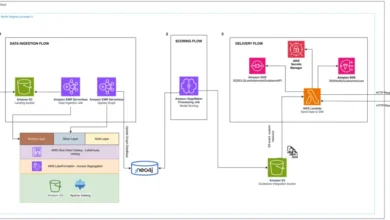
- Coordinate communication between autonomous AI agents: In increasingly complex AI systems where multiple agents operate as independent services (e.g., for data processing, decision-making, or interaction with external APIs), SQS provides a reliable mechanism for these agents to communicate asynchronously, share tasks, and coordinate their actions without tight coupling. An excellent example of this architecture can be seen in patterns like "Creating asynchronous AI agents with Amazon Bedrock," where SQS facilitates reliable message passing between different stages of an AI workflow.
The strategic importance of SQS extends beyond specific technological trends. It is a cornerstone of modern cloud architecture, enabling the microservices paradigm by facilitating loose coupling, improving fault tolerance, and enhancing scalability. By abstracting away the complexities of message broker management, SQS allows developers to focus on application logic rather than infrastructure, accelerating innovation and time-to-market.
As cloud computing continues to evolve, with increasing demands for real-time processing, hyper-scale applications, and sophisticated event-driven architectures, Amazon SQS remains a foundational and continuously evolving service. Its journey over two decades exemplifies AWS’s commitment to building services that not only address current customer needs but also anticipate future requirements, ensuring that developers have the tools to build the next generation of resilient, scalable, and intelligent applications. The constant thread through all these innovations is the unwavering focus on reliability, efficiency, and operational simplicity, cementing SQS’s legacy as a true pioneer and enduring pillar of the cloud.
Related posts: