Introducing Amazon ECS Gateway: A New Era for Simplified Containerized Ingress Networking

Managing containerized applications at scale on Amazon Elastic Container Service (ECS) has long been a complex balancing act for platform engineering teams. While the agility of containers allows for rapid development, the "day-two" operations—specifically the configuration of ingress networking—have historically acted as a friction point. For every new microservice deployed, platform teams have traditionally been required to manually provision and orchestrate a suite of infrastructure components: Application Load Balancers (ALBs), AWS Certificate Manager (ACM) certificates, AWS WAF web ACLs, and intricate security group rules. Keeping these components in perfect synchronization as services scale, update, or undergo maintenance often leads to configuration drift, increased operational overhead, and slower deployment velocities.
To address these systemic challenges, Amazon Web Services (AWS) has announced the general availability of Amazon ECS Gateway. This new account-level resource is designed to automate the lifecycle management of ingress infrastructure, allowing platform teams to focus on service delivery rather than the underlying network plumbing. By dynamically provisioning and managing the necessary networking stack directly within a customer’s account, ECS Gateway promises to streamline the deployment lifecycle significantly.
The Architectural Shift: Separating Concerns
The introduction of ECS Gateway marks a strategic shift in how AWS approaches the separation of responsibilities between platform and application teams. Historically, the burden of network security and traffic management fell squarely on the shoulders of platform engineers, who had to create standardized templates to ensure consistency across the organization. With ECS Gateway, this burden is abstracted.

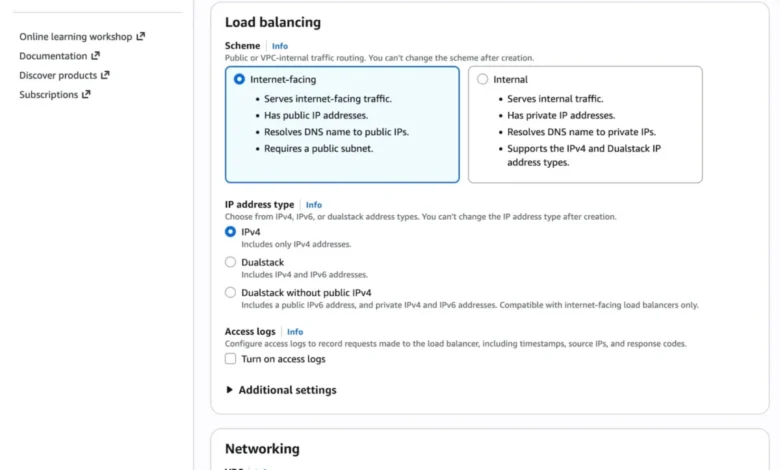
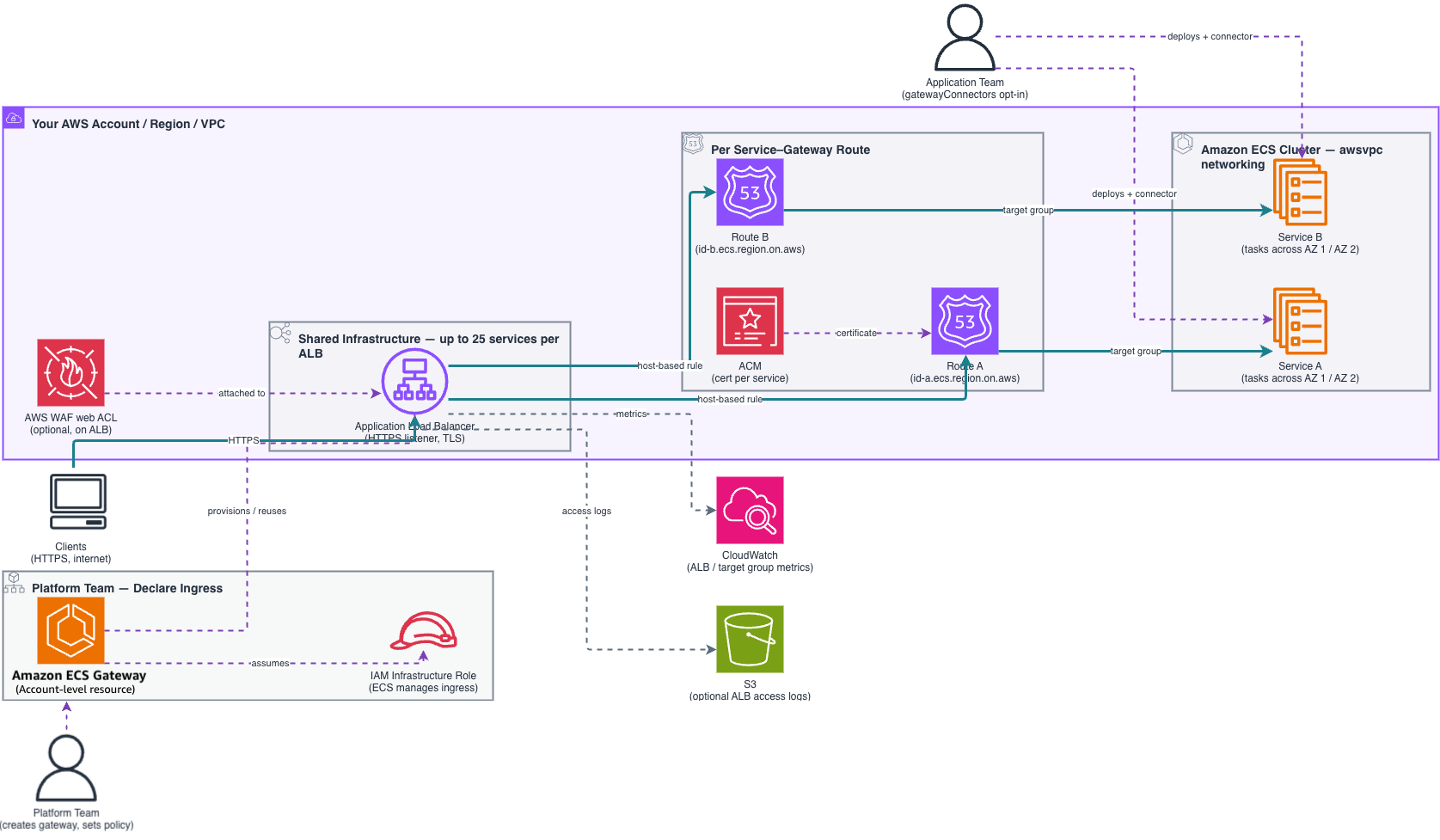
The gateway acts as an intelligent orchestration layer. It utilizes host-based routing via ALBs, allowing up to 25 services to share a single load balancer instance. This approach not only simplifies the architecture but also provides substantial cost optimization for organizations that previously over-provisioned load balancers to accommodate microservice architectures. When a service connects to the gateway, ECS automatically handles the provisioning of the load balancer, the issuance and management of SSL/TLS certificates via ACM, and the configuration of listener rules. As the number of services grows, the gateway autonomously scales by provisioning additional ALBs, and conversely, it de-provisions these resources when traffic demand subsides or services are decommissioned.
Chronology of Development and Deployment
The path to this release reflects a broader trend within the cloud-native ecosystem toward "infrastructure-as-code" (IaC) maturity. Over the last decade, as container orchestration evolved from basic scheduling to complex service meshes, the need for a simplified ingress point became clear. Early adopters of Amazon ECS often relied on custom automation scripts or third-party ingress controllers to manage the complexity of ALB and WAF integration.
By mid-2026, the demand for a native, managed gateway service reached a critical threshold. Development teams reported that the time-to-deployment for new services was disproportionately spent on "boilerplate" network configuration. The release of ECS Gateway in late 2026 serves as the culmination of these user feedback loops. The service is now available across all commercial AWS regions, signaling a robust rollout designed to accommodate enterprise-grade workloads from day one.
Technical Implementation and Operational Control
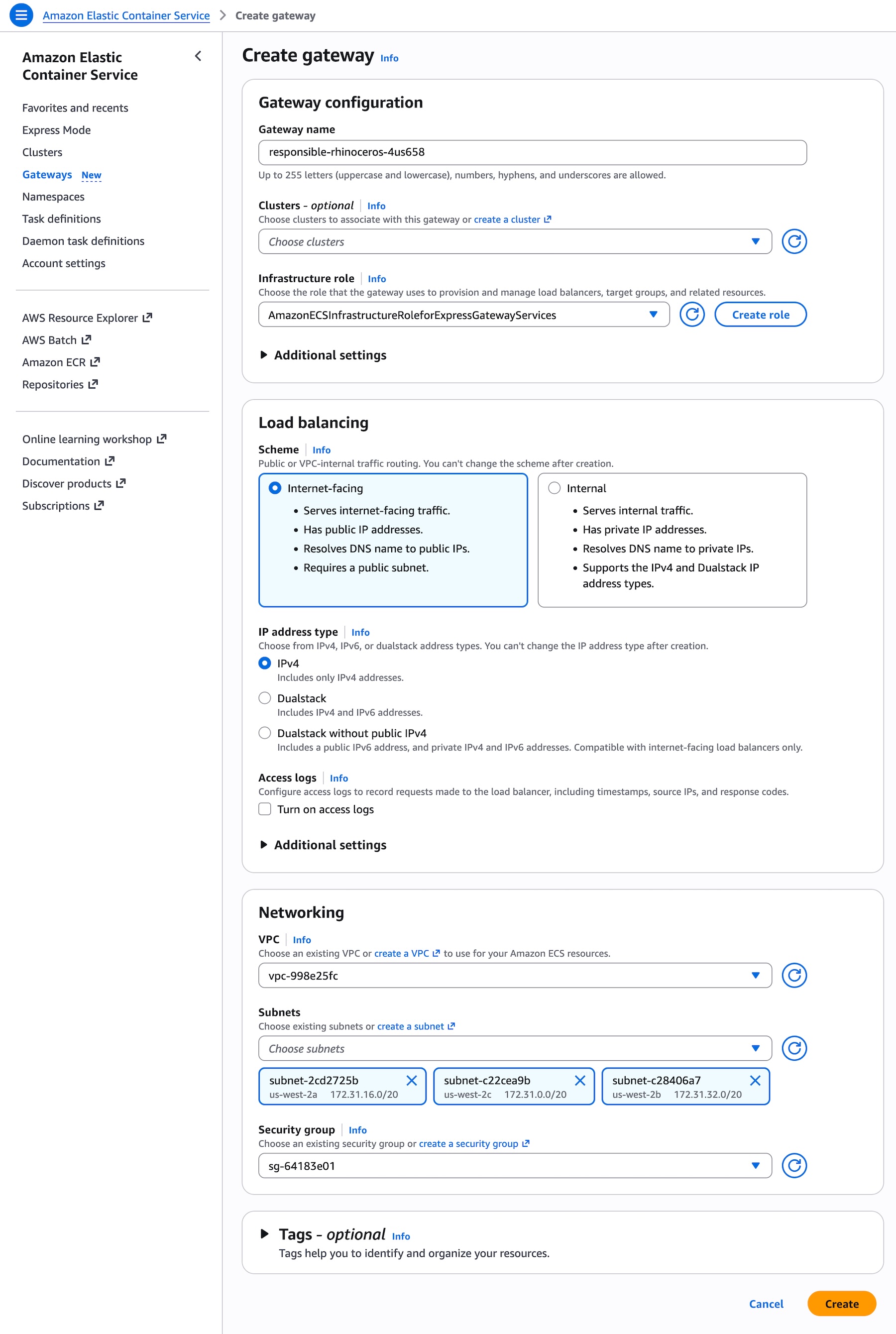
Platform teams interact with ECS Gateway through the AWS Management Console or the AWS Command Line Interface (AWS CLI). The initial setup requires the definition of an "infrastructure role"—an IAM entity that grants ECS the necessary permissions to manipulate networking resources on the user’s behalf. Once this foundation is laid, the gateway can be associated with multiple ECS clusters in a many-to-many configuration.

This flexibility is a critical feature for large-scale enterprises. For example, a single gateway can be shared across multiple development environments to enforce standardized security postures, or conversely, an organization can deploy multiple gateways—such as one for public-facing traffic and one for private, VPC-internal services—to a single cluster.
From an operational standpoint, the transition is designed to be non-disruptive. If an organization has existing services currently using individual ALBs, they can adopt the ECS Gateway incrementally. By adding a "gateway connector" to a service definition, teams can route traffic through the new infrastructure while keeping the old configuration active for validation. This "side-by-side" deployment capability allows for rigorous testing before decommissioning legacy network paths.
Data-Driven Efficiency and Scalability
The capacity limits of the ECS Gateway demonstrate its suitability for high-throughput environments. A single gateway can be associated with up to 10,000 clusters, providing a centralized control plane for vast, multi-region or multi-environment deployments. Each cluster, in turn, can support up to five gateway associations.
Furthermore, the automated lifecycle management extends to security. By integrating directly with AWS WAF, the gateway ensures that web ACLs are applied consistently across all services routed through the gateway. This reduces the risk of "shadow IT" or unpatched services being exposed to the internet without the proper security headers or threat protection.
The economic implications are equally significant. In many traditional setups, the fixed cost of an Application Load Balancer is a major contributor to the "cost-per-service" metric. By packing up to 25 services onto a single ALB, the ECS Gateway effectively lowers the barrier to entry for microservices that might otherwise be considered too "expensive" to host in their own isolated environment.
Industry Implications and Expert Analysis
Industry analysts view the introduction of ECS Gateway as a direct response to the "platform engineering" movement, which advocates for reducing the cognitive load on application developers. By providing a "golden path" for ingress networking, AWS is effectively enabling developers to deploy applications without needing to become experts in complex networking protocols or load balancer tuning.
"The primary value proposition here is the reduction of operational entropy," says a senior cloud architect familiar with the release. "When you automate the provisioning of ACM certificates and security groups, you aren’t just saving time; you are closing the door on common human errors, such as misconfigured listeners or expired SSL certificates, which are frequent causes of production incidents."
Furthermore, the integration with AI-powered development tools—such as the AWS MCP Server and various AI coding plugins—suggests that AWS is positioning ECS Gateway as a foundational component for the next generation of generative AI-driven infrastructure management. By exposing the gateway’s configuration via standardized APIs, developers can use LLM-based assistants to generate valid service definitions, further accelerating the development lifecycle.
Official Stance and Future Outlook
AWS has emphasized that ECS Gateway is offered at no additional charge beyond the underlying resource consumption. This pricing model—pay-only-for-what-you-use—is consistent with the broader AWS philosophy, ensuring that the utility of the service is accessible to both startups and Fortune 500 companies.
As of the current release, the service supports critical features like automated health checks, host-based routing, and sophisticated traffic filtering. However, the roadmap for the gateway is expected to evolve. Based on early documentation, the service is built to be modular, suggesting that future updates could include deeper integration with advanced traffic steering, such as canary deployments or blue/green switching, natively within the gateway layer.
For organizations currently struggling with the complexity of managing hundreds of ALBs, the transition to ECS Gateway offers a clear, manageable path toward operational excellence. The ability to programmatically define ingress, coupled with the rigorous security standards enforced by AWS, makes this a vital update for any organization heavily invested in the Amazon ECS ecosystem.
Conclusion
The release of Amazon ECS Gateway represents a significant milestone in the maturity of containerized infrastructure management. By addressing the specific pain points of ingress networking—namely the manual labor, the risk of configuration drift, and the costs associated with load balancer sprawl—AWS has provided a robust, scalable, and secure solution. As businesses continue to decompose monolithic applications into microservices, the demand for such high-level, intent-based management tools will only increase. Platform teams that adopt the ECS Gateway will likely find themselves spending less time fighting the infrastructure and more time building the business-critical features that drive value. As the ecosystem continues to integrate with AI-assisted deployment workflows, the ECS Gateway stands as a prime example of the future of cloud-native orchestration: automated, invisible, and inherently secure.