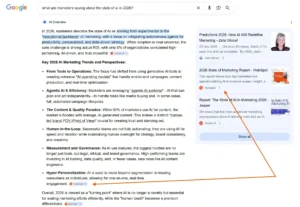
The rapid evolution of artificial intelligence has fundamentally altered the landscape of digital marketing, shifting from simple text generation to complex, data-driven operational intelligence. According to the latest State of AI in Marketing report from HubSpot, the adoption of AI tools among marketing teams has reached near-universal levels, with 98% of organizations now utilizing some form of generative technology to optimize their outreach. As these teams move beyond basic content drafting, the focus has shifted toward deep integration between Large Language Models (LLMs) and Customer Relationship Management (CRM) platforms. The introduction of the HubSpot connector for Claude marks a significant milestone in this transition, allowing for a bidirectional exchange of data that bridges the gap between creative execution and business analytics.
The background of this technological shift lies in the inherent limitations of standalone AI tools. Historically, marketers have relied on "copy-paste" workflows, where data extracted from a CRM is manually fed into an AI assistant, analyzed, and then re-imported. This process is not only labor-intensive but also prone to data silos, where the AI lacks the necessary context of specific customer interactions, deal stages, or historical campaign performance. By enabling Claude to access real-time data from HubSpot’s Smart CRM, organizations can now automate complex tasks—such as generating personalized follow-up sequences based on specific email engagement metrics or identifying recurring themes in customer support tickets—without manual intervention.
A Chronology of Integration and Adoption

The movement toward agentic AI in marketing began in earnest throughout the last 18 months, as enterprises sought to move past the novelty of generative chatbots toward functional utility. Early adoption was characterized by simple prompts and one-off tasks. By the second half of 2024, the demand for "context-aware" AI became the primary driver for software developers. The release of the HubSpot connector for Claude represents the culmination of this demand.
In early 2025, the industry saw a surge in the implementation of "connector" architectures, where platforms like HubSpot began opening secure, scoped access to their internal databases for validated AI models. This timeline reflects a broader industry trajectory: moving from passive content generation to active, system-integrated workflows where AI functions as an extension of the marketing team rather than a separate, detached tool.
Supporting Data and Operational Efficiency
The impact of integrating AI directly into the CRM ecosystem is quantifiable. For high-volume marketing teams, the time required to compile campaign performance reports can be reduced from hours to minutes. Industry benchmarks suggest that when AI models are provided with direct read-write access to CRM records, the rate of conversion for lead-nurturing sequences increases by approximately 15% due to improved personalization.

Furthermore, the operational data provided by the HubSpot connector highlights that marketers are increasingly using these tools for four primary functions: campaign analysis, content ideation, lead segmentation, and task automation. Because the connector operates within the strict security protocols of the HubSpot platform—respecting existing user permissions and access rights—it addresses the primary concern of enterprise security. Every action, whether it is a draft creation or a record update, is logged within the HubSpot Audit Log, providing a transparent trail of accountability that satisfies internal compliance requirements.
Technical Implementation and Governance
Deploying the connector requires a structured approach to prevent the "black box" syndrome often associated with AI. The setup process involves a direct API-driven link between the Claude environment and the HubSpot instance. Once authorized, users can leverage "Write tools" with a "Needs Approval" setting. This safety mechanism is critical; it ensures that while Claude can draft emails, update deal stages, or create tasks, it cannot execute these changes without human verification.
Governance frameworks are essential as teams scale these integrations. Organizations are advised to implement a four-pillar strategy:

- Skill Review: Auditing the specific AI "skills" or prompts that teams are using to ensure they align with brand voice and factual accuracy.
- Shared Standards: Establishing internal documentation for how Claude should handle proprietary data.
- Access Control: Regularly reviewing which team members have the authority to grant AI connectors access to sensitive CRM records.
- Measurement: Establishing clear KPIs, such as time-saved-per-campaign and pipeline contribution, to justify the investment in premium Claude tiers and platform integration.
The Role of Dashboards in an AI-Driven World
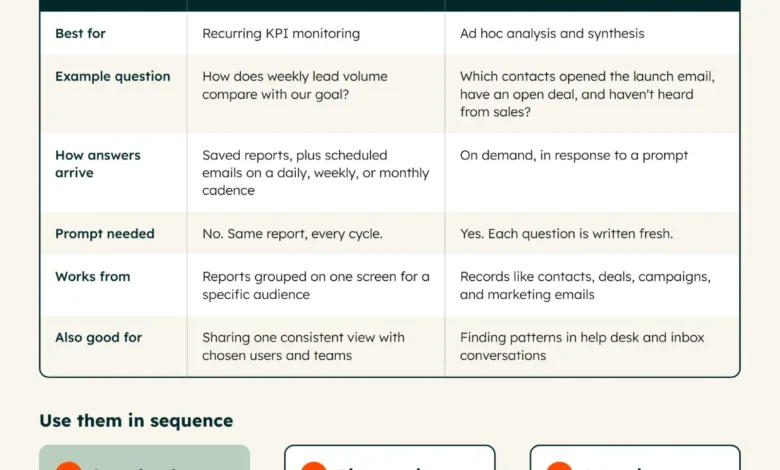
Despite the power of conversational AI, there remains a distinct role for static, automated dashboards. A key distinction in modern marketing operations is the difference between "ad-hoc analysis" and "recurring KPI monitoring." Dashboards are best utilized for consistent, high-frequency metrics—such as weekly lead volume, monthly recurring revenue (MRR), or quarterly pipeline growth. These reports provide a snapshot of the business health that does not require an AI to interpret.
Conversely, Claude is most effective when addressing "unstructured" questions—the "why" behind the numbers. For instance, while a dashboard might reveal a dip in email click-through rates, an AI-integrated workflow can be tasked with cross-referencing that dip against specific subject lines, customer segments, and recent support desk conversations to uncover the underlying cause. The most effective marketing teams employ a hybrid approach: using dashboards for baseline visibility and Claude for investigative, multi-dimensional analysis.
Broader Implications for Marketing Strategy

The integration of Claude with HubSpot signals a shift toward "agentic marketing," where the AI acts as a sophisticated participant in the GTM (Go-to-Market) strategy. By allowing the AI to read deal histories and customer interactions, marketers can move from generic messaging to hyper-contextual communication. For example, rather than sending a blast campaign, a marketer can use Claude to analyze a segment of high-value prospects, identify their specific objections based on past call notes, and draft highly tailored, high-converting outreach.
This level of integration also democratizes data science. Marketers who are not proficient in SQL or complex business intelligence tools can now use natural language to query their CRM. A prompt such as, "Analyze the last 50 closed-won deals and extract the top three buying triggers," provides actionable insights that were previously locked behind technical barriers.
However, the reliance on AI for these functions places a higher premium on data hygiene. Since Claude’s outputs are only as accurate as the data within the CRM, the role of the "Data Custodian" becomes more vital than ever. If contact records are incomplete or deal stages are not updated in real-time, the AI’s analysis will be flawed. Thus, the implementation of the Claude connector serves as a forcing function for teams to clean up their internal data processes, ultimately leading to better CRM management across the entire organization.
Looking ahead, the evolution of this technology will likely include more autonomous agent capabilities, where AI not only drafts content but manages the entire lifecycle of a campaign—from ideation to execution and iterative optimization. For now, the focus remains on the "human-in-the-loop" model, where the synergy between human strategic intent and machine-led data processing creates a more efficient, responsive, and data-backed marketing machine. As organizations continue to adopt these integrated workflows, the competitive advantage will go to those who can effectively govern these tools while empowering their teams to move beyond the limitations of manual data manipulation.