No Starshield, no problem: How Ukraine’s home-grown tech neutralized a critical Russian supply line

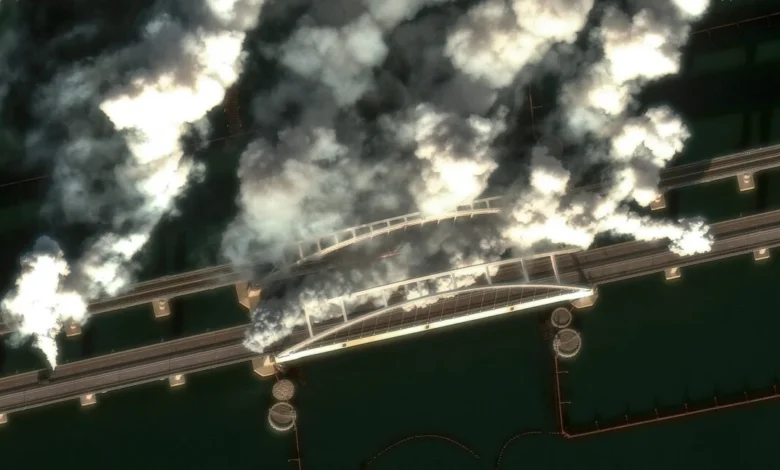
A coordinated Ukrainian assault on the night of November 15 and November 16, 2026, resulted in the partial collapse of the Kerch Strait Bridge, a major structural and symbolic defeat for the Russian Federation. In an operation that underscores a significant evolution in autonomous warfare, Ukrainian forces successfully bypassed restrictions on foreign satellite communication systems, utilizing a homegrown, relay-based drone network to guide high-precision strikes. This development marks a pivotal shift in the ongoing conflict, demonstrating Ukraine’s increasing self-reliance in military technology and its ability to adapt battlefield innovations previously pioneered by its adversary.
The destruction of one of the two primary steel arches supporting the bridge’s roadway has severed a critical logistics artery that serves as the backbone of Russia’s occupation of the Crimean Peninsula. By successfully navigating through dense electronic warfare environments and overwhelming Russian air defense systems, the operation has challenged the narrative of Russian invulnerability regarding its most protected infrastructure assets.
Chronology of the Assault
The degradation of the Kerch Strait Bridge was not an isolated event but the culmination of a weeks-long campaign of attrition. Ukrainian forces meticulously targeted the Russian defensive umbrella protecting the crossing, systematically dismantling radar installations, electronic warfare (EW) suites, and anti-aircraft missile batteries.
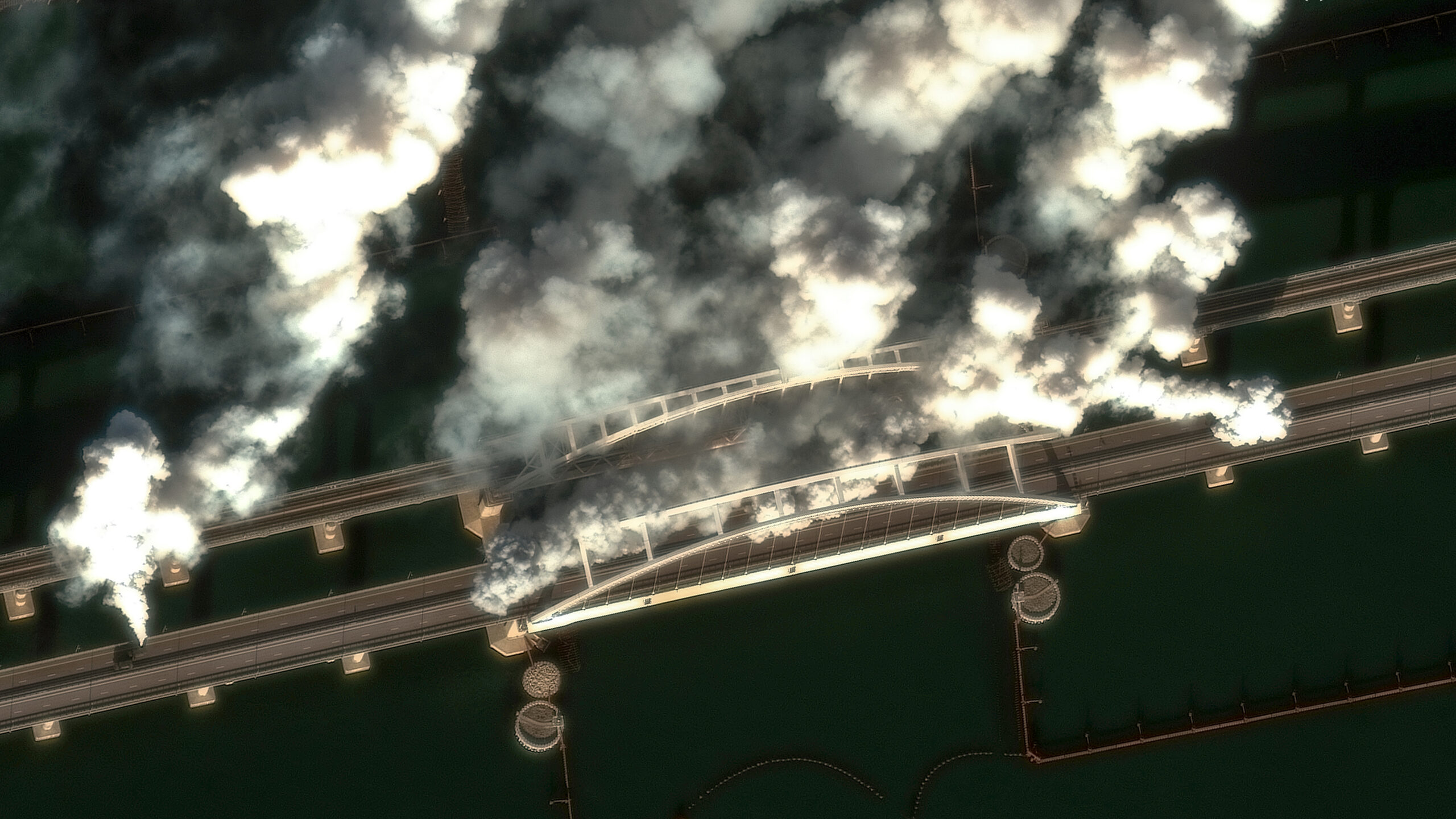
On the evening of November 15, the kinetic phase of the operation commenced. Russian sources and regional observers reported a massive, multi-wave drone barrage—the largest since the inception of the full-scale conflict. According to reports from the Institute for the Study of War, the initial wave of hundreds of low-cost drones served a twofold purpose: to saturate Russian air defenses and to identify gaps in the protective perimeter.
Once the defenses were sufficiently degraded or depleted of interceptors, the Ukrainian military launched its specialized strike package. This included the deployment of the Flamingo cruise missile, a domestically produced platform. According to data analyzed by military observers, the strike was executed with surgical precision, hitting the bridge’s weakest structural points at a time when the surrounding area was obscured by smoke generators, a common Russian defensive measure meant to mask the bridge from satellite and optical surveillance.
The Innovation of the Mesh Network
The most striking element of the operation was the tactical use of an airborne mesh communications network. Faced with strict limitations on the use of Starshield—the military-grade variant of Elon Musk’s Starlink satellite network—Ukrainian engineers looked to their adversary’s playbook.
Earlier in the conflict, Russian forces demonstrated the efficacy of using networked drones as relay nodes, extending the range of communication between ground-based operators and long-range strike vehicles. By adopting and refining this technique, Ukrainian units were able to maintain a stable, low-latency connection with their missiles and drones from locations exceeding 250 kilometers away. This relay system allowed operators to navigate complex terrain and evade detection, effectively homing in on the bridge despite the absence of external satellite-assisted navigation for the final terminal phase of the flight.
The decision to avoid Starshield was not merely a choice, but a necessity born of recent United States-imposed restrictions. These regulations effectively prohibit the use of satellite-linked drone technologies for platforms capable of exceeding 161 kilometers per hour (100 mph). By moving away from a reliance on private sector satellite constellations, Ukraine has signaled a strategic pivot toward indigenous defense technology, a move that potentially insulates its operations from the volatility of international private-sector policy.
Strategic Implications and Logistics
The Kerch Strait Bridge represents more than a logistical path; it is the physical manifestation of Vladimir Putin’s 2014 annexation of Crimea. The $3.5 billion structure has long been defended as a "red line" for the Russian military. Its periodic neutralization—first by a truck bomb in 2022, then by sub-surface sabotage in 2025, and now by a coordinated missile and drone strike in 2026—highlights a persistent vulnerability.
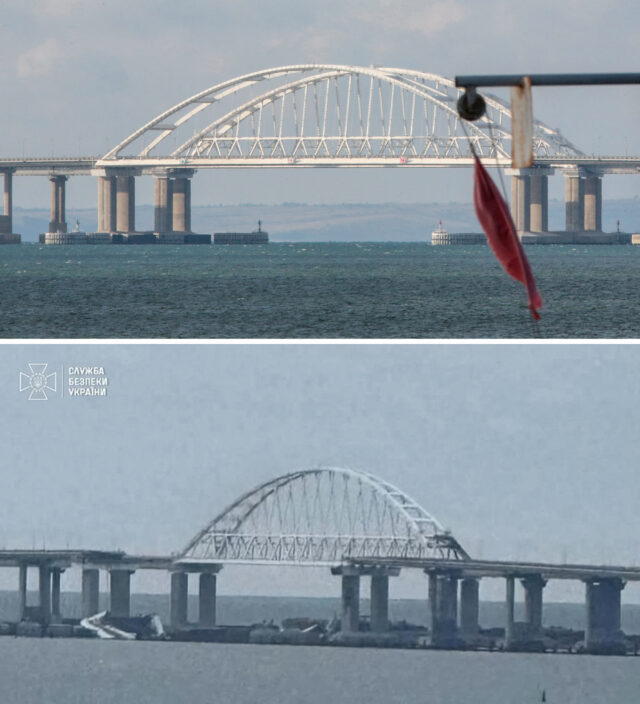
The damage sustained on November 16 is severe. While railway traffic reportedly resumed shortly after the attack, the collapse of the road arch significantly impairs the flow of heavy military vehicles and logistical support into Crimea. The secondary supply route, which runs through occupied southern Ukraine, remains under constant threat from Ukrainian artillery and partisan activity.
Furthermore, the debris from the collapsed arch now presents a significant hazard to maritime traffic in the Kerch Strait. As the primary maritime gateway between the Sea of Azov and the Black Sea, the bottleneck created by the wreckage threatens to choke off Russian naval resupply efforts. Given that Ukraine has previously succeeded in forcing the Russian Black Sea Fleet to retreat from its traditional ports, this new impediment to sea-based logistics further isolates the Crimean garrison.
Official Responses and the Tech Policy Debate
The fallout from the strike has reignited discussions regarding the role of private technology firms in state-level conflicts. President Volodymyr Zelenskyy has publicly expressed frustration regarding the speed limits imposed on Starshield, noting that such restrictions actively hinder the defense of Ukrainian infrastructure against Russian long-range drone strikes. While SpaceX has maintained that its services are provided within the parameters of their agreements, the Ukrainian military’s success without these services serves as a tacit rebuttal to the necessity of total reliance on external tech partners.
From the Russian perspective, the strike is a significant propaganda and military blow. The Kremlin has historically used the bridge as a symbol of the "permanence" of its control over Crimea. The recurring need for major repairs, combined with the increasing cost of defending the structure, raises questions about the long-term sustainability of the bridge as a strategic asset. Engineering experts consulted by international media have suggested that permanent repairs could take upwards of two years, provided that the work is not interrupted by further strikes—a prospect that appears increasingly likely given Ukraine’s demonstrated capacity to penetrate the area.
Broader Context of Autonomous Warfare
This event marks a milestone in the history of autonomous warfare. The integration of "mesh" communication networks into strike operations proves that conventional air defenses, designed to counter traditional manned aircraft or ballistic missiles, struggle to manage the sheer volume and adaptability of networked, low-cost drone swarms.
The successful strike also highlights the rapid maturation of the Ukrainian defense industry. The transition from utilizing donated, foreign-controlled systems to deploying, testing, and iterating on domestic technologies—such as the Flamingo cruise missile and airborne relay nodes—has granted the Ukrainian military a degree of operational independence that was previously unattainable.

As the conflict enters this new phase, the lessons learned from the Kerch Strait Bridge operation are likely to be studied by military strategists globally. The ability to circumvent electronic warfare and satellite restrictions through decentralized communication architectures represents a new frontier in asymmetric warfare. For Ukraine, the bridge represents a physical target, but the method of its destruction represents a broader strategic victory: the ability to wage a sustained, high-tech war of attrition on its own terms, independent of the shifting political constraints of its allies.
Looking ahead, the focus for both sides will likely remain on the resilience of these supply corridors. For Russia, the challenge is clear: the bridge is no longer a secure sanctuary, but a magnet for precision fire. For Ukraine, the mission is equally defined: to maintain the momentum of its indigenous technological development, ensuring that its military capabilities remain agile enough to bypass the evolving defensive technologies of the Kremlin. As the rubble of the Kerch Bridge settles, the war has effectively moved into a new era where the most decisive battles are won not just by the weight of munitions, but by the sophistication of the networks that guide them.
Related posts: