Ebenezer: Johnny Depp’s Return to the Spotlight and the Divisive Reception of Ti West’s Dickensian Horror Adaptation

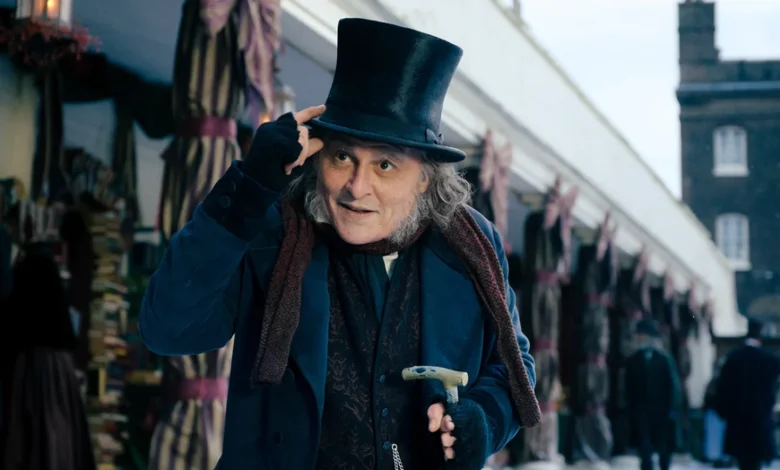
The release of Ebenezer marks a significant juncture in contemporary Hollywood, serving as the latest high-profile attempt to integrate Johnny Depp back into the ecosystem of major studio filmmaking. Directed by Ti West—a filmmaker recently acclaimed for his genre-bending horror trilogy consisting of X, Pearl, and MaXXXine—this adaptation of Charles Dickens’s A Christmas Carol attempts to bridge the gap between classic literary tragedy and gothic horror. Yet, the film’s arrival has been overshadowed by a broader cultural discourse concerning the actor’s personal history and his viability as a leading man in an industry that has undergone substantial shifts in talent management and audience expectations since his last major studio tenure.
The Context of a Contentious Return
Johnny Depp’s trajectory over the past decade has been marked by a series of high-profile legal battles, public disputes, and a subsequent withdrawal from major studio projects. For years, the actor—once considered one of the most bankable stars in the world, thanks to the massive success of the Pirates of the Caribbean franchise—saw his professional opportunities dwindle. His departure from the Fantastic Beasts series and the general hiatus from studio-backed blockbusters created a vacuum in his career that has only recently begun to close.
Ebenezer functions as a strategic pivot. By choosing a character as famously synonymous with redemption as Ebenezer Scrooge, the film’s narrative mirrors the real-world subtext of its lead actor. Lines such as "I am not the man I was" and "I was once good, and I know I can be again" are delivered by Depp under heavy prosthetics, creating a layer of artifice that has become a point of contention for critics. The film’s release is not merely a cinematic event; it is a barometer for public sentiment regarding the "cancel culture" debates that have dominated Hollywood discourse since 2017.
Critical Fragmentation and Rotten Tomatoes Metrics
The critical reception of Ebenezer has been remarkably polarized, as evidenced by its 51 percent approval rating on Rotten Tomatoes. This divide highlights a fundamental disagreement among critics: can an actor’s past behavior be effectively separated from his performance in a fictional role?
For some reviewers, the performance is a triumph of character work. The Hollywood Reporter noted that the film provides an "effective" comeback vehicle, allowing Depp to lean into the "quirky theatrical performance" that defined his early career. Conversely, outlets such as The Boston Globe and Vulture have been far more scathing. The Boston Globe described the performance as a "soulless, hollow shell," going so far as to compare the output to artificial intelligence, suggesting a lack of genuine human connection.
This tension between "star power" and "artistic sincerity" is the central theme of the reviews. While supporters argue that Depp’s charisma remains intact, detractors suggest that he has become trapped in a "grotesque caricature" of his former self—a critique that points to his long-standing reliance on heavy makeup and eccentric affectations.
A Supporting Cast of High Caliber
Despite the divisiveness surrounding Depp, the ensemble cast surrounding him has received near-universal acclaim. The film features an impressive lineup of performers, including Ian McKellen, Andrea Riseborough, Rupert Grint, Daisy Ridley, and Tramell Tillman.
The inclusion of Andrea Riseborough as the Ghost of Christmas Past has been a specific highlight. Critics have praised her performance as "imaginatively spooky," noting that the film’s most effective moments occur when the camera shifts away from the protagonist to focus on the supporting cast. This dynamic suggests that while the film is marketed as a vehicle for Depp, the production’s structural integrity relies heavily on the strength of the supporting performances to anchor the supernatural elements of the horror-tinged narrative.
The Horror Evolution of a Holiday Classic
Ti West’s direction represents a shift from the traditional, often sentimental, adaptations of the Dickens classic. By infusing the film with horror elements, West targets a demographic that is perhaps fatigued by the "vanilla" retellings that have populated the holiday season for decades.
However, this creative choice has drawn mixed reactions. Some critics, such as those at The Times UK, argue that the film is "hugely uninspired" and fails to add anything new to a "swollen canon." Others, such as The Daily Beast, suggest that the horror elements—specifically the "scariness" designed to unnerve younger viewers—make it a competent, if not classic, entry in the holiday horror subgenre. The film’s lack of "revisionist" depth is seen by some as a safety measure, while others view it as a missed opportunity to truly modernize the source material.
Chronology of the Project
The development of Ebenezer began in late 2024, following the conclusion of West’s X trilogy. The announcement that Depp would be headlining the project caused immediate ripples in the industry. The following timeline outlines the project’s progression:
- November 2024: Production is announced with Ti West attached to direct.
- February 2025: Casting of the supporting ensemble, including Ian McKellen and Daisy Ridley, is confirmed.
- July 2025: Principal photography concludes; rumors of a "comeback" narrative begin to circulate in trade publications.
- October 2025: First trailer release, focusing on the dark, gothic aesthetics of the film.
- November 2026: Official theatrical release.
Market Implications and the "Comeback" Narrative
The question remains: will the audience mirror the critical consensus? In the age of social media, the audience score on platforms like Rotten Tomatoes often diverges sharply from professional critical assessments, particularly when a star is involved in a contentious public narrative.
For the studio, the primary objective is to determine if Depp can still command a box office draw. If Ebenezer performs well, it could signal a return to the A-list for the actor, potentially opening doors for more significant studio roles. If it fails, the "comeback" narrative may be effectively debunked, potentially limiting the actor to independent or lower-budget projects for the foreseeable future.
Furthermore, the film’s performance will provide data to studios regarding the "risk-reward" ratio of casting actors with controversial public personas. As the industry continues to navigate the complexities of talent management, the success of Ebenezer serves as a case study in how studios attempt to leverage nostalgia and star power to mitigate the reputational risks associated with their leading talent.
Analytical Perspective: The Future of the "Scrooge" Archetype
The character of Ebenezer Scrooge is, by definition, a man who requires redemption. In this adaptation, the script explicitly leans into this theme. However, the disconnect between the character’s onscreen growth and the off-screen perception of the actor creates a dissonance that prevents the film from achieving total immersion.
When a viewer watches a story about redemption, they are essentially participating in an act of empathy. When that viewer has preconceived notions about the actor’s personal life, that empathy is strained. The reviews for the film consistently reflect this strain; whether they are positive or negative, the mention of Depp’s off-screen reality is almost unavoidable. This suggests that the "memory wipe" mentioned by The New York Times is, for most, an impossible task.
Final Observations
As Ebenezer hits theaters this Friday, the film faces a crowded holiday market. While it benefits from the established brand recognition of A Christmas Carol, it is also fighting against decades of superior adaptations, including the 1951 Alastair Sim version and the 1992 Muppet classic.
Ultimately, Ebenezer stands as a curious, disjointed effort. It is a film that wants to be a gothic horror story, a holiday classic, and a redemptive career move all at once. Whether it succeeds as any of those things depends largely on what the individual viewer brings into the theater. For those looking for a traditional Christmas story, the horror elements may prove distracting. For those looking for a return to form for Johnny Depp, the performance may be too obscured by prosthetics and personal baggage to satisfy.
The legacy of the film will likely be determined not by its box office returns, but by its place in the long, ongoing conversation about how Hollywood treats its aging icons and how audiences choose to interact with the art of those whose personal lives have become inseparable from their professional work. The release of this film is, if nothing else, a reminder that the story of Ebenezer Scrooge—a man forced to face his past in order to move toward his future—remains one of the most resonant, and most frequently retold, narratives in Western culture.
Related posts: