Amazon ECS Gateway Simplifies Ingress Networking for Containerized Applications at Scale

The management of containerized workloads at scale has long presented a significant operational hurdle for platform engineering teams utilizing Amazon Elastic Container Service (Amazon ECS). As organizations transition from monolithic architectures to microservices, the proliferation of individual services necessitates a corresponding increase in networking infrastructure. Historically, each new ECS service required the manual or scripted provisioning of an Application Load Balancer (ALB), the management of SSL/TLS certificates via AWS Certificate Manager (ACM), the configuration of AWS WAF web access control lists (web ACLs), and the rigorous maintenance of security group rules. This "per-service" operational model has frequently resulted in deployment bottlenecks, increased configuration drift, and escalating management overhead. To address these systemic challenges, Amazon Web Services has introduced Amazon ECS Gateway, a new account-level resource designed to automate the lifecycle management of ingress networking infrastructure.
The Evolution of ECS Networking Architecture
For years, the standard deployment pattern for ECS involved a tightly coupled relationship between the container service and its underlying networking components. In environments managing hundreds or thousands of services, platform teams often found themselves building custom automation frameworks to keep ALBs and security groups in sync with the underlying task definitions. This manual coordination often led to human error, such as misconfigured listeners or expired certificates, which could result in service outages.

The introduction of ECS Gateway represents a fundamental shift in how AWS handles the intersection of compute and network layers. By abstracting the provisioning of load balancers, certificates, and DNS records into a centralized, account-level construct, AWS is moving toward an "infrastructure-as-a-service" model where the platform handles the undifferentiated heavy lifting of networking.
Chronology and Development
The journey toward ECS Gateway began as a response to feedback from enterprise customers who reported that the "overhead per service" was the primary inhibitor to faster release cycles. According to internal AWS usage trends, the complexity of configuring ingress for microservices was cited as the second-most common reason for delayed production rollouts in 2024.
The development cycle saw the implementation of a new API-driven control plane within ECS, specifically designed to handle the "many-to-many" mapping between clusters and gateways. Throughout the latter half of 2025 and into 2026, the feature underwent rigorous beta testing among select AWS enterprise partners, focusing on high-density environments where ALB resource limits were previously a constraint. The official launch in October 2026 marks the culmination of this effort, providing a native, integrated solution for ingress management.

Technical Mechanics: How ECS Gateway Operates
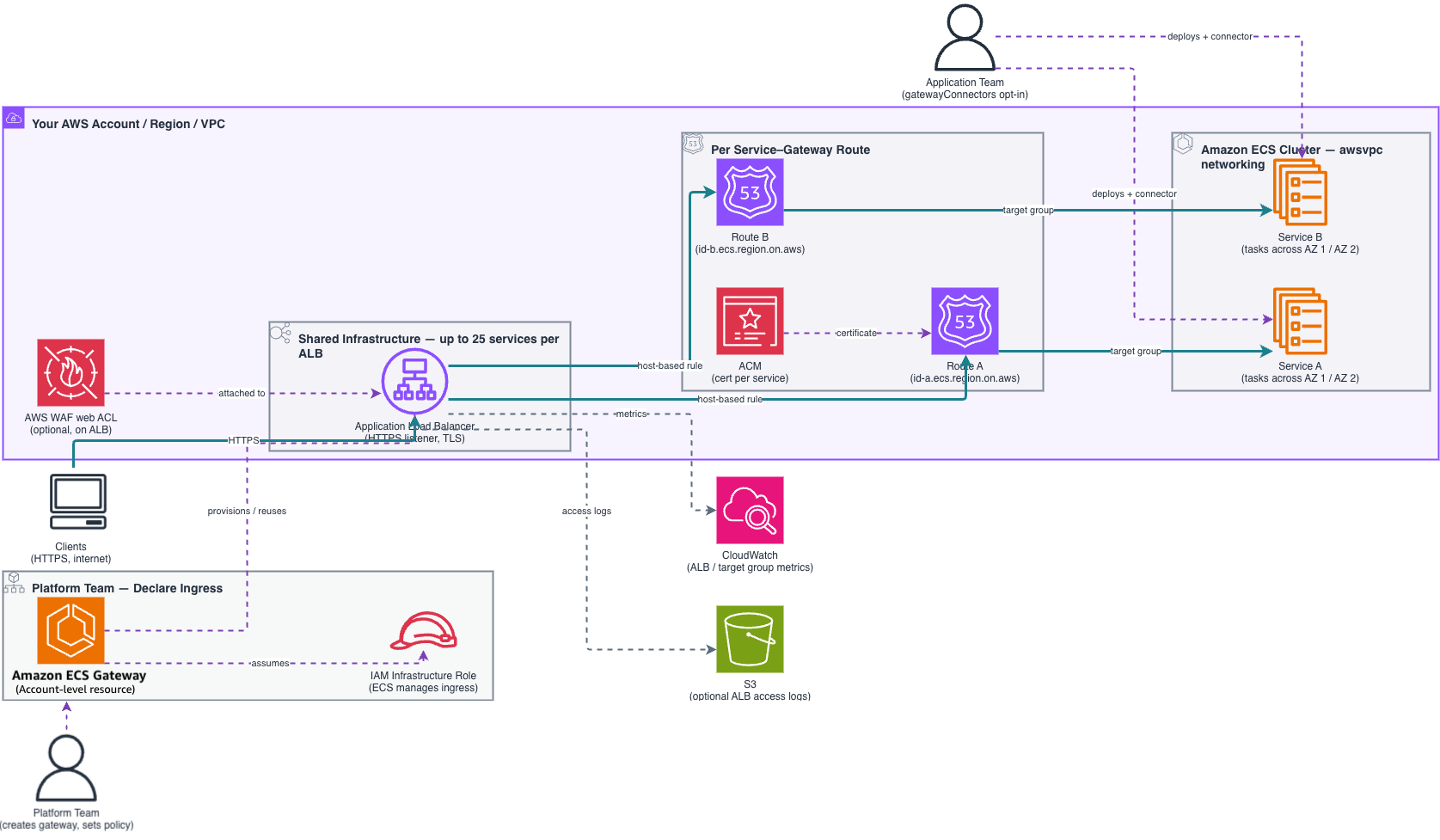
At its core, ECS Gateway functions as an orchestration layer that sits between the ECS control plane and the AWS networking services. The architecture relies on an infrastructure role—an IAM role that allows ECS to perform the necessary API calls to provision and manage resources within the customer’s account.
Host-Based Routing and Resource Optimization
A critical feature of the ECS Gateway is its ability to support host-based routing across multiple services using a shared ALB. By allowing up to 25 services to share a single load balancer, organizations can significantly reduce the "cold" overhead associated with maintaining dozens of idle ALBs. ECS manages the lifecycle of these resources automatically: when a service is deployed, the gateway provisions the necessary rule in the ALB listener; when the service is removed, the rule is deleted. If a gateway reaches its maximum ALB capacity, the system automatically provisions an additional load balancer to accommodate further growth, ensuring that infrastructure scales in lockstep with application demand.
The Role of the Infrastructure Role
Security is paramount in this automated workflow. By utilizing an infrastructure role, platform teams retain granular control over what the ECS Gateway is permitted to do. This role defines the boundaries of the gateway’s permissions, ensuring that the automation process remains compliant with the organization’s security posture. Platform teams can audit every action taken by the gateway via AWS CloudTrail, providing transparency into the automated infrastructure changes.
Implementing ECS Gateway in Production
For organizations looking to adopt this new capability, the implementation process follows a logical progression:
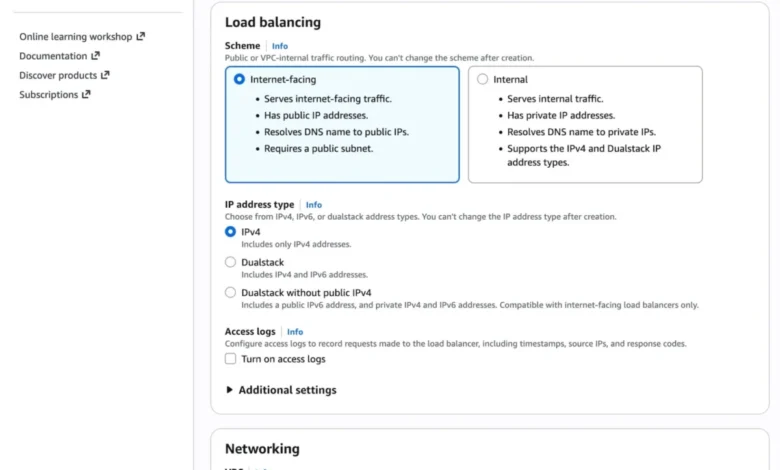
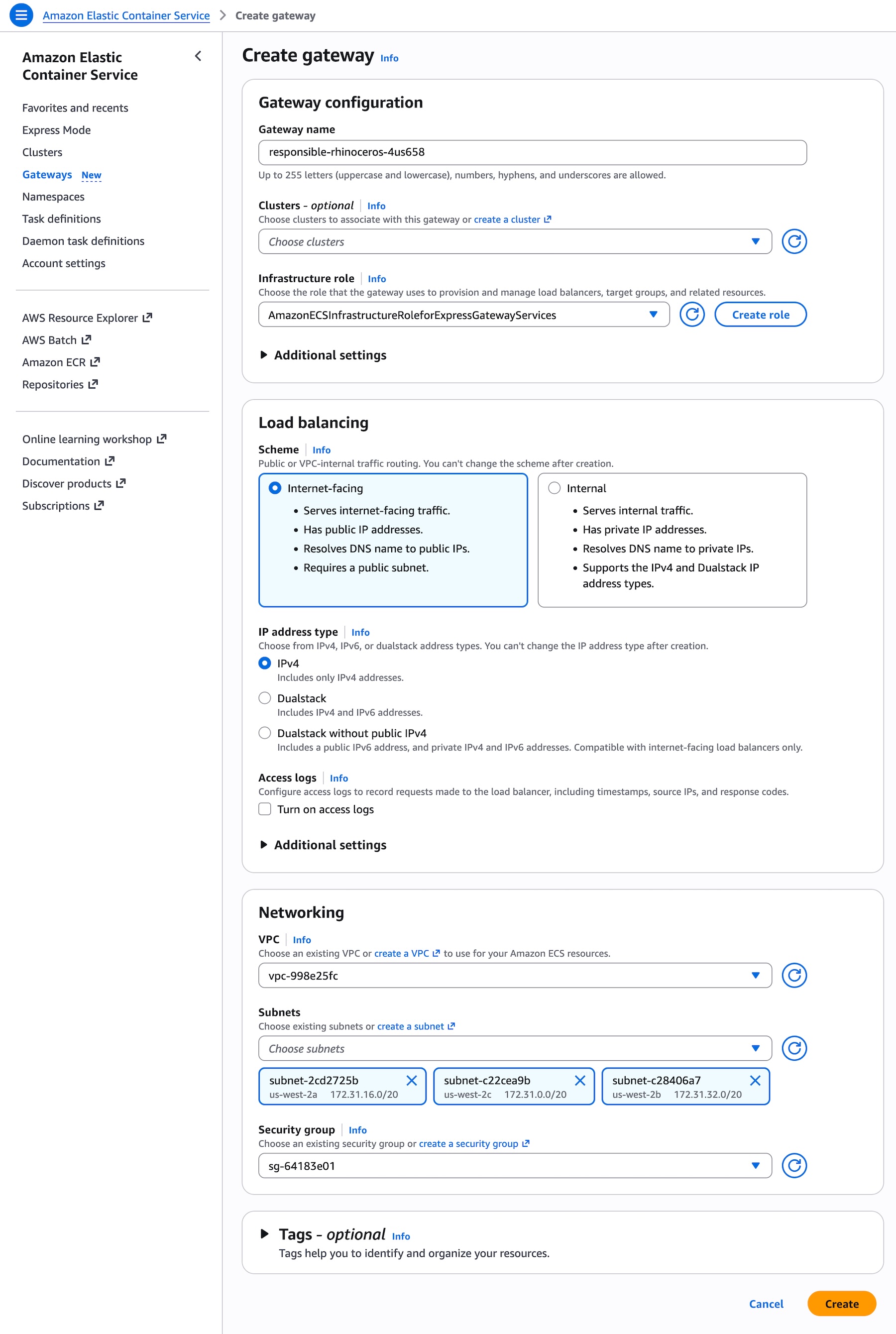
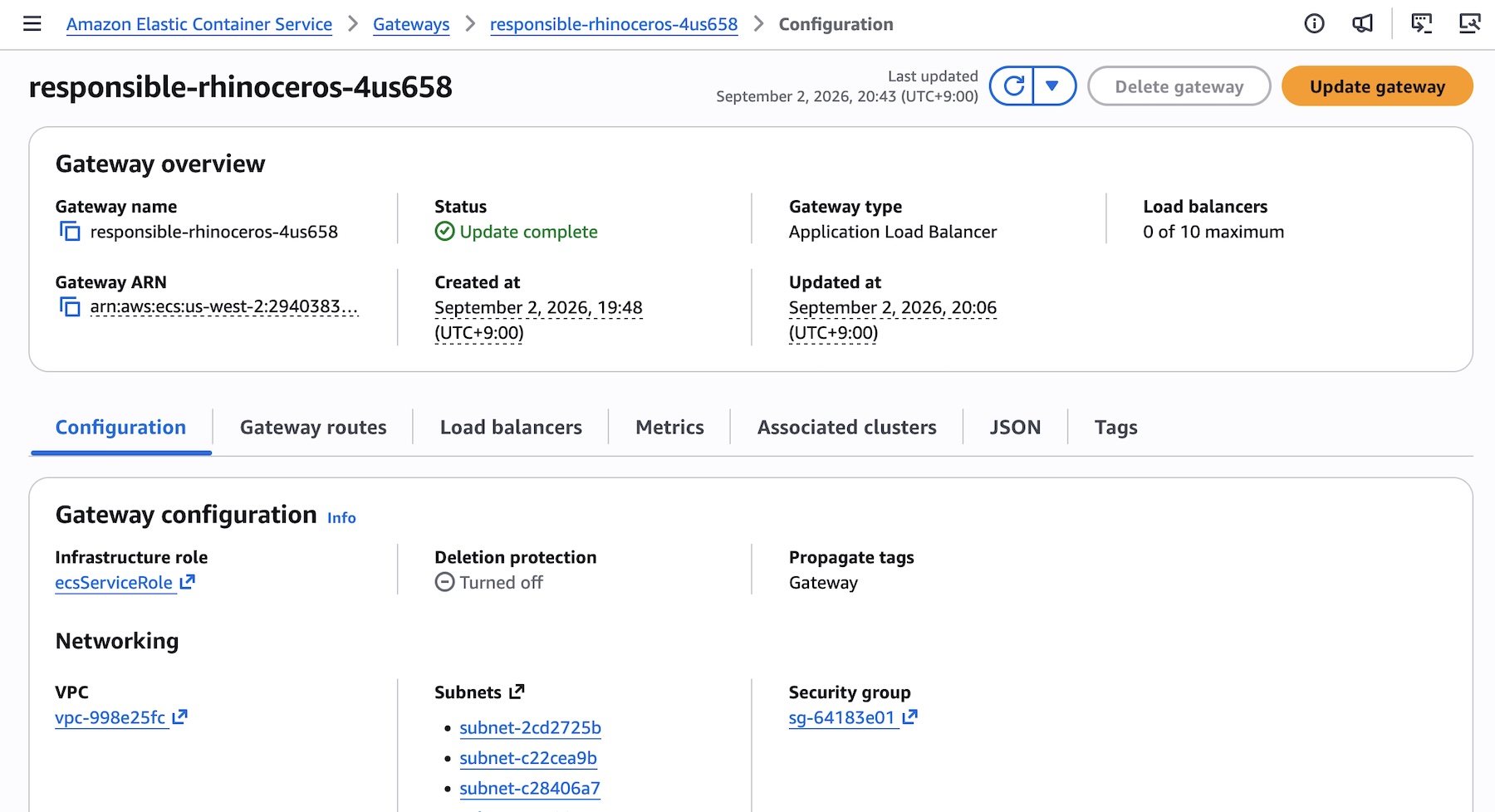
- Gateway Definition: Using the AWS Management Console or the AWS CLI, platform administrators define a gateway by specifying a unique name, the associated infrastructure role, and the configuration for the ALB (e.g., internet-facing vs. VPC-internal).
- Cluster Association: Once created, the gateway is associated with one or more ECS clusters. This step is crucial, as it defines the scope of availability for the gateway. A single cluster can be associated with multiple gateways, allowing for a mix of internal and external traffic patterns.
- Service Connectivity: Application developers modify their service definitions to include a "gateway connector." This connector acts as a request to the gateway, specifying the required port and health check parameters.
- Automated Provisioning: Once the service is updated, the ECS control plane triggers the gateway to provision the necessary listener rules, DNS records, and security group updates.
Data-Driven Efficiency and Cost Implications
Initial data from early-adopter environments suggests that ECS Gateway can reduce the time required to onboard a new microservice by approximately 60% to 70%. By removing the manual task of updating load balancer configurations, developers can focus on application logic rather than network plumbing.
From a cost perspective, ECS Gateway is offered at no additional charge. Users continue to pay only for the underlying resources—ALBs, ACM certificates, WAF rules, and data transfer—that the gateway manages. This is a vital distinction for financial operations (FinOps) teams, as it ensures that the introduction of an automation layer does not introduce hidden "management fees." Furthermore, by optimizing the use of ALBs through shared host-based routing, many organizations will likely see a reduction in their overall load balancing costs, as they will no longer be forced to maintain an individual ALB for every small-scale service.
Broader Implications for Microservices Architecture
The launch of ECS Gateway is expected to have significant implications for the industry’s approach to cloud-native networking.
Reducing Configuration Drift
Configuration drift—the phenomenon where the actual state of the infrastructure deviates from the intended state—has long plagued large-scale deployments. By centralizing the management of ingress resources, ECS Gateway effectively eliminates the possibility of human error during the creation of listener rules or the association of certificates. The "source of truth" remains the service definition, and the gateway ensures that the infrastructure remains consistent with that definition.
Strengthening the Platform Engineering Model
The separation of responsibilities provided by ECS Gateway is a boon for modern platform engineering teams. Platform teams can now set the "guardrails" by defining the gateway’s capabilities, while application teams gain the autonomy to deploy their services without needing to understand the underlying complexity of VPCs, subnets, and ALB listeners. This alignment promotes a "self-service" culture, which is essential for scaling development velocity in high-growth companies.
Integration with AI-Driven Development Tools
The announcement also highlights the growing importance of AI-assisted operations. By providing support for the AWS MCP (Model Context Protocol) Server and associated plugins, AWS is enabling developers to manage their gateways through AI coding assistants. This capability allows teams to query their infrastructure state or generate deployment scripts using natural language, further lowering the barrier to entry for managing complex networking configurations.
Operational Considerations and Best Practices
While ECS Gateway offers substantial benefits, there are several operational considerations for teams planning a transition:
- Quota Management: Platform teams must be mindful of the
maxAlbCountsetting. While the system manages the addition of load balancers, hitting account-level quotas for ALBs or security groups can still occur if not monitored. - Incremental Adoption: One of the most significant advantages of the gateway is its support for incremental migration. Organizations can keep their existing ingress infrastructure in place while simultaneously testing the gateway for new services. This allows for a "side-by-side" validation period, significantly reducing the risk of downtime during transition.
- Monitoring and Observability: Since the infrastructure is now managed by the gateway, monitoring efforts should shift toward the gateway itself. AWS CloudWatch logs and metrics provide visibility into the health of the gateways and the success rates of the automated provisioning processes.
Conclusion
The release of Amazon ECS Gateway signifies a mature phase in the lifecycle of AWS container services. By shifting from a manual, per-service provisioning model to an automated, policy-driven architecture, AWS is providing the tools necessary for organizations to scale their containerized applications without scaling their operational burden. As microservices architectures continue to grow in complexity, the importance of such abstractive, high-level orchestration layers will only increase. For platform teams currently struggling with the weight of ingress management, the ECS Gateway offers a clear, scalable path forward, enabling them to prioritize application delivery and performance over the complexities of underlying infrastructure management.
Related posts: