How Claude Marketing Plugins Are Reshaping the Future of Content Strategy and CRM Integration

The rapid evolution of artificial intelligence in the professional landscape has reached a pivotal juncture in 2026, as marketers move beyond basic text generation to the sophisticated implementation of specialized AI plugins. Anthropic’s Claude, known for its emphasis on safety and nuanced reasoning, has established a robust ecosystem of marketing plugins that transform the AI from a general-purpose chatbot into a specialized operational partner. By integrating directly with business data and core marketing platforms, these tools are effectively automating the "busy work" of modern marketing, allowing teams to reclaim significant portions of their workweek.
According to HubSpot’s 2026 State of Marketing Report, the reliance on AI has shifted from experimental to foundational. The data indicates that 80% of marketing professionals now utilize AI for content creation, while 67% report that these tools save their departments at least 10 hours per week. This time-saving efficiency is the primary catalyst for the current surge in plugin adoption. As marketers look to move beyond simple drafting, they are turning to connectors and plugins that bridge the gap between creative output and actionable CRM data.
The Functional Evolution of Claude Plugins

To understand the current market, one must distinguish between the technical components of the Claude ecosystem. Plugins serve as modular packages that bundle specific skills, connectors, and sub-agents into a singular, installable interface. Connectors provide the necessary "pipes" that allow Claude to access external data sources—such as HubSpot’s Smart CRM—while skills act as reusable instruction sets that maintain brand voice and style guidelines.
This modular architecture allows organizations to curate a tailored workspace. For example, a content team might install a brand-voice plugin to ensure consistency across all written assets, while a marketing operations team might implement a CRM-specific connector to pull real-time campaign performance metrics into their analysis. By centralizing these capabilities within the Claude interface, marketers avoid the friction of toggling between disparate software windows, effectively creating a "digital command center" for their daily operations.
Chronology and Development of the Ecosystem
The integration of third-party systems into AI models began in earnest during the mid-2020s, as companies sought to solve the "hallucination" problem by grounding AI responses in verified, real-world data. The launch of the HubSpot connector for Claude marked a significant milestone, representing the first time a major CRM platform provided direct, secure access to its database within an LLM environment.

In the months following that release, Anthropic expanded its unified directory, allowing users to discover and deploy specialized plugins directly from the Claude "Customize" menu. This evolution followed a clear trajectory: first, basic text generation; second, file analysis and data interpretation; and third, the current era of agentic workflows, where the AI is permitted to perform actions—such as drafting a blog post or creating a campaign event—within external platforms.
Strategic Utility: The HubSpot Connector as a Case Study
For organizations heavily invested in their CRM, the HubSpot connector for Claude stands as the benchmark for operational integration. Its primary value proposition is the reduction of data preparation time. Traditionally, a marketer would need to export CSV files, clean the data, and prompt the AI with context before an analysis could begin. With the connector, the AI has real-time access to records, deals, and engagement history.
Karen Ng, EVP and Head of Product at HubSpot, has emphasized that the true value of this connection lies in "grounding" the AI’s responses in the reality of the business. By drawing on specific CRM data, the AI avoids generic marketing advice, instead offering recommendations based on the actual performance of the user’s customer base.

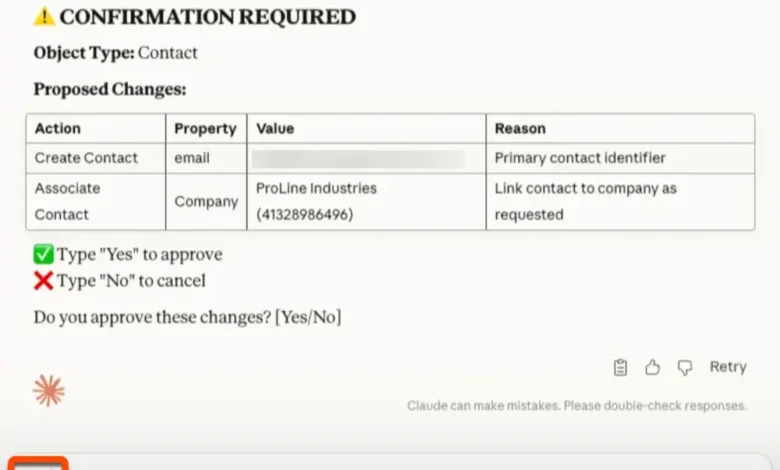
The security architecture of this integration is also worth noting. The system is designed with specific permission tiers, ensuring that Claude can only access data explicitly authorized by the user or administrator. Furthermore, the "human-in-the-loop" requirement for write-access—whereby Claude can propose a change, but a human must click "approve" before it goes live—has been instrumental in winning over enterprise-level users concerned about brand safety and compliance.
Beyond Content: Analytics, Design, and Agency
While content creation remains the most popular use case for Claude, the utility of plugins extends into more complex domains. The design plugin, for instance, allows for the prototyping of landing pages by leveraging existing brand assets. By feeding the AI a set of visual style guides, companies can generate consistent page layouts that align with their existing design systems. This accelerates the creative process, moving teams from ideation to wireframe in a fraction of the time previously required.
In the realm of analytics, the integration of tools like Amplitude and HubSpot’s internal reporting allows for the rapid generation of stakeholder reports. Instead of manually updating spreadsheets, marketing operations professionals can use natural language queries to identify trends in customer lifecycle stages or campaign ROI. The AI effectively acts as a junior data analyst, summarizing complex datasets into clear, actionable summaries.

The Rise of Agentic Workflows
The most advanced applications currently emerging involve "agentic" behavior, where Claude is used to orchestrate complex, multi-step processes. For instance, an AI agent could be configured to:
- Identify a decrease in email open rates for a specific customer segment.
- Retrieve the most recent campaign performance data.
- Propose a new, personalized email subject line based on the data.
- Draft the email body using the brand’s approved voice.
- Save the result as a draft in the marketing platform for a final human review.
This level of automation is particularly attractive to growth marketing teams. For those with internal development resources, the use of Claude Code allows for even greater customization, enabling the connection of proprietary internal tools to the AI. While this requires more technical oversight, it offers a level of operational efficiency that is unattainable with off-the-shelf solutions.
Measuring Success and Mitigating Risk

As the adoption of these plugins scales, the focus for leadership must shift toward rigorous measurement. The common pitfall is to evaluate success based purely on the volume of content produced. However, volume is a vanity metric in the context of AI. A more effective framework involves measuring the reduction in "revision effort"—the time a human editor spends correcting AI-generated work—and the correlation between AI-assisted assets and business outcomes such as conversion rates or pipeline generation.
To ensure success, marketing departments should establish a clear baseline before integrating a new plugin. By measuring the duration of a standard workflow and the performance of its output, teams can objectively determine the ROI of the AI integration after 30 days of use.
Risk management remains a critical pillar of this transition. Because AI models are probabilistic rather than deterministic, they can occasionally produce unexpected results. Therefore, the implementation of "Human-in-the-Loop" (HITL) processes is not merely a recommendation; it is an organizational imperative. Whether it is an editorial review of a blog post or a final check on a CRM update, human oversight ensures that the efficiency gains of AI do not come at the cost of brand integrity or customer trust.
The Path Forward: Strategic Implementation

Looking ahead, the role of the marketer is fundamentally changing. The ability to write high-quality copy is becoming secondary to the ability to manage the AI agents that produce that copy. Professionals who master the art of prompt engineering, data integration, and workflow orchestration will find themselves at a distinct advantage.
For organizations, the directive is clear: prioritize friction reduction. Do not add a plugin to the stack simply because it offers a flashy feature. Instead, identify the most repetitive, time-consuming task in the marketing department—whether it is reporting, content staging, or data entry—and search for a plugin that directly solves that specific bottleneck.
As the ecosystem continues to mature, we can expect deeper integrations with third-party tools, improved reasoning capabilities for complex multi-platform campaigns, and more robust compliance controls for sensitive industry sectors. The integration of Claude into the marketing tech stack is no longer an optional upgrade; it is the new standard for operational excellence. By focusing on purposeful, secure, and measured implementation, marketing teams can leverage these plugins to not only survive the rapid pace of change but to set the tempo for their industry.