White House Network Security Compromised by Residential Proxy Services Linked to Russian Infrastructure

In a significant breach of digital hygiene and network security protocols, multiple devices connected to the Executive Office of the President’s dedicated internet network have been identified as residential proxy nodes. Security researchers have confirmed that these devices are effectively turning high-security government endpoints into gateways for external users, allowing anyone with a few dollars to rent access to the White House’s digital footprint. The discovery, which spans the month of October and early November, underscores a growing, systemic vulnerability where government-issued devices, when infected with seemingly innocuous software, inadvertently create backdoors into the most sensitive network in the United States.
The Mechanism of the Breach
Residential proxy services function by aggregating thousands of consumer devices into a global pool of exit nodes. When a user employs such a service, their internet traffic appears to originate from the residence or office of an unsuspecting person whose device has been co-opted. In the case of the White House network, identified by the Autonomous System number AS2650, devices belonging to staff members appear to have been running software—often bundled with free applications—that grants proxy providers remote control over the device’s outbound traffic.
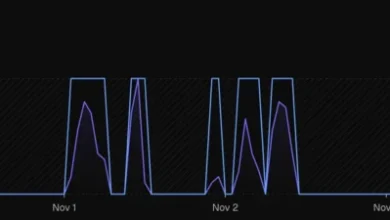
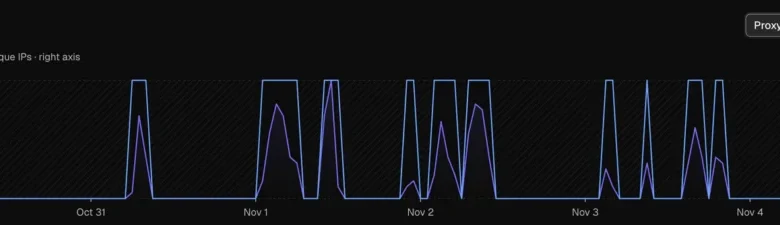
The security firm Layer3 Intel, which first identified the anomaly, reported that the activity was persistent and non-random. Between October 5 and November 3, their monitoring systems detected 236 distinct instances where traffic originating from the Executive Office of the President’s network was being utilized as an exit point for a residential proxy service. The activity was most concentrated during off-hours, typically between 5 p.m. and midnight, suggesting that the devices involved were likely personal or staff-issued hardware being used for domestic or recreational tasks after standard business hours.
A Troubling Connection to Russian Cyber Operations
Perhaps the most alarming aspect of this discovery is the involvement of Infatica, a proxy provider whose roots trace back to individuals previously implicated in state-sponsored cyber espionage. Synthient, a proxy-tracking firm, identified Infatica’s software as the primary culprit behind the unauthorized traffic originating from the White House.
The founder of Infatica, Vladimir Fomenko, is a figure well-known to Western intelligence agencies. Fomenko’s previous hosting enterprise, King Servers, was identified by U.S. officials as the infrastructure provider for six of the eight IP addresses used in the 2016 campaign to breach election systems in Arizona and Illinois. The presence of Infatica on sensitive government hardware creates an immediate and high-level security concern regarding the potential for data exfiltration or the deliberate targeting of White House assets by state-aligned actors.
Chronology of the Discovery
The detection of these proxy nodes was not the result of a targeted audit, but rather an accidental byproduct of global internet scanning. The timeline of the activity is as follows:
- October 5: Layer3 Intel begins observing consistent beaconing activity from AS2650.
- October 5 – November 3: Proxy tracking tools record 236 distinct exit events from the White House network.
- Late October: Security analysts note that the proxy activity is not limited to a single service, with 28 different proxy providers successfully routing traffic through the White House network during this 30-day window.
- Early November: Final reports from security firms synthesize the data, confirming the presence of Infatica and other residential proxy software on machines connected to the executive network.
The fact that 28 different services were able to route traffic through this network indicates a systemic failure in endpoint management. It suggests that various staffers have installed software—whether it be free utility apps, browser extensions, or "monetized" free software—that contains the SDKs (Software Development Kits) required to transform a device into a proxy node.
The Economics of Exploitation
The ease with which this occurs is driven by a robust, under-regulated market for bandwidth. Residential proxy services frequently operate on a model where they offer users "free" software in exchange for the right to use their device’s bandwidth. These companies then turn around and sell this access to anyone—ranging from marketers performing web scraping to cybercriminals conducting credential stuffing or phishing attacks.
Ben Brundage, founder of Synthient, noted that the cost of entry is negligible. "Some of these resellers sell bandwidth for as low as 60 cents a Gigabyte," Brundage explained. "That means for less than a dollar, you can gain access into some of the most confidential and trusted networks." The lack of Know Your Customer (KYC) protocols within this gray market means that threat actors can bypass traditional IP-based security filters by hiding behind the reputable, whitelisted IP addresses of government agencies.
Broader Implications and Institutional Risks
The vulnerability identified at the White House is emblematic of a wider crisis in cybersecurity. In January 2026, the proxy-tracking service Spur released data indicating that residential proxies had been found in nearly 300 government-owned networks, 318 utility companies, and 166 healthcare institutions. This widespread "proxy-fication" of critical infrastructure creates a landscape where the perimeter of a network is no longer a defined boundary, but a porous collection of endpoints that can be compromised from the inside out.
Beyond the risk of unauthorized access, these services represent a significant malware vector. In 2025, security researchers uncovered a vulnerability in proxy service architecture that allowed attackers to move laterally from a proxy node into the local network of the host. In effect, by allowing a proxy service to run on a work computer, an employee provides a potential bridge for a malicious actor to scan and attack the entire internal agency network, bypassing firewalls and air-gapped defenses.
Official Response and Remediation
As of the time of this report, the White House has not issued a formal statement regarding the breach of its network. However, security experts suggest that the remediation process will be complex. Simply blocking the known IP addresses of proxy providers is insufficient, as these services rotate their addresses constantly. Instead, the focus must shift to rigorous endpoint management, specifically the enforcement of strict "allow-lists" for software installations and the implementation of mobile device management (MDM) protocols that can detect and disable proxy-related SDKs on government-issued devices.
For many organizations, the realization that they are unwittingly contributing to a global botnet is a harsh wake-up call. The "free" software that promises to speed up a web browser or provide a free VPN service often comes at the cost of the user’s network integrity. In the context of the Executive Office of the President, this reality is not merely a technical inconvenience but a national security vulnerability.
Analysis: A Call for Stricter Governance
The incident involving AS2650 highlights a critical gap in modern cybersecurity strategy: the inability to fully account for the "shadow IT" residing on employee devices. While large organizations invest millions in perimeter defense, the reality is that a single employee installing a seemingly harmless application can render those investments moot.
Moving forward, agencies must adopt a "Zero Trust" model that extends beyond the network perimeter to the device itself. This includes:
- Strict Software Control: Prohibiting the installation of any non-vetted third-party software on devices that touch government networks.
- Continuous Monitoring: Implementing behavioral analytics to detect the characteristic beaconing patterns associated with proxy services.
- Increased Awareness: Educating staff on the dangers of "free" software and the hidden trade-offs involved in using applications that monetize user bandwidth.
The presence of Russian-linked infrastructure on American executive networks is a reminder that the cyber-battlefield is not confined to servers in distant data centers. It is located on the laptops, tablets, and mobile devices sitting on the desks of government officials every day. Unless the flow of traffic from these devices is tightly restricted and monitored, the integrity of the nation’s most sensitive communications will remain at risk of being rented out to the highest bidder.