White House Network Compromised by Residential Proxy Services Linked to Russian Cyber Actors

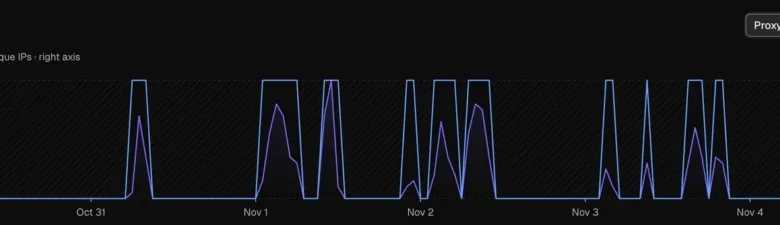
In a significant breach of digital operational security, security researchers have identified that multiple devices connected to the official Executive Office of the President network (AS2650) have been functioning as residential proxy nodes. This configuration effectively turns government-issued computers and mobile devices into gateways that allow third parties to route internet traffic through the White House’s own infrastructure. The discovery, detailed by the security intelligence firm Layer3 Intel, highlights a growing, systemic vulnerability where sensitive corporate and government networks are inadvertently being co-opted by global proxy marketplaces.
The situation is further complicated by the identified presence of Infatica, a proxy service provider founded by Vladimir Fomenko. Fomenko is a figure of notable interest to Western intelligence agencies; his previous hosting venture, King Servers, was identified by investigators as the primary infrastructure provider for the 2016 cyberattacks against election databases in Arizona and Illinois. The presence of such a service within the high-security perimeter of the White House suggests either a severe lapse in endpoint security management or an unintentional installation of malicious or incentivized software by personnel.
A Chronology of the Breach
The investigation into this anomaly began when Layer3 Intel observed persistent, unauthorized traffic patterns beaconing out from the AS2650 network block. According to the firm’s data, the activity was not an isolated incident but a consistent pattern of behavior recorded between October 5 and November 3. During this thirty-day window, researchers logged 236 separate instances where proxy traffic exited through the White House’s internal network.
The activity exhibited a distinct temporal signature: the majority of the connections were recorded during off-hours, specifically between 5:00 p.m. and midnight. This suggests that the devices were active and connected to the network during evening hours, likely when users were either working late or, more concerningly, when the devices were left unattended or connected to the office network while simultaneously interacting with public-facing, potentially compromised, applications.
The tracking firm Synthient confirmed these findings, noting that the traffic was directly attributable to Windows 11 installations of the Infatica proxy software. Infatica operates by embedding itself into otherwise benign-looking mobile and desktop applications. Once installed, the software turns the host machine into an exit node, allowing external users to pay for the right to "rent" that machine’s IP address. This effectively masks the user’s true location and identity, making them appear as if they are browsing from within the secure, trusted network of the White House.
The Mechanism of Residential Proxy Exploitation
Residential proxy services have exploded in popularity over the last several years, evolving from niche tools for web developers into a massive, unregulated shadow industry. While these services claim to offer "legitimate" data-scraping capabilities, the reality is that they are frequently built upon a foundation of "monetized" end-user devices.
The business model is deceptive. Developers of free mobile games, utility apps, or browser extensions often integrate Software Development Kits (SDKs) provided by these proxy networks. When an unsuspecting user downloads the app, they unknowingly grant the provider permission to use their internet bandwidth as a proxy. In exchange, the developer receives a small commission per installation.
From a security perspective, this creates a "leaky" network. Once a device becomes a node, the proxy provider can route any traffic through it. As Layer3 Intel noted, this is not a sophisticated, targeted attack on the White House but rather a consequence of "public access." Because these services are open to anyone with a credit card, a bad actor can pay a few dollars, select a specific region or network, and begin routing their malicious web requests through the Executive Office of the President’s own infrastructure. The researchers emphasized that they did not need to exploit a zero-day vulnerability; they simply signed up for the service and requested access to the network segment.
The Russian Connection and Historical Context
The involvement of Infatica adds a layer of geopolitical sensitivity to this technical failure. Vladimir Fomenko’s history with King Servers is well-documented in the annals of election interference. In 2016, his hosting services provided the command-and-control infrastructure for the state-sponsored cyber actors who targeted U.S. election systems.
While there is currently no evidence that the Russian government is actively using the White House proxy nodes to launch secondary attacks, the mere presence of a service with these historical ties inside the White House network is a major intelligence concern. If a malicious actor can rent access to an IP address that is recognized by major websites and government portals as a "trusted" White House node, they could theoretically bypass multi-factor authentication (MFA) triggers or geolocation-based security filters that would otherwise block suspicious foreign traffic.
Broad Implications for National Security and Infrastructure
The White House is not an isolated case, but rather the most high-profile example of a much larger, systemic failure in modern cybersecurity. In January 2026, the proxy tracking service Spur released data showing that residential proxy nodes were present in nearly 300 government-owned networks, 318 utility companies, 166 healthcare providers, and 141 financial institutions.
The risks associated with these proxies are twofold. First, there is the risk of data exfiltration and impersonation. Second, there is the risk of "inward" exploitation. In late 2025, researchers identified a widespread vulnerability in the way these proxy services communicate with their nodes. By probing the proxy endpoint, an attacker can gain insight into the local network the device is connected to. In January 2026, security researcher Ben Brundage demonstrated how these vulnerabilities could be used to seize control of internal devices, effectively granting an attacker a bridgehead into an otherwise firewalled corporate or government environment.
"Some of these resellers sell bandwidth for as low as 60 cents a gigabyte," Brundage stated in an interview. "That means for less than a dollar, you can gain access into some of the most confidential and trusted networks. The reseller ecosystem further enables this with any criminal able to buy access while skipping KYC [Know Your Customer] processes."
Analysis: The Failure of Endpoint Hygiene
The persistence of this issue points to a critical failure in endpoint management policies. In a high-security environment like the White House, "Bring Your Own Device" (BYOD) policies or the installation of unvetted software should be strictly prohibited. The fact that dozens of proxy services were able to exit through the White House network indicates that there may be a lack of egress filtering and application whitelisting.
If an employee installs a "free" utility application that bundles a proxy SDK, that device becomes a security liability. Without robust endpoint detection and response (EDR) solutions configured to block unauthorized outbound proxy traffic, these devices will continue to beacon out, broadcasting their availability to the highest bidder on the dark web.
The findings also highlight the inadequacy of current Know Your Customer (KYC) regulations within the proxy industry. Because these services are often registered in jurisdictions with limited oversight or are designed to facilitate anonymity, there is little accountability for the providers themselves. As long as these companies can monetize government bandwidth, they have little financial incentive to implement the strict controls necessary to prevent the abuse of their networks.
Official Response and Future Outlook
As of this writing, the White House has not provided a formal statement regarding the report. However, the revelation will likely trigger an immediate internal audit of all network-connected devices within the Executive Office of the President. IT security teams are expected to implement more aggressive traffic monitoring to identify and block connections to known residential proxy providers.
The broader implications for the cybersecurity industry are stark. As the cost of high-quality proxy access drops, the barrier to entry for cybercriminals continues to lower. Organizations, particularly those in critical infrastructure, must move beyond perimeter-based defenses and adopt "Zero Trust" architectures that assume every device—even those inside the office—could be compromised. Without a concerted effort to regulate the residential proxy market and enforce stricter software installation policies, the trend of government and corporate networks being used to facilitate their own subversion is likely to continue.