Amazon Transforms Prime Video Into A Massive Virtual Storefront With New Shopping Integrations

Amazon is fundamentally altering the intersection of entertainment and e-commerce by rolling out a comprehensive suite of features designed to turn Prime Video into a seamless shopping destination. By leveraging its proprietary X-Ray technology and advanced computer vision, the retail titan is positioning its streaming service not just as a platform for media consumption, but as a dynamic, interactive marketplace. This initiative, announced on Thursday, represents a significant evolution in how viewers interact with the content they consume, effectively shrinking the gap between seeing a product on screen and purchasing it.
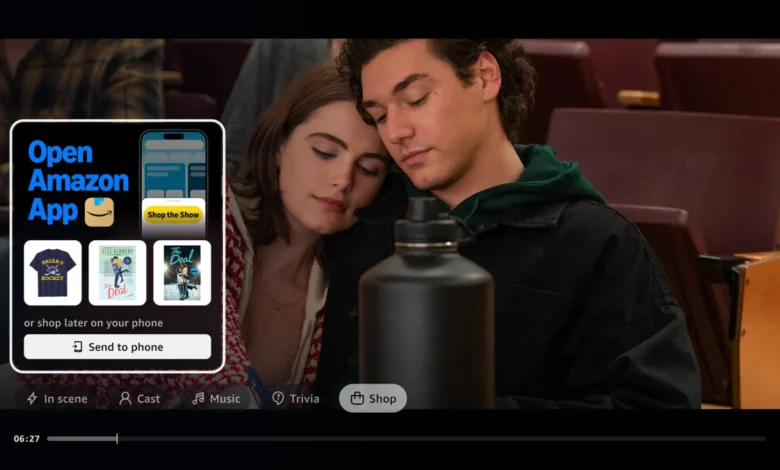
The new features allow for a more intuitive shopping experience across thousands of Prime Video titles. By integrating directly with X-Ray—the long-standing feature that provides real-time data on cast members, soundtrack listings, and trivia—Amazon is introducing a dedicated "Shop" tab. When users press up on their Fire TV remote to activate X-Ray, they can now navigate to this tab to see products related to the specific scene or character they are viewing. To complete a purchase, the system syncs with the user’s mobile Amazon Shopping app, which automatically detects the content playing on the television and presents a curated, synchronized feed of available products.
A Chronology of Amazon’s Shoppable Content Strategy
Amazon’s move to monetize the viewing experience did not emerge overnight; it is the culmination of years of iterative testing and infrastructure development. The journey began in earnest with the introduction of "Shop the Show," a second-screen shopping experience that launched last year. Initially, the feature required a manual, somewhat cumbersome process: users had to type "shop the show" into the Amazon search bar on their mobile devices to manually trigger a store page related to the content they were watching.
While innovative, the friction involved in the original "Shop the Show" process limited its adoption. Market observers and internal data analysts likely recognized that for shoppable TV to reach mass-market appeal, the experience needed to be passive, immediate, and omnipresent. The latest updates effectively eliminate the manual search requirement. Now, by simply opening the Amazon Shopping app while a movie or show is playing, the app recognizes the title and instantly routes the user to a dedicated storefront. This shift from a "search-based" model to an "automatic recognition" model represents a critical milestone in Amazon’s retail strategy.
Leveraging Artificial Intelligence with Amazon Lens
At the heart of the new "Shop the Scene" feature is Amazon’s sophisticated visual search technology, often referred to as Amazon Lens. This tool uses machine learning to identify objects, apparel, and home decor items within a frame of video. When a viewer sees an outfit or a piece of furniture that catches their eye, they can tap an image within the app to trigger a visual search.
It is important to note the technical limitations of this AI: Amazon does not claim that the system will provide an exact, one-to-one match for every item. In many instances, the clothing worn by characters in high-budget productions may be bespoke, vintage, or from high-end luxury designers that are not part of the standard Amazon retail catalog. Instead, the technology identifies products that are visually similar, allowing users to achieve a "look" or style aesthetic rather than securing the identical garment. This approach creates a broader retail opportunity, as it allows Amazon to highlight a wider array of inventory from its third-party sellers that align with the aesthetic trends seen on screen.
Industry Context and Competitive Landscape
Amazon is by no means the only player attempting to capture the "shoppable TV" market. As traditional linear television ad revenues face pressure from the rise of streaming, major media and tech companies are aggressively seeking alternative revenue streams. The integration of commerce into entertainment is currently viewed as the "holy grail" of advertising, as it bypasses the need for traditional commercials by making the content itself the ad.

The competitive landscape is crowded with heavyweights:
- YouTube: Having long established a "merch shelf" for creators, YouTube has pushed further into shoppable connected TV ads, allowing viewers to click through to products directly from their television screens.
- Peacock: In 2023, the NBCUniversal-owned streamer introduced "Must ShopTV," a feature that explicitly highlights products featured in its original programming and reality shows.
- Roku: As a platform provider rather than a content owner, Roku has taken a different approach by integrating with Shopify. This allows users to purchase products from Shopify merchants directly through the Roku remote control, creating a hardware-based shopping ecosystem.
- Disney: Through its Disney+ and Hulu platforms, Disney has been experimenting with virtual concessions and content-based e-commerce, particularly within its streaming ad tiers.
By launching these features, Amazon is leveraging its unique position as both a massive streaming service provider and the world’s largest online retailer. Unlike its competitors, who must often form partnerships to facilitate transactions, Amazon owns the entire value chain—from the content production and distribution platform (Prime Video) to the shopping app, the payment gateway, and the logistics network (Amazon fulfillment).
Strategic Implications and Market Analysis
The implications of this rollout are significant for advertisers, content creators, and the retail industry at large. For advertisers, this marks a shift toward "contextual commerce." Rather than placing a static banner ad next to a video, brands can now place their products inside the narrative. This is expected to drive higher conversion rates, as the product is being presented to a consumer who is already engaged with the content.
For content creators and studios, this provides a new avenue for monetization that could potentially influence production decisions. It is plausible that future scripts or production designs will take into account the "shoppability" of a set or a character’s wardrobe, creating a new layer of product placement that is far more sophisticated than traditional branding.
However, the rollout also raises questions about user experience. There is a delicate balance to be struck between providing useful, non-intrusive shopping tools and cluttering the viewing experience with commercial prompts. Amazon’s strategy of utilizing the "second screen" (the mobile device) rather than forcing overlays onto the TV screen suggests that the company is mindful of this balance. By keeping the primary TV experience clean while offloading the heavy lifting to the mobile app, Amazon hopes to enhance, rather than detract from, the storytelling.
Future Outlook and Expansion
The "Shop the Scene" technology is currently live on iOS and Android in the United States and is compatible with more than 600 titles at launch. Meanwhile, the broader "Shop the Show" integration is scaling rapidly, expanding from 1,300 titles to over 8,000. This expansion covers a diverse range of content, including Prime Originals, licensed films, and live sports events, where the potential for apparel and memorabilia sales is particularly high.
Industry analysts expect Amazon to continue expanding these features internationally and across more device types. As the underlying machine learning models for Amazon Lens improve, the accuracy of product identification is likely to increase, further reducing the gap between the viewer’s desire for an item and their ability to purchase it.
While the retail giant has not disclosed specific revenue projections for these new features, the integration is clearly a long-term play. By turning Prime Video into a multi-billion-dollar shopping mall, Amazon is reinforcing its moat. As the boundaries between media and commerce continue to dissolve, the ability to capitalize on consumer intent in real-time will likely become one of the most valuable assets in the modern digital economy. Amazon’s latest announcement is a clear signal that the era of "passive viewing" is coming to an end, replaced by a future where the screen is always a point of sale.