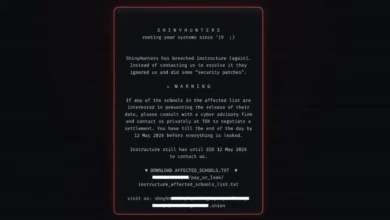
Unmasking the digital architect behind Qilin: How a St. Petersburg man became the world’s most prolific ransomware operator

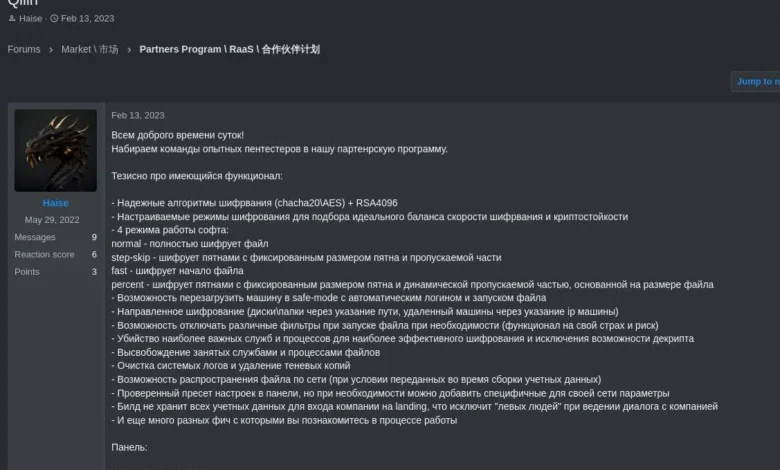
The global landscape of cyber-extortion has shifted dramatically over the past three years, with the emergence of the Qilin ransomware group as the dominant force in the Ransomware-as-a-Service (RaaS) ecosystem. According to recent intelligence from the NCC Group, Qilin has orchestrated a staggering 365 attacks against major organizations in just the last quarter, cementing its status as the most industrious threat actor currently in operation. Behind this massive criminal infrastructure, however, lies not a faceless organization, but a trail of operational security failures that have led investigators to a 36-year-old resident of St. Petersburg, Russia: Aleksey Mikhailovich Yakovtsev.
The de-anonymization of the individual known in cybercrime circles as “Haise” represents a significant victory for intelligence firms and security researchers. By stitching together disparate data points—ranging from compromised government databases to leaked forum activity—experts have successfully mapped the evolution of a mid-level fraudster into the mastermind behind a global extortion engine.
The Operational Genesis of a Cybercriminal
The digital footprint of the person behind Qilin began long before the group’s inception in September 2022. Forensic analysis conducted by IntelHawk and Flashpoint suggests a clear developmental trajectory. Between 2018 and 2019, the individual, then operating under the handle “Rjun,” was primarily involved in the low-level trade of stolen credentials, traffic manipulation, and credit card fraud. During this period, the subject focused on acquiring bulk Facebook logs and Google Ads accounts to facilitate fraudulent advertising and high-volume gambling schemes.
This early period served as a foundational training ground. By 2020, Rjun had migrated to prominent Russian-language forums such as Exploit and XSS, where the user began managing networks of illicit data traffickers. It was during this phase that the handle “Alexbigboss44” appeared, tied to a Telegram account that would eventually become the command-and-control center for the Qilin operation.
Chronology of the Qilin Ascent
The transition from a specialized fraudster to a ransomware kingpin was marked by calculated moves into more aggressive criminal niches. The following timeline outlines the evolution of this actor:

- 2018–2019: The subject, later identified as Aleksey Yakovtsev, operates under the pseudonym “Rjun,” focusing on traffic arbitrage and the sale of compromised social media and advertising accounts.
- 2020: The alias “Alexbigboss44” is established on Telegram, facilitating more complex illicit transactions and networking with high-level botnet operators.
- June 2022: The actor applies for membership to RAMP, an elite, invite-only Russian cybercrime forum. The administrator of RAMP approves the application, formally linking the handle “Haise” to the identity of Alexbigboss44.
- September 2022: Qilin officially launches its RaaS operations, adopting the "double extortion" model—encrypting victim systems while simultaneously threatening the public release of exfiltrated data.
- January 2026: The RAMP forum is seized by the FBI, leading to the preservation of direct messages that provide a critical link between the Haise persona and his earlier, less secure identifiers.
- Late 2026: Advanced stylometric and data-correlation analysis definitively links Haise to the real-world identity of Aleksey Mikhailovich Yakovtsev through breached state-run Russian databases.
The Fatal Flaw: OpSec and Data Leaks
The identification of Yakovtsev rests on a series of cascading security oversights. Despite his technical proficiency in deploying malware and managing complex extortion campaigns, the actor failed to maintain a rigid "air gap" between his criminal activities and his civilian life.
A crucial discovery occurred through the analysis of the email address [email protected]. This address was used by “Rjun” to register accounts on multiple cybercrime forums. When the Russian government’s digital services platform, Gosuslugi, suffered a massive data breach in late 2025, the exposed records included the personal details associated with this specific email address.
The data, which included full legal names, birth dates, and mobile numbers, matched the profile of Aleksey Mikhailovich Yakovtsev, a 36-year-old native of Murmansk with a master’s degree in computing and information systems. Further investigation into Yakovtsev’s digital history showed a consistent reliance on family-linked contact information—specifically his sister’s phone number and email addresses—to register accounts, a practice that allowed researchers to correlate his personal travel history and digital habits with his criminal aliases.
The Qilin Business Model: Why They Dominate
Qilin’s rise to the top of the ransomware hierarchy is not accidental. The group has optimized its business model to appeal to the most aggressive elements of the cybercriminal underground. By offering affiliates up to 80 percent of the extortion proceeds, Qilin has managed to attract top-tier talent, including operatives previously associated with the notorious Scattered Spider and RansomHub groups.
Unlike many of its competitors, Qilin has actively courted English-speaking affiliates, lowering the barrier to entry for international hackers. Their adoption of the double-extortion tactic has proven to be highly effective, as it forces victims to pay not only for the restoration of their systems but also for the non-disclosure of sensitive corporate data. This model has proven resilient even as law enforcement agencies increase their pressure on ransomware infrastructure.
Broader Implications and Institutional Impact
The exposure of Qilin’s administrator underscores a growing trend in cyber-intelligence: the use of AI-driven, multi-modal data correlation to bridge the gap between anonymous handles and physical persons. The collaboration between firms like IntelHawk, Flashpoint, and Spycloud has demonstrated that even the most cautious cybercriminals are vulnerable to the "data exhaust" created by their own earlier, less-disciplined digital lives.

However, the implications of this discovery are tempered by the realities of international law enforcement. While the identity of the person behind Qilin is now public knowledge, Yakovtsev remains in Russia, a jurisdiction where Western law enforcement agencies have limited reach. For the organizations that have fallen victim to Qilin’s campaigns, the identification provides closure but little in the way of immediate restitution.
Cybersecurity analysts warn that the Qilin organization is unlikely to dissolve simply because its administrator has been identified. History suggests that such groups are modular; if the lead administrator is forced to go underground, the infrastructure often remains, and new leadership is frequently installed to ensure the continuation of revenue streams.
Future Outlook
As the digital hunt for Yakovtsev continues, the case serves as a stark reminder of the risks inherent in the modern RaaS model. For corporations, the lesson is clear: relying on perimeter defenses is no longer sufficient. As threat actors refine their methods and become more adept at cross-platform coordination, the focus of enterprise security must shift toward rapid detection, data segmentation, and robust incident response.
While the "Haise" alias may eventually be abandoned, the investigative work conducted by intelligence agencies has stripped away the illusion of invulnerability. For now, the Qilin ransomware group remains active, and the global security community remains on high alert, monitoring for the next iteration of the group’s infrastructure. Whether Yakovtsev faces justice remains a question of international politics, but his ability to operate in the shadows has been permanently compromised.