U.S. Military Acknowledges Deployment of Space-Based Weapons in Earth Orbit for the First Time

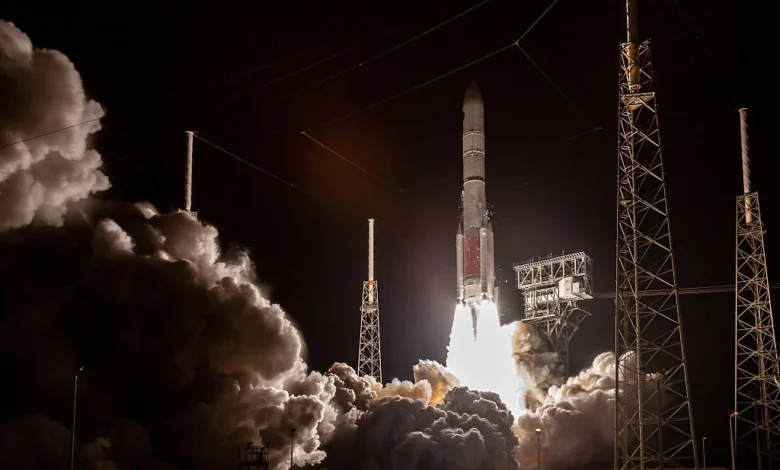
In a historic policy shift that marks a major milestone in modern defense strategy, the United States military has officially acknowledged for the first time that it has deployed offensive and defensive space-based weapons into Earth’s orbit. The confirmation shatters decades of calculated ambiguity regarding the militarization of the cosmos and signals a definitive transition of outer space from a sanctuary of international scientific collaboration into a contested operational warfighting domain.
The disclosure was made by U.S. Air Force Secretary Troy Meink, who holds overarching administrative responsibility for both the United States Air Force and the United States Space Force. Speaking at a defense policy event, Meink outlined a comprehensive blueprint for modernizing the nation’s air and space forces affordably. Within his address, Meink stated unequivocally that the military currently maintains "on-orbit space control weapons capable of defending the Joint Force against hostile adversary action."
While Meink deliberately omitted specific details regarding the technical architecture, operational mechanisms, or precise inventory of the deployed systems, defense analysts and military observers noted that his phrasing was meticulously chosen. Representatives from the Air Force later clarified that the existence of these assets is no longer a classified secret, driven by a strategic necessity to openly signal capability, deter potential adversaries, and prevent dangerous miscalculations in an increasingly volatile orbital theater.
The Strategic Shift: From Space as a Sanctuary to a Warfighting Domain
For decades, United States defense doctrine treated outer space primarily as a global commons—a sanctuary dedicated to peaceful exploration, scientific discovery, and vital communications infrastructure. Although early Cold War programs experimented with anti-satellite (ASAT) capabilities, successive U.S. administrations historically avoided deploying permanent, active weapon systems directly into orbit. This restraint was largely motivated by a desire to prevent an expensive and destabilizing arms race, as well as profound concerns over orbital debris. The destruction of satellites in low Earth orbit generates thousands of high-velocity fragments capable of crippling commercial spacecraft, weather observation satellites, and crewed platforms like the International Space Station.
However, the rapid technological advancements of strategic rivals have systematically eroded this traditional posture. According to statements provided by Air Force spokespersons following Meink’s address, the decision to deploy and acknowledge on-orbit space control weapons is a direct response to years of provocative behavior by near-peer adversaries, specifically Russia and China.
Military officials point to a consistent pattern of aggressive space testing dating back nearly two decades. The United States has formally accused both Beijing and Moscow of developing, testing, and fielding counter-space technologies designed to blind, jam, disable, or physically destroy American and allied orbital assets. In an environment where modern military operations—including precision-guided munitions, global communications, intelligence gathering, missile warning systems, and navigation—rely almost entirely on space-based architecture, the vulnerability of these assets has transformed them into high-value targets.
Consequently, the U.S. national security apparatus concluded that maintaining a posture of strategic ambiguity was no longer viable. By bringing the existence of these orbital defense systems into the public domain, Washington aims to establish a transparent deterrence framework similar to those governing traditional land, sea, air, and cyber domains.
Chronology of Escalation: How Space Became Militarized
To understand the weight of Secretary Meink’s recent acknowledgment, it is necessary to examine the steady escalation of tensions in Earth’s orbit over the past twenty years:
- January 2007: China conducts a destructive anti-satellite missile test, launching a kinetic kill vehicle that obliterates an aging Chinese weather satellite (FY-1C). The test creates more than 3,000 pieces of trackable, long-lasting orbital debris, drawing international condemnation and forcing a sharp re-evaluation of space security within Western defense circles.
- February 2008: In a demonstration of its own capabilities and to mitigate potential hazards from a failing satellite, the U.S. Navy uses a modified Standard Missile-3 (SM-3) to destroy a malfunctioning U.S. reconnaissance satellite (USA-193) in low Earth orbit.
- July 2020: U.S. and British space commands publicly accuse Russia of testing a space-based weapon by releasing a high-speed projectile from a Russian satellite in orbit, demonstrating a clear capability to threaten other spacecraft.
- November 2021: Russia conducts a direct-ascent anti-satellite missile test against its own defunct Cosmos-1408 satellite, creating roughly 1,500 pieces of debris and forcing the crew of the International Space Station to temporarily shelter in their return spacecraft.
- December 2019: Recognizing the escalating threats to national security interests in orbit, the United States officially establishes the U.S. Space Force as the sixth branch of the Armed Services, institutionalizing space as a distinct operational warfighting domain.
- September 2024: U.S. intelligence officials and military leaders issue public warnings regarding Russian development of a space-based anti-satellite system potentially designed to carry a nuclear device, which would pose an indiscriminate threat to all nations’ orbital infrastructure.
- September 2026: Air Force Secretary Troy Meink officially acknowledges during a policy address that the U.S. military has deployed active, on-orbit space control weapons to protect the Joint Force.
Adversarial Capabilities: The Threat Environment Driving U.S. Policy
The public disclosure by the Air Force does not occur in a vacuum; it is a calculated reaction to sophisticated, multifaceted programs pursued by Beijing and Moscow. Both nations have spent years systematically fielding systems designed to contest American dominance in space.
China has long operated a diverse fleet of secretive spacecraft equipped with robotic arms, optical sensors, and maneuvering thrusters capable of grappling, inspecting, or disabling other satellites. These dual-use technologies can perform legitimate maintenance and debris-removal tasks, but they also possess inherent offensive applications that allow them to interfere with vital U.S. national security payloads. Furthermore, Beijing has heavily invested in ground-based lasers capable of dazzling optical reconnaissance satellites, as well as powerful electronic warfare jamming systems designed to sever tactical communications links.
Simultaneously, Russia has advanced its own counter-space portfolio. Beyond conducting direct-ascent missile tests, Moscow has deployed inspector satellites that shadow American intelligence-gathering spacecraft in geostationary and low Earth orbits. Most alarmingly, U.S. intelligence assessments released over recent years indicate that Russia has pursued the development of a space-based nuclear electromagnetic pulse (EMP) weapon. Such a device, if detonated in low Earth orbit, would indiscriminately wipe out commercial and military satellites across vast constellations, crippling global financial networks, weather tracking, and military command-and-control systems alike.
Faced with these asymmetric threats, American defense planners determined that ground-based countermeasures and passive hardening of satellites were insufficient. The deployment of active, on-orbit defense systems represents an attempt to establish a protective shield over critical infrastructure, ensuring that adversaries cannot unilaterally blind or disable American forces without facing immediate strategic consequences.
Official Rationales and the Doctrine of Transparent Deterrence
The strategic rationale behind the public confirmation of these weapons centers on the concept of deterrence through transparency. During briefings following Meink’s remarks, Air Force representatives emphasized that acknowledging the presence of these defense assets serves to stabilize the security environment rather than inflame it.
"Open communication strengthens deterrence, prevents adversary miscalculation, and normalizes space operations alongside the other services," an Air Force spokesperson told technology publication TechCrunch.
Military planners argue that ambiguity regarding defensive capabilities can inadvertently invite aggression. If adversaries believe the United States is entirely defenseless in orbit, they may be more inclined to launch preemptive attacks during a geopolitical crisis. By confirming that the U.S. military possesses active on-orbit capabilities designed to defeat hostile actions, Washington is explicitly drawing a red line. The message to Beijing and Moscow is clear: any attack on American space assets will be met with immediate, effective, and resilient defensive measures.
Furthermore, officials stressed that these weapons are strictly defensive in nature, engineered to protect the Joint Force against space-enabled attacks. They are part of a broader "space control" mission set that ensures freedom of action for the United States and its allies in an environment where access to the cosmos is no longer guaranteed.
Broader Implications for Global Security and International Law
The formal acknowledgment of operational space weapons carries profound implications for international law, strategic stability, and the future of human activity in outer space.
For decades, international diplomats have attempted to negotiate treaties restricting the placement of weapons in orbit. The primary foundational document governing the cosmos, the 1967 Outer Space Treaty, explicitly bans the placement of nuclear weapons or other weapons of mass destruction in orbit, and prohibits the establishment of military bases, testing of any type of weapons, and the conduct of military maneuvers on celestial bodies. However, the treaty contains a notable loophole: it does not explicitly ban conventional weapons, electronic warfare systems, or kinetic defense mechanisms in Earth orbit.
Efforts at the United Nations to draft new legally binding instruments governing space security have largely stalled due to deep geopolitical mistrust. While Western nations advocate for voluntary norms of responsible behavior—such as pledges not to conduct destructive direct-ascent ASAT tests—rival powers like Russia and China have frequently pushed back, labeling Western transparency initiatives as self-serving attempts to freeze existing power dynamics.
The open admission by the United States that it has crossed the threshold into armed, on-orbit readiness likely signals the end of the traditional post-Cold War consensus on space demilitarization. Analysts warn that this development could accelerate an unconstrained orbital arms race, as adversaries feel justified in openly expanding and accelerating their own space-weapon programs in response.
Moreover, the physical realities of combat in Earth’s orbit present unique hazards that do not exist in terrestrial warfare. Because objects in low Earth orbit travel at speeds exceeding 17,500 miles per hour, any kinetic engagement—whether through direct impact or the destruction of a satellite—generates thousands of high-velocity shrapnel pieces. This debris cloud expands exponentially, threatening all neighboring spacecraft, regardless of their nationality, commercial purpose, or military alignment. A localized conflict in orbit could inadvertently trigger a "Kessler syndrome" scenario—a cascading cascade of collisions that could render entire orbital shells completely unusable for generations, devastating modern telecommunications, scientific research, and global commerce.
As the international community digests the reality of armed spacecraft circling the globe, the focus of defense diplomacy will inevitably shift from preventing the militarization of space—a battle that has already been lost—to managing escalation and establishing strict rules of engagement. Whether major space-faring nations can establish guardrails to prevent an orbital catastrophe remains one of the defining national security challenges of the twenty-first century.
Related posts: