Toys R Us is making a major brick-and-mortar push with 120 locations opening across the U.S.

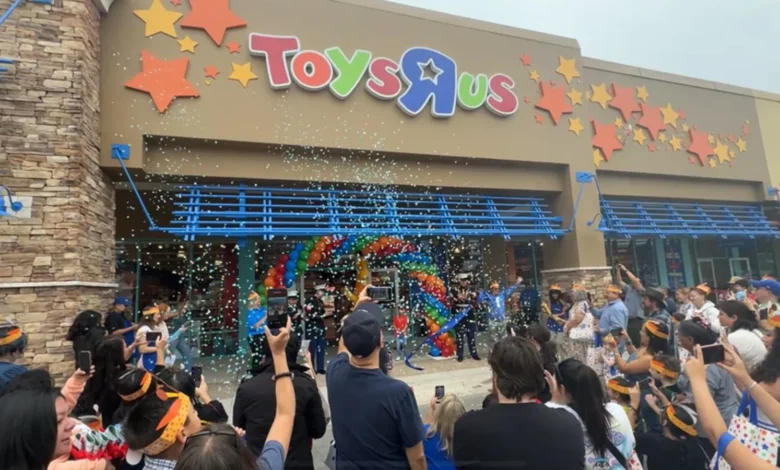
This aggressive expansion signals a definitive shift in strategy for the iconic toy retailer, which is betting heavily on the enduring power of physical play in an increasingly digital retail landscape. Under the ownership of brand management firm WHP Global, the company is moving beyond its previous experimentations with small-format shops and seasonal pop-ups to establish a more permanent, widespread footprint across the United States.
A Strategic Pivot Toward Physical Retail
The announcement of 120 new store openings represents one of the most significant physical retail rollouts in the toy sector in recent years. By scaling its brick-and-mortar presence, Toys R Us aims to recapture the experiential magic that once defined the brand, allowing children and parents to interact with products directly—a factor that online shopping platforms, despite their convenience, often fail to replicate.
Jamie Uitdenhowen, executive vice president of Toys R Us at WHP Global, emphasized the weight of this development in a recent statement, noting, “This is a major moment for Toys R Us as we significantly expand our presence across the United States.”
These new locations are designed to be destinations rather than just distribution points. They will feature curated selections from powerhouses like Lego, Barbie, and Pokémon, alongside trending products such as KPop Demon Hunters. This inventory strategy reflects a move to balance evergreen classics with the volatile, high-demand nature of modern toy crazes.
The Chronology of a Retail Phoenix
The road to this 120-store expansion has been anything but linear. The history of Toys R Us over the last decade serves as a masterclass in the volatility of the retail sector.
- 2017: The company, buckling under the weight of debt and the rapid rise of e-commerce competitors, filed for Chapter 11 bankruptcy protection.
- 2018: Following a failed restructuring attempt, the company liquidated all of its U.S. operations, leading to the closure of hundreds of stores and the loss of thousands of jobs.
- 2019: The brand emerged under the entity Tru Kids, attempting a modest, experiential retail comeback with two small-format stores in New Jersey and Texas.
- 2021: WHP Global acquired a controlling stake in the brand, providing the capital and strategic oversight necessary for a more robust revival.
- 2022: A massive partnership with Macy’s was launched, placing Toys R Us branded sections inside hundreds of department stores nationwide.
- 2025: The company began testing seasonal holiday shops and airport kiosks, proving that the brand still held significant consumer recognition.
- 2026: The current 120-store rollout is launched, marking the company’s most ambitious post-bankruptcy expansion phase to date.
Diverse Retail Channels: Beyond the Standalone Store
While the 120 new standalone locations are the primary focus of this announcement, Toys R Us has been quietly building a multi-channel ecosystem. The strategy is to meet the customer at every point of the journey—whether they are traveling through an airport, shopping for apparel at a department store, or seeking a dedicated toy experience.
The partnership with Macy’s remains a cornerstone of this strategy. By embedding itself within existing high-traffic retail environments, Toys R Us has been able to leverage the foot traffic of established department stores without bearing the full cost of independent real estate. Furthermore, the company’s recent entry into the airport retail market—including a location at Orlando International Airport opened in August—suggests a focus on "impulse" and "travel-ready" toy purchases, with a second airport location already on the docket for next summer.
Market Context and Competitive Landscape
The retail toy market in the United States remains a fiercely competitive arena. While Toys R Us focuses on physical growth, its competitors are doubling down on their own specialized strategies. Amazon continues to dominate the e-commerce space, recently announcing an expansion of its own toy-focused storefronts, including a new partnership with luxury brand FAO Schwarz.
Industry analysts observe that the toy industry is currently grappling with a shift in consumer behavior. With inflation impacting household budgets, consumers are becoming more selective. However, the toy sector often exhibits "recession-proof" characteristics, as parents prioritize small luxuries for their children even during periods of economic tightening.

Data from the retail sector indicates that experiential retail—stores where shoppers can test, touch, and play—tends to command higher loyalty than pure-play e-commerce sites. By positioning its 120 stores as "experience centers," Toys R Us is attempting to differentiate itself from the static experience of scrolling through Amazon’s endless catalog.
WHP Global’s Broader Retail Ambitions
The success of this Toys R Us expansion is inextricably linked to the parent company, WHP Global. Since acquiring the brand in 2021, WHP has leveraged its portfolio—which includes legacy names like Anne Klein, Express, Bonobos, and Marc Jacobs—to create operational synergies.
WHP Global’s business model involves acquiring underperforming or distressed brands and revitalizing them through aggressive licensing, improved supply chain management, and a focus on omnichannel distribution. The revival of Toys R Us is arguably the company’s highest-profile test case. If the 120-store rollout proves successful, it could provide a roadmap for the future of other retail brands currently struggling to transition from the era of big-box liquidation to the era of agile, multi-channel presence.
Implications for the Future
The expansion has several significant implications for the retail sector:
- Re-emergence of Specialty Retail: After years of consolidation into generalist retailers like Walmart and Target, there appears to be a renewed appetite for specialty stores that offer a deep dive into a single category.
- The Hybrid Model: Toys R Us is proving that a brand does not need to choose between online and offline. By maintaining a presence in Macy’s, operating airport kiosks, launching standalone stores, and keeping an online storefront, they are hedging their bets across multiple demographics.
- Real Estate Dynamics: As many retailers continue to downsize, the sudden demand for 120 locations by a single brand provides a notable boost to commercial real estate developers who are currently navigating a high-vacancy environment in shopping centers across the country.
Conclusion: A Test of Brand Longevity
The next twelve months will be critical for Toys R Us. Expanding by 120 locations is a massive logistical undertaking that requires precise inventory management, staffing, and marketing execution. While the brand’s name recognition remains a powerful asset, the company must prove that it can convert that nostalgia into consistent, year-round sales rather than just holiday-season spikes.

If the stores are successful, it will confirm that the "retail apocalypse" narrative—which dominated headlines during the initial bankruptcy filing in 2017—was premature. It would suggest that the decline of the original Toys R Us was a failure of management and debt structure, not a fundamental rejection of the toy store model by the American consumer. As the company opens these doors across the country, it isn’t just selling toys; it is testing the very viability of the traditional toy store in a modern, hyper-digital world.
The industry will be watching closely as these locations come online. For now, Toys R Us is once again a major player in the physical retail space, seeking to prove that while the world has changed, the desire for a dedicated place to discover, play, and purchase toys remains as strong as ever.