The tension between these two poles—the hyper-capitalized AI sector and the burgeoning "humanity-first" startups—was the central theme of a recent deep dive by the TechCrunch Equity podcast team, featuring Kirsten Korosec, Anthony Ha, and Sean O’Kane. The discussion highlighted a shift in the venture capital ecosystem: while the "big guys" like Alphabet and Anthropic are vacuuming up the lion’s share of liquidity to build massive compute clusters, a smaller, more focused group of innovators is betting that consumers are reaching a point of "AI fatigue."
The $85 Billion Elephant in the Room: Alphabet’s AI Ambitions
The scale of investment currently being poured into artificial intelligence is difficult to overstate. Alphabet’s recent internal earmark of $85 billion for its AI division marks a historic moment in corporate reinvestment. This capital is not merely for research and development; it is a defensive and offensive war chest designed to secure the infrastructure necessary for the next decade of computing. Much of this funding is expected to flow into the procurement of high-end semiconductors, primarily from Nvidia, and the construction of massive data centers required to train and run large language models (LLMs) at a global scale.
This massive capital injection serves as a signal to the broader market that the barrier to entry for foundational AI models is rising exponentially. Simultaneously, Anthropic, one of the most prominent rivals to OpenAI, has reportedly moved forward with a confidential IPO filing. This move suggests that the era of private "mega-rounds" for AI may be transitioning into a public market phase, where the scrutiny on actual revenue and unit economics will intensify. The Equity team noted that these financial maneuvers raise a critical question: is the money simply flowing back into the coffers of the tech giants, or is it creating a sustainable new economy?
The Rise of "Together Tech": Brynn Putnam and Board
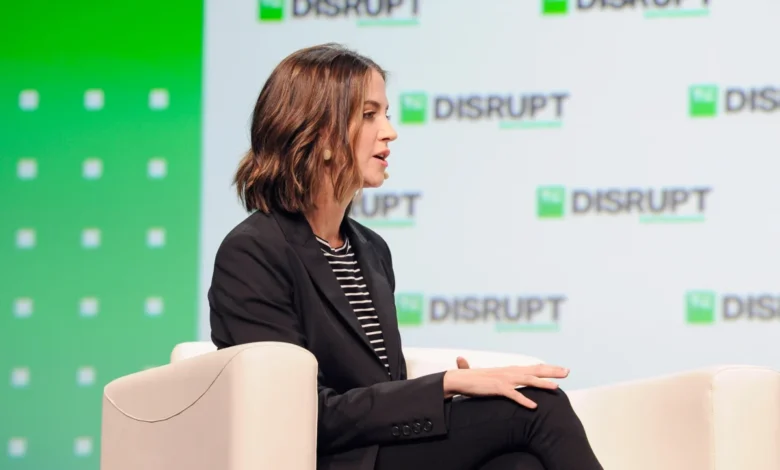
In stark contrast to the billions flowing into neural networks, Brynn Putnam, the founder who sold the fitness startup Mirror to Lululemon for $500 million in 2020, is leading a charge in the opposite direction. Her new startup, Board, recently raised $20 million—a modest sum by AI standards, but a significant bet on the future of physical social interaction. Board focuses on in-person games and social experiences, moving away from the "screen-first" philosophy that has dominated the last two decades of tech development.
The philosophy behind Board is rooted in the idea that digital saturation has created a "loneliness epidemic" that software alone cannot solve. By leveraging technology to facilitate, rather than replace, face-to-face interaction, Putnam is tapping into a market of consumers who are increasingly looking for reasons to put their phones down. The startup has already reported selling thousands of units of its initial offerings, indicating that there is a hungry audience for "analog-plus" experiences.
The Cyberdeck Movement and the "Touch Grass" Philosophy
The shift toward the human and the tangible is also manifesting in the DIY and hobbyist tech communities. One of the most viral trends in recent months has been the rise of "Cyberdecks." These are custom-built, often whimsical, and highly tactile computers crafted by enthusiasts who reject the sleek, homogenized aesthetic of modern Big Tech hardware.
Cyberdecks often feature mechanical keyboards, small screens, and ruggedized chassis that look like they belong in a 1980s science fiction film. More importantly, they represent a philosophical rejection of the "black box" nature of modern devices. The creators of these machines often advocate for a "touch grass" lifestyle—a colloquialism for going outside and engaging with the physical world. Unlike modern smartphones designed to maximize "time on device," cyberdecks are tools built for specific, intentional tasks, encouraging users to engage with technology on their own terms rather than being subservient to an algorithm.
Search Without the Noise: DuckDuckGo and AI-Free Access
Even within the realm of software, a resistance to the AI-everything trend is forming. DuckDuckGo, the privacy-focused search engine, recently made its "No-AI" search option easier to access. This move comes as major search engines like Google and Bing have integrated AI-generated summaries at the top of their search results, often to the frustration of users who prefer direct links to original sources.
Traffic for DuckDuckGo has seen a notable boom as users seek a "cleaner" internet experience. This suggests that while AI is undoubtedly powerful, there is a growing segment of the population that views generative AI as "noise" rather than "signal." The demand for an AI-free search engine highlights a broader trend: the emergence of a market for "organic" digital experiences that prioritize human-authored content over machine-generated summaries.
Chronology of the 2024-2026 Tech Pivot
To understand the current state of the industry, it is helpful to look at the timeline of events that led to this bifurcation:
- Late 2023: The initial "Gold Rush" phase of generative AI peaks, with OpenAI, Anthropic, and Cohere raising multi-billion dollar rounds.
- Early 2024: Concerns about "AI hallucinations" and the displacement of human labor begin to saturate the public discourse.
- Mid-2024: Brynn Putnam exits her post-acquisition roles to begin developing Board, citing a need for "human-centric" innovation.
- Late 2024: The Cyberdeck movement moves from niche Reddit forums to mainstream social media, with millions of views on "DIY tech" tutorials.
- Early 2025: Alphabet announces its $85 billion AI investment plan, the largest single-focus corporate expenditure in history.
- June 2026: Anthropic files for a confidential IPO, signaling a shift toward public market accountability for AI firms. Simultaneously, Board announces its $20 million raise, marking the formalization of the "together tech" sector.
Data and Market Analysis: The Scale of Divergence
The financial data underscores the massive gap between these two movements. In the first half of 2026, AI-related startups accounted for approximately 65% of all venture capital deployed in North America. The median deal size for an AI startup at the Series A stage has ballooned to $45 million.
In contrast, "Together Tech" and "Human-Centric Tech" startups—defined as those focusing on hardware for physical interaction, non-AI social platforms, and local community tools—account for less than 5% of total VC deployment. However, these companies often boast higher "stickiness" and lower customer acquisition costs (CAC) because they tap into existing social networks and physical communities rather than competing for digital attention in an overcrowded ad market.
Industry analysts suggest that we are seeing the birth of a "premium human" market. Much like the organic food movement arose as a response to industrial food processing, "Together Tech" is arising as a response to the industrialization of thought and social interaction by AI.
Official Responses and Strategic Perspectives
While Alphabet and Google have remained focused on the utility and efficiency of their AI models, executives at these firms have occasionally acknowledged the need for balance. In a recent earnings call, Alphabet leadership emphasized that AI is meant to "augment" human capability, not replace the human experience. However, critics argue that an $85 billion investment speaks louder than words, suggesting that the company’s primary goal is to become the underlying operating system for all digital life.
On the other side, founders like Brynn Putnam are more vocal about their mission. In statements following her recent fundraise, Putnam noted that the "pendulum has swung too far toward the virtual." Her goal with Board is to provide the "connective tissue" that helps people transition from digital interactions back to physical ones.
Broader Impact and Implications for the Future
The divergence between AI-dominant tech and "Together Tech" has profound implications for the future of the economy and society. If the current trend continues, we may see a bifurcated society where the majority of services and interactions are mediated by low-cost, high-efficiency AI systems, while physical, human-led experiences become a "luxury" or "premium" tier of the economy.
Furthermore, the rise of DIY hardware like cyberdecks and the success of AI-free search engines suggest that a "Tech Resistance" is no longer just for Luddites. It is being led by tech-literate individuals who understand the tools and are choosing to use them in a more intentional, less intrusive way.
As the Equity podcast team concluded, the "together tech" wave is not necessarily an anti-AI movement, but rather a pro-human one. It represents a realization that as our machines become more intelligent, the value of our un-automated, messy, and physical human interactions only increases. Whether $20 million can compete with $85 billion remains to be seen, but the early success of companies like Board and the viral nature of the cyberdeck trend suggest that the human spirit is not ready to be digitized just yet.