The 2026 GTM Benchmark Report from ICONIQ Reveals a Paradigm Shift in Sales Quotas and Compensation Models for AI-Driven B2B Organizations

The global software-as-a-service (SaaS) landscape has entered a transformative era where the integration of artificial intelligence is no longer a peripheral advantage but a core driver of go-to-market (GTM) efficiency. According to the recently released 2026 GTM Benchmark Report by ICONIQ Growth, the fundamental mechanics of sales quotas and organizational processes are undergoing a significant recalibration. While the basic underlying economics of sales compensation—where representatives typically earn approximately 20% of their total closed volume through base pay and bonuses—remain consistent with historical norms, the scale and execution of these models have ramped up dramatically to meet the demands of an AI-augmented economy.
The findings are based on a comprehensive survey of GTM executives from more than 150 B2B and AI-focused software companies. The sample, which ranges from early-stage startups to late-stage growth firms, provides a window into the strategies employed by the market’s highest performers. ICONIQ, known for its investments in top-tier growth-stage companies, notes that these benchmarks represent the "gold standard" for well-funded startups that have achieved true product-market fit. The data suggests that for these leaders, the "pre-AI" era of sales is officially a relic of the past, replaced by a model that prioritizes higher quotas, deeper customer ownership, and AI-driven pipeline velocity.
The Evolution of Sales Ownership and the Rise of Cross-Selling
One of the most striking revelations in the ICONIQ report is the shift in how sales responsibilities are distributed across the customer lifecycle. In previous years, a sharp line often existed between the "hunters" (Account Executives) and the "farmers" (Account Managers or Customer Success Managers). In 2026, that line has blurred significantly, with high-performing sales organizations taking a much more aggressive stance on expansion revenue.
The data shows that 65% of high-performing companies now have their sales teams owning the cross-sell process, compared to just 49% in the broader market. Similarly, 55% of these top-tier organizations task sales reps with managing upsells, and 37% have them overseeing renewals—a significant jump from the 24% seen in average-performing firms. This trend indicates that the modern Account Executive (AE) is no longer just responsible for the initial "land" of a new logo; they are increasingly responsible for the "expand" and "retain" portions of the revenue cycle.
Industry analysts suggest this shift is a response to the increasing complexity of AI software suites. As products become more modular and integrated, the representative who navigated the initial sale is often best positioned to identify additional use cases within the same organization. By keeping the AE involved throughout the lifecycle, companies are finding they can reduce friction in the expansion process and capitalize on established trust.
High Quotas Meet High Attainment: The 2026 Paradox
Historically, a rise in sales quotas has been inversely correlated with attainment rates. When companies set more aggressive targets, the percentage of the sales force reaching those targets typically drops. However, the ICONIQ data reveals a counter-intuitive trend among top B2B and AI leaders. While traditional B2B sales organizations often see quota attainment hover between 65% and 75%, the elite tier of 2026 companies is reporting attainment rates as high as 85% to 90%.
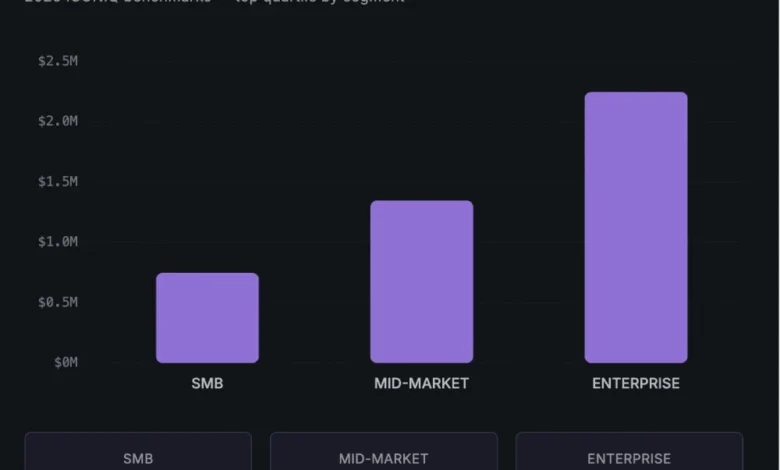
This shift suggests that higher quotas are not being used as a tool for "stretching" the team, but rather as a reflection of increased capacity. The report emphasizes that for top AI leaders, the increase in quotas is supported by a massive surge in productivity. Rather than being a "punishment" for previous success, the $2.5 million enterprise quotas being seen in 2026 are viewed as achievable benchmarks backed by robust data and automated support systems.
This high-attainment environment is critical for maintaining morale and reducing churn among top-tier sales talent. In an era where the best representatives have their pick of employers, companies that set unrealistic quotas without the necessary support see rapid attrition. Conversely, the companies hitting 90% attainment are creating a "virtuous cycle" where high earners stay, further stabilizing the revenue base.
The Recalibration of Compensation Architecture
As the responsibilities of the sales representative have shifted toward expansion and retention, compensation plans have followed suit. The ICONIQ report highlights a growing gap between the "legacy" compensation models of 2023 and the "modern" models of 2026.
In the traditional model, a sales representative’s compensation was heavily weighted toward new business, often following an 80/20 split (80% commission from new logos, 20% from expansion). In the 2026 landscape, high performers have moved toward a more balanced structure. Because AEs now own more of the customer relationship, they expect—and are receiving—meaningful compensation for expansion revenue.
The report warns that founders who have not updated their compensation plans are at a significant disadvantage. Reps capable of carrying $2 million-plus quotas are in high demand and specifically seek out organizations that offer lucrative expansion incentives. If a company’s plan is still anchored in 2023 logic, they risk losing their most productive employees to competitors who have aligned their pay structures with the reality of the current market. This "compensation gap" has become a primary differentiator in the war for talent within the AI sector.
AI Pipeline Generation: The Engine Behind the Numbers
The feasibility of the 2026 quota levels is inextricably linked to the efficiency of the sales pipeline. The ICONIQ report clarifies that a $2.5 million enterprise quota is only "real" if the pipeline behind it is sufficient to support it. The primary driver of this increased capacity is the integration of AI into marketing and Sales Development Representative (SDR) motions.
According to the data, companies that have deeply embedded AI into their lead generation processes are seeing a significant lift in conversion rates. Specifically, these organizations are generating 10 to 11 percentage points more in lead-to-MQL (Marketing Qualified Lead) conversion and 8 percentage points more in MQL-to-SQL (Sales Qualified Lead) conversion.
This increased volume of qualified pipeline allows sales representatives to spend less time on manual prospecting and more time on high-value closing activities. In effect, AI is acting as a force multiplier. If a representative in 2023 could handle a $1.5 million quota with a manual pipeline, the 2026 representative can handle $2.5 million because the "top-of-funnel" work is more precise and automated. The report notes that if pipeline generation does not climb at the same rate as the quota, attainment will inevitably crater, highlighting the necessity of a synchronized GTM strategy.
Establishing the 2026 Baseline: A Strategic Guide for Leaders
For founders and sales leaders building or restructuring their organizations in the current climate, the ICONIQ report provides a clear baseline for 2026. These figures represent the standard for companies that have achieved product-market fit and are looking to scale efficiently:
- Mid-Market Account Executives: Quotas are now expected to sit between $1.2 million and $1.4 million.
- Enterprise Account Executives: The benchmark has shifted significantly upward, with quotas now reaching approximately $2.5 million.
The report suggests that organizations maintaining enterprise quotas at the $1.5 million level—which was standard just a few years ago—are likely leaving as much as 30% of their potential revenue on the table. However, the transition to these higher benchmarks must be handled with care. A sudden jump to a $2.5 million quota without the accompanying AI-driven pipeline and a modernized compensation structure will lead to a spike in attrition and a decline in overall performance.
Broader Implications and Market Analysis
The implications of the 2026 GTM Benchmark Report extend beyond simple sales metrics. They point to a broader shift in the B2B software industry toward "efficient growth." The era of "growth at all costs," which characterized much of the last decade, has been replaced by a focus on lean, flatter organizations that leverage technology to achieve higher output per head.
The gap between high-performing companies and the rest of the market is no longer defined solely by the quality of the product or the overarching strategy. Instead, the differentiator has become the "architecture of execution"—specifically, how well a company aligns its quota-setting, pipeline generation, and compensation models with the capabilities of modern AI.
Furthermore, the data suggests that the "AI era" has not fundamentally changed the human element of sales, but it has heightened the stakes. The demand for "super-reps"—those who can manage complex enterprise sales while also navigating the expansion and renewal phases—is at an all-time high. For these individuals, the combination of high quotas and AI support represents an opportunity for unprecedented earnings, provided they are at an organization that understands the new rules of the game.
As the industry moves further into 2026, the benchmarks set by ICONIQ will likely serve as a roadmap for the next generation of SaaS giants. Companies that can successfully navigate this transition will find themselves with a more loyal sales force, a more efficient revenue engine, and a significant competitive advantage in an increasingly crowded marketplace. For those who remain tethered to the GTM strategies of the past, the risk of obsolescence is becoming increasingly real. The message of the 2026 report is clear: the bar has been raised, and the tools to clear it are now available for those willing to adapt.