The Great Tech Divergence Giant AI Investments Meet a Growing Human Centric Hardware Movement

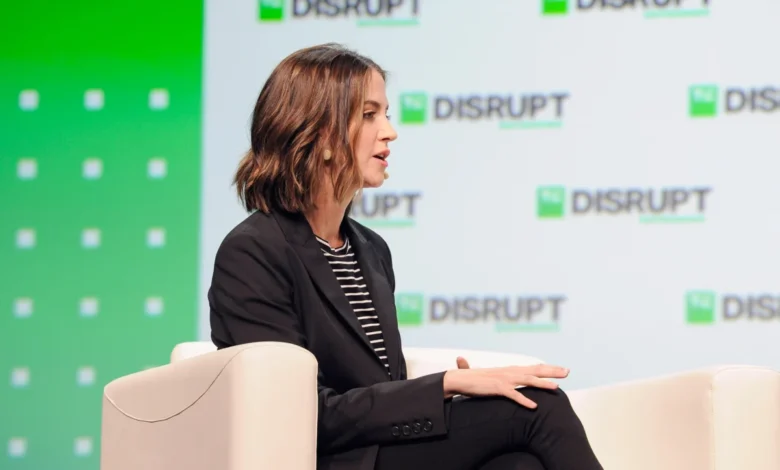
The global technology landscape is currently witnessing a stark and fascinating bifurcation. On one side, the industry is funneling unprecedented amounts of capital into artificial intelligence, with individual funding rounds now reaching figures that previously defined entire market sectors. On the other, a burgeoning "together tech" movement is gaining traction, led by founders and hobbyists who are intentionally pivoting away from the digital-first, AI-driven zeitgeist to prioritize physical presence, analog experiences, and human-to-human connection. This divergence represents more than just a difference in business models; it reflects a fundamental debate about the role of technology in the human experience.
While the AI fundraising machine continues to break its own records, such as Alphabet’s recent $85 billion allocation for its AI business, a parallel narrative is emerging. Founders like Brynn Putnam, the creator of the fitness sensation Mirror, are securing significant venture capital for startups that encourage people to put down their phones and engage in the real world. This cultural and economic shift suggests that as AI becomes more pervasive, the value of "human-centric" experiences is experiencing a market premium.
The Scale of the AI Financial Juggernaut
To understand the magnitude of the current tech landscape, one must first look at the sheer volume of capital flowing into artificial intelligence. Alphabet’s record-breaking $85 billion investment into its AI operations, specifically targeting its Google AI business and Gemini model development, signals a "helluva good signal" for the broader market, according to industry analysts. This capital is not merely for software development but is largely earmarked for the massive infrastructure requirements of the generative AI era, including custom silicon (TPUs), data center expansion, and the procurement of high-end GPUs.
Parallel to Alphabet’s internal investment is the news of Anthropic’s confidential IPO filing. Anthropic, a primary rival to OpenAI and a recipient of billions in investment from Amazon and Google, is reportedly preparing for a public debut that would test the appetite of the public markets for high-growth, high-burn AI firms. Against the backdrop of Alphabet’s $85 billion raise, the Anthropic filing raises critical questions about market consolidation. Industry experts are increasingly concerned that while venture capital is flowing into AI at a feverish pace, much of that liquidity is ultimately circulating back to the "big guys"—the cloud providers and hardware giants who own the infrastructure necessary to run these models.
The financial chronology of the last 18 months shows an accelerating trend of "mega-rounds." Since the public release of ChatGPT in late 2022, the threshold for a "large" funding round has shifted from the hundreds of millions to the multi-billions. This concentration of capital creates a high barrier to entry, effectively turning the AI race into a battle of balance sheets where only the most well-capitalized entities can compete for the talent and compute power required to push the frontier of large language models.
The Rise of Together Tech and the Return to Physicality
In direct contrast to the ethereal and often isolating nature of generative AI, a new wave of "together tech" is emerging. This movement is characterized by a focus on in-person games, social experiences, and hardware that encourages physical interaction.
Brynn Putnam’s new venture, Board, is a prime example of this trend. After selling Mirror to Lululemon for $500 million, Putnam has pivoted from digital fitness to a startup focused on bringing people together through social gaming. Board recently raised $20 million in funding and has already seen strong early traction, selling thousands of units before its full-scale launch. The premise of Board is simple yet counter-cultural: using technology as a facilitator for face-to-face interaction rather than a replacement for it.
This shift is supported by growing data regarding the "loneliness epidemic." A 2023 report from the U.S. Surgeon General highlighted that social isolation can be as damaging to health as smoking 15 cigarettes a day. As consumers become increasingly wary of the "dead internet" theory—the idea that much of the web is now populated by AI-generated bots and content—there is a measurable gravitation toward things that feel "a little more human."
The Cyberdeck Movement and the DIY Ethos
Beyond the venture-backed world of "together tech," a grassroots movement is taking hold among hardware enthusiasts: the Cyberdeck. These are whimsical, DIY computers often built into rugged cases or vintage chassis, featuring mechanical keyboards and unconventional displays. Cyberdeck creators have recently gone viral on platforms like TikTok and Instagram, not because their machines are more powerful than a standard laptop, but because they are "intentional."
These devices often emphasize "offline-first" capabilities and "distraction-free" environments. They encourage users to "touch grass"—a colloquialism for going outside and re-engaging with reality. The Cyberdeck movement is part of a broader rejection of the "black box" nature of modern Big Tech hardware. By building their own machines, these hobbyists are reclaiming agency over their digital lives, favoring repairability, customization, and a tactile experience over the sleek, sealed, and AI-integrated devices produced by mainstream manufacturers.
The Search for an AI-Free Digital Environment
The movement away from pervasive AI is also manifesting in the software layer. DuckDuckGo, the privacy-focused search engine, has recently made its "no-AI" search options easier to access as its traffic continues to boom. While Google and Bing have rushed to integrate AI-generated summaries at the top of their search results—often to the chagrin of users seeking direct links and human-authored content—DuckDuckGo is positioning itself as a haven for those who want a traditional, non-synthesized search experience.
This trend suggests that "AI-free" could become a marketing term similar to "organic" or "non-GMO" in the food industry. As AI-generated content begins to saturate the internet, the ability to find "human-made" information and "AI-free" tools is becoming a priority for a significant segment of the population. This isn’t necessarily a luddite backlash; rather, it is a demand for choice in an era where AI integration is often forced upon the consumer.
Analyzing the Economic and Social Implications
The divergence between the AI-industrial complex and the human-centric tech movement has several long-term implications for the economy and society.
- Capital Concentration vs. Community Innovation: The $85 billion raises for AI suggest a future where a few massive corporations control the "intelligence" layer of the economy. However, the success of startups like Board and the Cyberdeck movement indicates that there is still room for high-margin, community-focused innovation that doesn’t require billions in compute credits.
- The Premium on Human Interaction: As AI masters the ability to mimic human speech and creativity, the market value of "verifiable human" interaction is likely to rise. This could lead to a new category of premium services and products that guarantee a "human-in-the-loop" or "human-only" experience.
- Hardware as a Social Tool: For the last decade, hardware design has focused on making devices as thin and unobtrusive as possible, often leading to a "heads-down" culture. The "together tech" wave suggests a return to hardware that is designed to be shared, touched, and used in a group setting, potentially reshaping the consumer electronics market.
- Privacy as a Stand-Alone Product: The aggressive data harvesting required to train large-scale AI models is driving more users toward privacy-first platforms. The growth of DuckDuckGo and the use of encrypted communication tools like Signal are indicators that a segment of the market is willing to sacrifice "smart" features for the sake of digital sovereignty.
The Chronology of the Modern Tech Pivot
The timeline of this divergence can be traced through several key events over the past two years:
- November 2022: OpenAI releases ChatGPT, triggering the current AI arms race.
- Early 2023: Major tech firms (Google, Microsoft, Meta) announce a "year of efficiency" while simultaneously pivoting all R&D toward generative AI.
- Late 2023: Reports on the "loneliness epidemic" gain mainstream traction, sparking a surge in interest for social-third-place startups.
- Early 2024: The "Cyberdeck" aesthetic moves from niche forums to mainstream social media, highlighting a desire for tactile, DIY hardware.
- June 2024: Alphabet commits $85 billion to AI; Brynn Putnam raises $20 million for Board; Anthropic files for an IPO.
Conclusion: A Balanced Ecosystem
The current state of the technology industry is not a zero-sum game between artificial intelligence and human connection. While the headlines will likely continue to be dominated by the staggering financial figures of the AI giants, the quiet growth of the "together tech" movement is equally significant.
As discussed on TechCrunch’s Equity podcast by Kirsten Korosec, Anthony Ha, and Sean O’Kane, the industry is at a crossroads. The "together tech" wave isn’t just a reaction against the complexity of AI; it is a genuine movement toward things that feel authentic. Whether the massive capital flowing into AI will eventually find its way into supporting these human-centric endeavors remains to be seen. However, for now, the tech world is large enough to accommodate both the silicon-driven future of Alphabet and the tactile, social-driven future envisioned by founders like Brynn Putnam. The real challenge for the next generation of founders will be finding the equilibrium between these two powerful, yet opposing, forces.