The Future of Digital Discovery: Mastering Answer Engine Optimization for the Generative AI Era


The digital landscape is undergoing its most significant transformation since the inception of the search engine, driven by the rapid adoption of artificial intelligence tools. According to recent data from Wix Studio, monthly unique visitors to major answer engines surged from 634 million in the first quarter of 2025 to 904 million by the first quarter of 2026. This 40% year-over-year increase underscores a fundamental shift in how users conduct research, moving from traditional keyword-based link lists to conversational, synthesized responses provided by Large Language Models (LLMs). As this shift accelerates, marketers and content creators are pivoting toward Answer Engine Optimization (AEO), a strategic evolution of traditional Search Engine Optimization (SEO) designed to secure visibility within AI-generated responses.
The Historical Context and the Convergence of Search
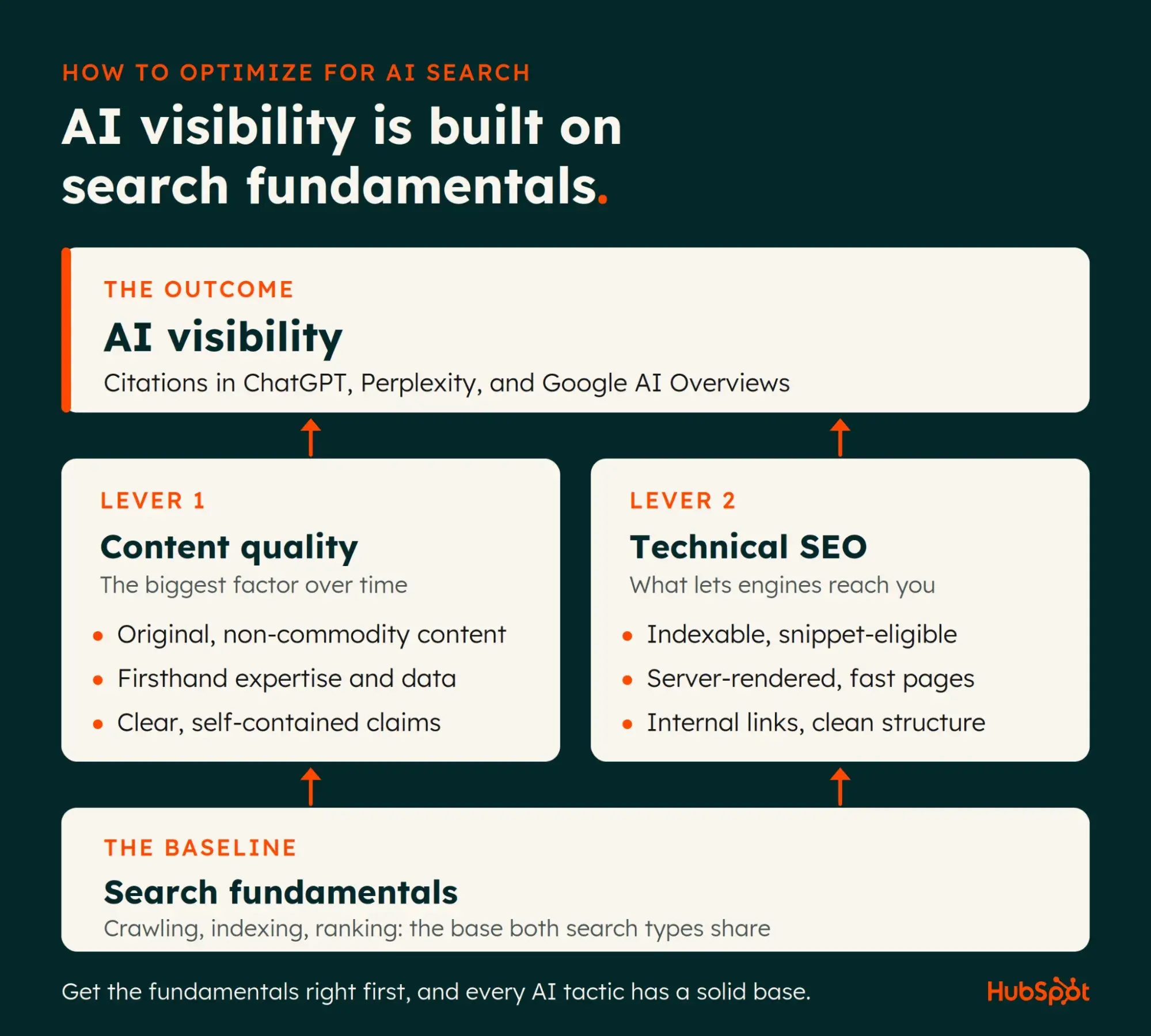
To understand the current state of AEO, one must recognize that AI search does not exist in a vacuum. It is an extension of the existing search infrastructure. Google, for instance, has integrated its AI Overviews using a specialized version of its Gemini model, which operates atop its established indexing and ranking systems. Similarly, platforms like ChatGPT have incorporated web-browsing capabilities that rely on search providers, including Bing, to fetch real-time data.
The chronology of this transition began in earnest around 2023, when generative AI prototypes were first integrated into public search interfaces. By 2025, the "search-to-answer" transition became the standard for complex queries. Industry experts note that because AI models rely on the same crawl-and-index pathways as traditional search, a website that is poorly optimized for classic search is mathematically unlikely to be cited by an AI. The fundamental requirement remains: if a machine cannot parse, render, or understand a page, it cannot cite that page in a summary.
Data-Driven Performance Indicators
Recent studies provide a granular look at what drives citation frequency. Research by SE Ranking, which analyzed over 216,000 pages, found a distinct correlation between content depth and AI visibility. Pages that incorporate expert quotes are statistically likely to receive 4.1 citations on average, compared to 2.4 for those that lack such authoritative input. Furthermore, data-rich content—specifically pages featuring 19 or more unique data points—averaged 5.4 citations, while content lacking such depth trailed significantly at 2.8.
These figures suggest that AI models are not merely "scraping" text; they are performing a rudimentary form of value assessment. Content that provides original research, proprietary data, or unique human perspectives is prioritized by algorithms because it represents information that the model cannot synthesize from its own training data. This "non-commodity" content strategy is the cornerstone of modern AEO.
Technical Foundations and Performance Metrics
While high-quality writing is essential, technical infrastructure acts as the gatekeeper for AI visibility. Technical requirements have not changed drastically, but the stakes have risen. Google has clarified that pages must be indexed and snippet-eligible to appear in AI features. This means that technical failures—such as blocking crawlers, using inaccessible JavaScript, or slow page-loading speeds—are more detrimental than ever.
Performance metrics are particularly telling. Research indicates that pages with a First Contentful Paint (FCP) of under 0.4 seconds average 6.7 ChatGPT citations, whereas pages exceeding 1.13 seconds in load time struggle to reach an average of 2.1. Additionally, the reliance on client-side JavaScript remains a high-risk area. While Googlebot is increasingly capable of rendering complex JavaScript, many other AI crawlers are less sophisticated, often reading only raw HTML. If a brand’s core value proposition is hidden behind a script that fails to execute for a crawler, the site effectively ceases to exist for that AI.

Navigating the Ecosystem: Perplexity vs. ChatGPT
A critical aspect of a modern AEO strategy is acknowledging that not all AI engines behave the same way. The ecosystem is highly fragmented; data from Fan Out suggests that only 7.7% of cited URLs appear across multiple different engines.
Perplexity, for example, is currently the most aggressive "citer," often providing roughly 10.8 sources per answer. It displays a distinct preference for discussion-based platforms, including LinkedIn, G2, and Reddit, which account for over 17% of its citations. In contrast, ChatGPT is more selective, typically providing 3.3 citations per query and favoring traditional long-form journalism and academic-style articles. Businesses must therefore treat these platforms as distinct channels, tailoring content to the specific tendencies of each engine.
Strategic Implementation and Operational Workflows
The most effective way to manage these requirements is to institutionalize AEO as a repeatable business process. A robust workflow involves:
- Entity Mapping: Identifying the core topics and questions relevant to the brand and mapping them into logical clusters.
- "Answer-First" Writing: Structuring content to resolve the primary user question within the first 60 words. This respects the "top-third" preference of AI models, where most cited passages are sourced.
- Question-Led Architecture: Utilizing headings that mirror the exact phrasing of user queries (e.g., "What is the impact of X on Y?") to provide clear anchors for LLMs.
- Structured Data: Implementing schema markup that accurately reflects the page content, allowing engines to parse the hierarchy of information with higher confidence.
Debunking Common Myths
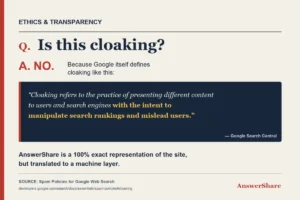
As the industry matures, several misconceptions have surfaced. A notable example is the "llms.txt" file. Despite speculation that this file would help sites manage AI access, empirical evidence from nearly 300,000 domains suggests it has no positive impact on citation rates. Furthermore, there is a persistent myth that "cloaking"—serving different content to AI crawlers than to humans—is a viable strategy. Industry guidelines and search engine documentation strongly advise against this, as it violates the core principle of content integrity and risks penalization.
Broader Implications and Future Outlook
The shift toward AI-mediated information retrieval carries profound implications for digital marketing. The traditional "ten blue links" model is being superseded by a conversational interface where the "answer" is the final product. For businesses, this means the end of the era where volume and keyword stuffing were sufficient for visibility.
Looking forward, the competitive advantage will likely belong to firms that treat their proprietary data as a strategic asset. By serving as the primary source of truth for specific niches, brands can ensure that even as LLMs evolve, they remain the foundational "nodes" of knowledge that the AI must cite to provide accurate answers. As search engines continue to integrate generative features, the focus will remain on the intersection of human expertise and machine-readable technical excellence. The companies that thrive will be those that can successfully navigate the paradox of being both highly machine-readable and fundamentally indispensable to the human reader.
Ultimately, the goal of AEO is not to "game" the algorithm, but to provide such clear, accurate, and structured value that the AI system views the brand’s website as the most logical, authoritative, and trustworthy source to provide to the user. As the volume of AI-driven search continues its rapid ascent, the organizations that invest in these fundamental optimizations today will be best positioned to capture the attention of the next generation of digital consumers.