Tesco Partners with Adobe to Revolutionize Grocery Shopping with AI-Powered Personalization and Enhanced Customer Experience

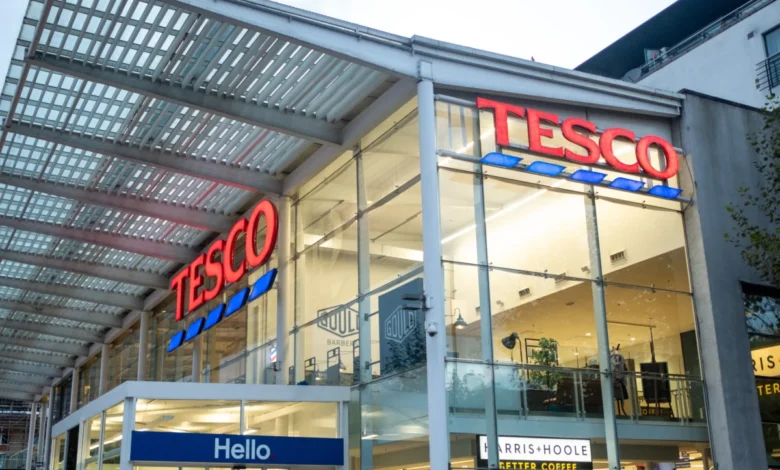
U.K. grocery behemoth Tesco has embarked on a strategic alliance with U.S. software giant Adobe, a collaboration poised to inject advanced artificial intelligence into the fabric of supermarket shopping, promising a more intuitive and streamlined experience for millions of customers. This significant partnership underscores a pivotal moment in the retail sector’s embrace of cutting-edge technology to redefine customer engagement and operational efficiency.
The core of this transformative initiative lies in Tesco’s planned deployment of Adobe’s sophisticated agentic AI capabilities and the innovative Adobe Firefly Foundry. These tools are designed to empower Tesco’s personalization and AI teams, enabling them to anticipate customer needs with unprecedented precision. The overarching goal is to deliver highly tailored content, bespoke offers, and individualized experiences across all of Tesco’s extensive digital channels, moving beyond traditional segmentation to true one-to-one marketing at scale. A particular emphasis will be placed on revitalizing and enhancing the relevance and responsiveness of its cornerstone Clubcard program, which currently serves over 24 million households across the United Kingdom. This loyalty scheme, a critical component of Tesco’s customer relationship management for decades, is set to undergo a significant AI-driven evolution.
A Deep Dive into the Innovation Lab and Technological Synergy
Central to this groundbreaking collaboration is the establishment of a dedicated Tesco x Adobe Innovation Lab. This co-innovation model represents a strategic investment in accelerated development, wherein Adobe engineers will be directly embedded within Tesco’s in-house technology teams. This direct integration is designed to foster rapid experimentation in AI-driven personalization and to scale the production of on-brand content efficiently. By bringing expertise together in a collaborative environment, both companies aim to fast-track the deployment of AI solutions that deliver tangible benefits to shoppers.
Tesco, a formidable presence in the European retail landscape, holds the ninth position in the Digital Commerce 360 Europe Database, which meticulously tracks the continent’s 500 largest online retailers by their annual e-commerce sales. The company has historically maintained a leadership position in the U.K. online grocery market, a testament to its early adoption of digital channels and its continuous efforts to innovate within the sector. This new partnership with Adobe is a clear signal of Tesco’s commitment to maintaining and extending this leadership through advanced technological integration.
The strategic rationale behind this partnership extends beyond mere technological adoption; it represents a proactive response to an increasingly competitive retail environment and evolving consumer expectations. As customers become accustomed to highly personalized experiences in other digital spheres, the demand for similar bespoke interactions within grocery retail has intensified. Tesco’s move to leverage Adobe’s AI suite is an investment in future-proofing its customer relationships and solidifying its market position.
The Evolution of Tesco’s Digital Strategy and Clubcard’s Role
Tesco’s journey in digital commerce began decades ago, pioneering online grocery delivery in the UK. Its Clubcard program, launched in 1995, revolutionized loyalty schemes by providing personalized discounts and offers based on purchasing history, moving beyond simple points accumulation. For nearly three decades, the Clubcard has been a crucial differentiator for Tesco, fostering deep customer loyalty and providing invaluable data insights. However, in an age of hyper-personalization, the traditional Clubcard model, while effective, faced the challenge of delivering real-time, dynamic relevance. This partnership with Adobe aims to bridge that gap, infusing the Clubcard with agentic AI to make every interaction feel bespoke and timely.
Becky Brock, Tesco Group customer digital transformation director, articulated the company’s vision for the partnership, stating, "At Tesco, we want customers to feel that the more they use their Clubcard, the more use it is to them." She emphasized that the collaboration with Adobe would enable Tesco to be "even more responsive to the needs of shoppers," facilitating "acting in the moment, getting the right messages, savings or ideas to the right customers, just when they need them." This underscores a shift from reactive promotions to predictive, proactive engagement, where AI anticipates needs before they are explicitly expressed. Brock further highlighted that the partnership equips Tesco with enhanced capabilities to harness AI for customer benefit, delivering personalized shopping experiences that resonate deeply with individual preferences.
Industry Perspectives: A Shift Towards Predictive Retail
The significance of this deal has not gone unnoticed by industry analysts, who view it as a bellwether for the broader retail sector. Amber Brooner, chief revenue officer of XTel, a Luxembourg-based AI revenue management platform catering to major consumer goods brands and retailers, commented on the strategic implications. "The partnership between Tesco and Adobe reflects a broader shift in retail where AI-driven personalization is no longer a differentiator, but a core capability for growth," Brooner stated. She elaborated on the paradigm shift, noting, "For Tesco, it’s about moving from reactive engagement to predictive, real-time customer interaction."
Brooner’s analysis highlights how retailers can leverage AI to deliver more relevant recommendations, precisely tailored promotions, and contextually rich shopping experiences. This, she argued, is critical for meaningfully improving conversion rates, increasing average basket size, and cultivating stronger customer loyalty. In the intensely margin-sensitive grocery environment, even marginal gains can translate into substantial financial impact. "In a margin-sensitive environment like grocery, even a 1%-2% improvement in conversion or basket size translates into meaningful revenue impact at scale," Brooner emphasized, underscoring the commercial imperative behind such AI investments.
Adobe’s Strategic Play: Becoming the Enterprise AI Layer for Commerce
From Adobe’s perspective, this partnership with Tesco is more than just a single deal; it is a strategic move to solidify its position as the preeminent enterprise AI layer for commerce. Brooner observed, "This is less about a single deal and more about owning the AI-driven customer journey in retail." She added, "Strategically, Adobe strengthens its position as a critical enterprise partner in retail by embedding itself deeper into the customer journey." This deep embedding allows Adobe to showcase the full spectrum of its AI capabilities, from personalization engines to generative content tools, within a complex, high-volume retail operation. It provides a robust case study for future engagements, and Brooner anticipates that Adobe will seek to replicate this co-innovation model with other major retailers globally, cementing its role as a foundational technology provider in the evolving retail ecosystem.
The agentic AI capabilities refer to intelligent systems that can act autonomously and proactively to achieve goals, often learning and adapting over time. In the retail context, this means AI that can not only analyze past purchases but also predict future needs, recommend relevant products, and even trigger personalized marketing actions without direct human intervention for every single decision. Adobe Firefly Foundry, on the other hand, represents a suite of generative AI tools that can create on-brand content at speed and scale, from product descriptions and marketing copy to visual assets, ensuring consistency and relevance across all customer touchpoints. This combination allows Tesco to personalize not just what is offered, but also how it is presented, maintaining brand integrity while achieving hyper-personalization.
Tangible Benefits for Consumers: Less Friction, More Relevance
For the end consumer, the benefits of this advanced partnership are expected to be profound and largely seamless. Brooner succinctly summarized the consumer advantage: "less friction and more relevance." She explained that personalized experiences inherently reduce the time and effort required for shopping, ensuring that promotions and recommendations are precisely aligned with actual needs and preferences. This means fewer irrelevant ads, more useful suggestions, and a shopping journey that feels uniquely tailored.
The most effective applications of AI, Brooner noted, are often invisible to the user. Customers are not necessarily aware of the complex algorithms and machine learning models operating behind the scenes. Instead, "They simply feel that the brand understands them." This sentiment of being understood and valued is a powerful driver of loyalty and satisfaction, translating into a more pleasant and efficient shopping experience without conscious interaction with the underlying technology.
Broader Industry Implications: Unifying Data and Integrated Platforms
From a broader business-to-business perspective, this partnership signals a definitive shift in the market dynamics of retail technology. Brooner asserted, "Retailers are being forced to unify data, decisioning and execution to compete, while technology providers must move toward integrated platforms rather than point solutions." The era of fragmented systems and siloed data is drawing to a close as retailers recognize the imperative of a holistic view of the customer and a unified operational strategy.
This unification extends across the entire value chain, connecting customer experience directly to commercial outcomes in real time. Partnerships like the one between Tesco and Adobe are indicative of the future trajectory of the industry, where no single provider can deliver the full stack of necessary solutions alone. Collaborative ecosystems will be key. "The retailers who can operationalize AI across the entire value chain – connecting customer experience directly to commercial outcomes in real time – will be the ones who come out ahead," Brooner concluded, emphasizing the competitive advantage that integrated AI strategies will confer.
The Future of Retail: Hyper-Personalization as the Standard
The collaboration between Tesco and Adobe serves as a powerful case study for the future of retail, where hyper-personalization, driven by advanced AI, becomes the new standard. As online grocery continues its rapid expansion – with global online grocery sales projected to exceed $1 trillion by 2026, according to some market analyses – the ability to differentiate through superior customer experience will be paramount. Studies consistently show that personalized experiences can significantly boost conversion rates, with some reports indicating increases of 20% or more, and can enhance customer retention by up to 25%. These figures highlight the immense commercial incentive for retailers to invest heavily in AI-driven personalization.
Tesco’s deep understanding of the UK consumer market, combined with Adobe’s technological prowess in digital experience management and AI, creates a formidable pairing. The Innovation Lab, in particular, suggests a commitment to ongoing development and refinement, ensuring that Tesco remains at the forefront of retail innovation. This partnership will likely inspire other major retailers to accelerate their own AI integration strategies, further driving the competitive landscape towards more intelligent, responsive, and customer-centric shopping environments. The era of generic promotions and one-size-fits-all marketing is rapidly receding, replaced by a future where every customer interaction is a uniquely tailored journey, making shopping easier, more relevant, and ultimately, more rewarding.
Related posts: