Mux Unveils Shots: A High-Efficiency Algorithm for Automated Video Scene Detection and Shot Boundary Analysis


The landscape of cloud-based video infrastructure has undergone a significant transformation with the introduction of Shots, a new technical primitive developed by Mux Video. Designed to serve as a foundational layer for automated content intelligence, Shots provides a streamlined method for generating manifests of shot boundaries and representative images for any uploaded asset. This technological advancement serves as the engine for the "Find Scenes" workflow within the broader Mux Robots ecosystem, an initiative aimed at enabling artificial intelligence agents to better perceive and categorize visual media. By distilling complex visual data into a structured format, the Shots algorithm addresses one of the most persistent challenges in video engineering: the balance between detection accuracy and computational efficiency.
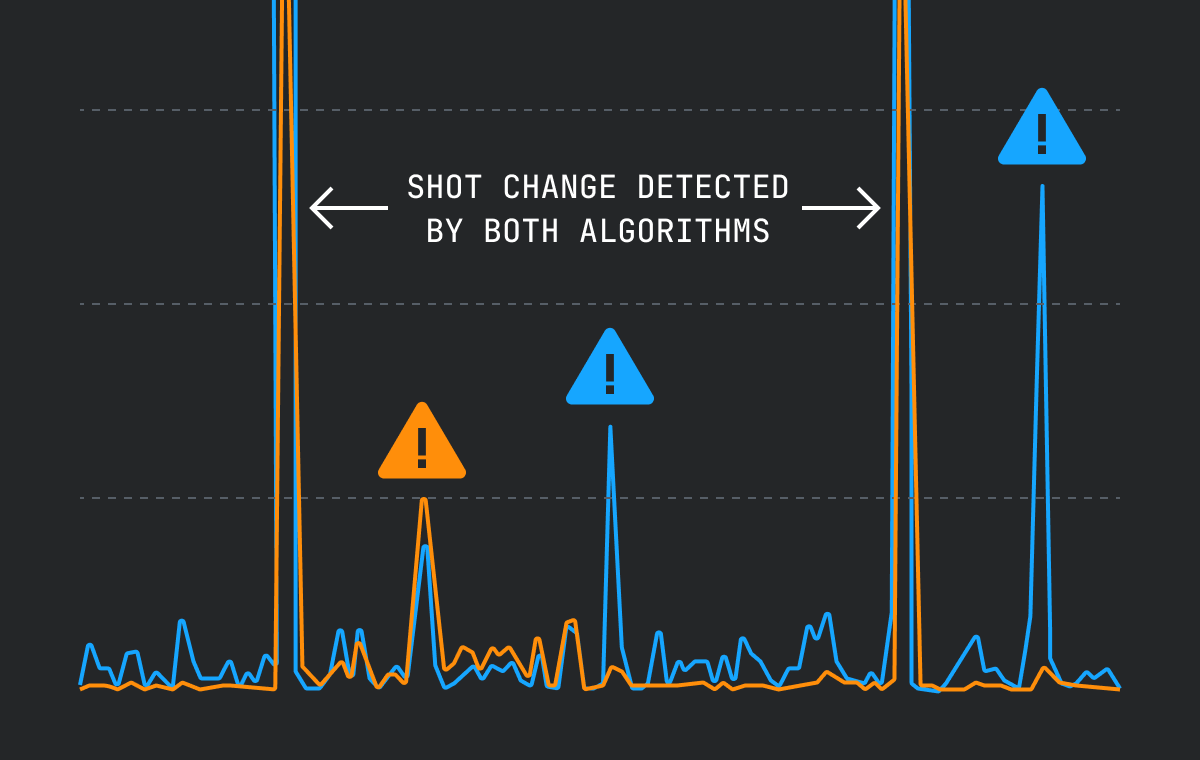
The development of the Shots algorithm was guided by a specific set of operational goals. Engineers at Mux identified the need for a one-pass algorithm that could function with minimal resource overhead, ensuring that the process of analyzing video does not become a bottleneck in the delivery pipeline. In the hierarchy of detection errors, the team opted to prioritize a high recall rate, meaning the algorithm is designed to tolerate a higher number of false positives rather than risking false negatives. This strategic choice ensures that while the system might occasionally flag a camera movement as a shot change, it is highly unlikely to miss a genuine cut between scenes. This "fail-safe" approach is particularly valuable for downstream AI agents that can further refine the data, but which require a comprehensive baseline of potential transitions to function effectively.
To understand the mechanics of the Shots algorithm, one must look at the fundamental metrics of digital video analysis. The system leverages the power of FFmpeg, an industry-standard multimedia framework, to extract raw data regarding pixel-level changes between consecutive frames. Three primary metrics form the core of this analysis: the Sum of Absolute Differences (SAD), the Mean Average Frame Difference (MAFD), and a normalized Shot Change Score. SAD measures the total variation in luminance between frames; a significant spike in this value typically indicates a visible change in the scene, suggesting a potential shot boundary. MAFD provides a more granular look at these differences, which are then normalized into a 0-100 score to create a standardized scale for detection across varying video formats and qualities.

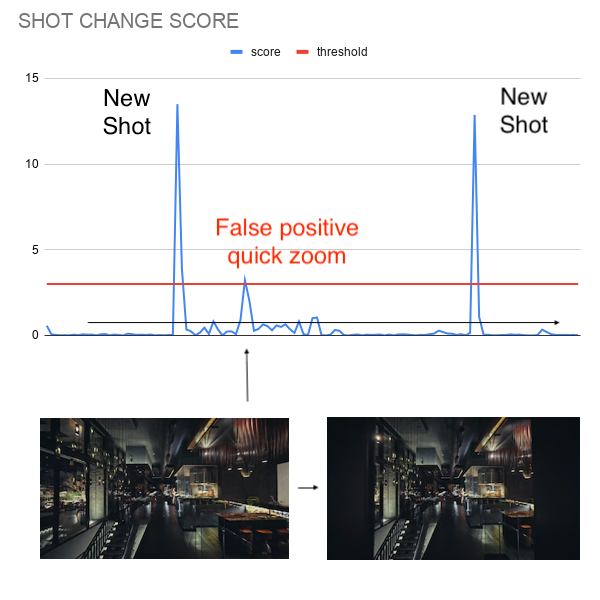
The journey toward the final Shots algorithm involved several iterative phases, each highlighting the limitations of traditional detection methods. In the first phase of development, the team explored a simple threshold-based approach. This method, which is the default for many FFmpeg-based tools, triggers a shot change detection whenever the normalized score exceeds a predefined value. However, the inherent diversity of video content makes a universal threshold nearly impossible to maintain. A high-action sports sequence, for instance, requires a significantly higher threshold to avoid flagging every rapid camera pan as a new shot. Conversely, a quiet, minimalist film might feature shot changes with very subtle visual shifts, necessitating a low threshold. Mux engineers concluded that a single-pass algorithm could not realistically adjust this threshold dynamically for every video type without incurring massive computational costs, leading to an unacceptable volume of false positives in dynamic footage.
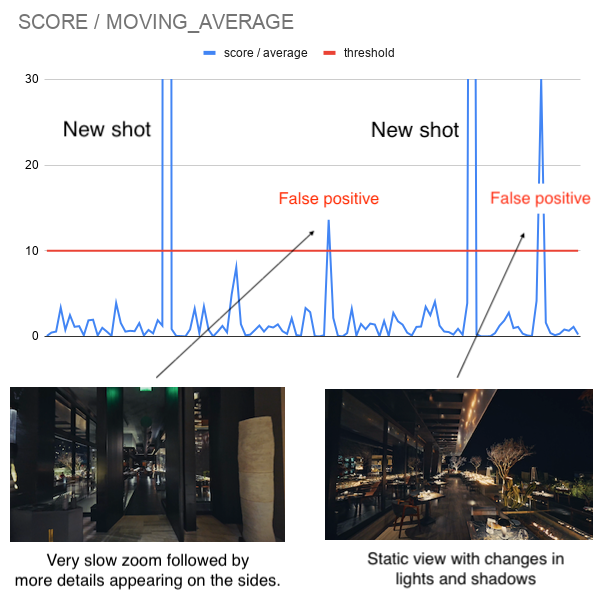
The second phase of development shifted the focus toward peak detection. Instead of relying on a static number, this approach analyzed the ratio of the current frame’s score against a moving average of the previous three frames. By looking for short, sharp peaks relative to the immediate context, the algorithm became much more resilient to the overall dynamic range of the video. While this solved the threshold sensitivity problem, it introduced a new vulnerability: the "static scene" error. In videos where the camera remains perfectly still for several seconds, the moving average of frame differences begins to approach zero. In such a mathematical environment, even a microscopic change—such as a slight shift in shadow or a single moving pixel—can result in a disproportionately high ratio, triggering a false positive shot change.
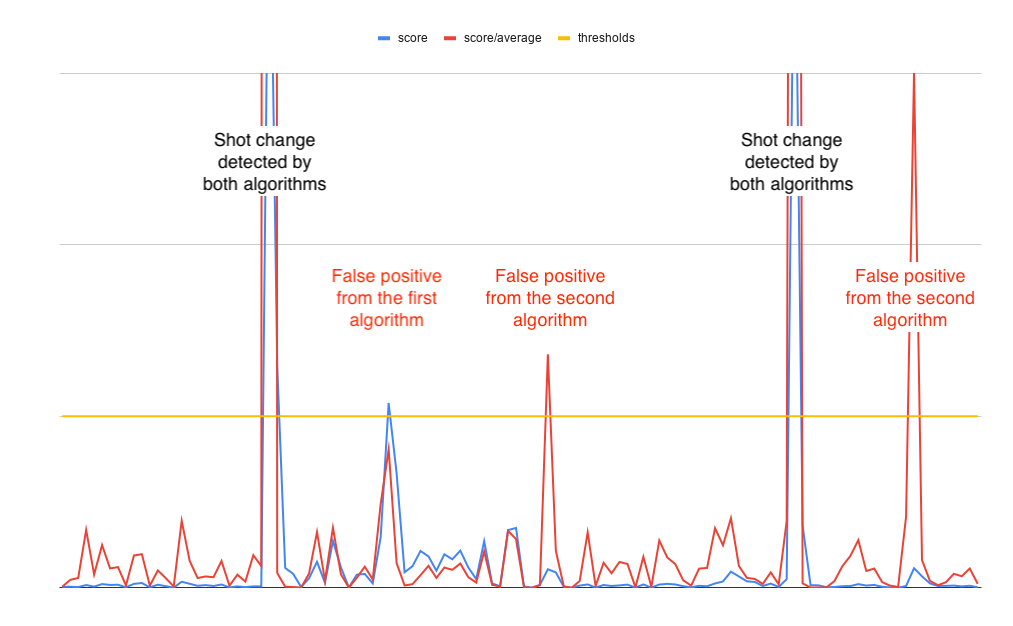
The breakthrough for the Mux Robots team came with the realization that the failure cases for the threshold approach and the peak detection approach were almost entirely non-overlapping. The threshold method failed during high-motion sequences, while the peak detection method failed during near-static sequences. By combining these two heuristics into a dual-trigger system, the team developed a "best of both worlds" solution. The final Shots algorithm only records a shot boundary when both the threshold is exceeded and a significant peak relative to the moving average is detected. This hybrid logic ensures that the algorithm remains resource-efficient, requiring only the storage of the last three values in memory, while significantly increasing the precision of the output.
Real-world testing of the Shots algorithm has demonstrated its efficacy across a wide variety of content. In a controlled test involving a high-production video of red wine being poured, the algorithm successfully identified the distinct transitions between the close-up of the bottle, the wide shot of the bar, and the final slow-motion capture of the glass. In this specific scenario, the individual algorithms would have flagged a "false positive quick zoom" or a "static lighting shift" as new shots. However, the combined logic ignored these micro-movements, resulting in a clean manifest that matched the human perception of the scene structure.
Despite its robustness, Mux has been transparent about the known failure cases that still challenge algorithmic detection. Smooth transitions, such as cross-fades or "dissolves" often found in animated features or high-end documentaries, remain the primary cause of false negatives. Because these transitions occur over several frames rather than a single cut, the frame-to-frame difference never spikes high enough to trigger the threshold or the peak detector. Solving this would require a multi-pass approach or a more intensive AI model capable of "understanding" the visual content of the frames, a trade-off that would violate the algorithm’s goal of low-resource, one-pass processing.
On the opposite end of the spectrum, videos featuring high-intensity flashing lights—such as concert footage captured on mobile devices—tend to produce false positives. Every flash of a strobe light creates a massive, instantaneous change in luminance that satisfies both the threshold and peak detection criteria. From a mathematical perspective, a strobe flash is indistinguishable from a hard cut to a white screen. Other edge cases include partial-screen slideshows, where only a small window of the frame changes while the background remains static, and extremely sharp digital zooms. Mux categorizes these as acceptable trade-offs, noting that the current iteration of Shots is designed to provide the best possible data within the constraints of high-speed cloud infrastructure.
The implications of the Shots primitive extend far beyond simple metadata generation. In the broader context of the media industry, the ability to automatically and cheaply segment video into shots is a prerequisite for the next generation of AI-driven video tools. For content creators, this technology enables automated trailer generation, where an AI can "pick" the most visually compelling shots from a film based on the images generated by the algorithm. For streaming platforms, it allows for more sophisticated "smart seeking," where users can navigate through a video by looking at keyframes representing every camera change rather than arbitrary time intervals.
Industry analysts suggest that the release of Shots positions Mux as a leader in the "AI-ready" infrastructure space. As more companies look to integrate Large Language Models (LLMs) and multi-modal AI into their video workflows, the need for structured, pre-processed data becomes paramount. By providing a reliable way to "find the shots," Mux is essentially providing the vocabulary that these AI agents need to "read" a video. Furthermore, the efficiency of the one-pass algorithm reflects a growing industry trend toward "green computing," reducing the total CPU cycles required for video analysis and lowering the carbon footprint of massive media libraries.

As Mux continues to refine its Robots suite, the Shots primitive will likely serve as the benchmark for how infrastructure providers handle the intersection of traditional video engineering and modern machine learning. By focusing on the fundamental mathematics of frame differences and acknowledging the inherent limitations of algorithmic detection, Mux has created a tool that is both pragmatically useful and technologically sophisticated. For developers and media organizations, the message is clear: the future of video understanding begins with the ability to see the cuts, and with the introduction of Shots, that process has become more accessible than ever before.
Related posts: