Amazon S3 Vectors Introduces Metadata Pre-filtering to Enhance Retrieval Accuracy and Search Performance

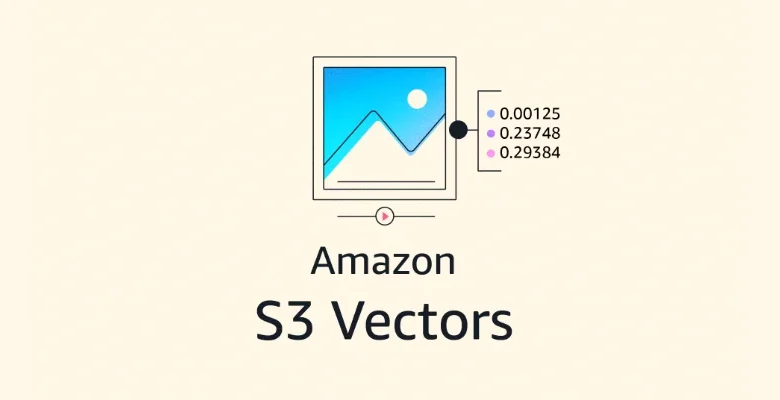
Amazon Web Services (AWS) has announced a significant architectural update to its S3 Vectors service with the introduction of metadata pre-filtering. This capability is designed to address a persistent challenge in high-dimensional vector search: the trade-off between strict data scoping and retrieval recall. By resolving metadata filters—such as tenant IDs, document categories, or temporal constraints—before initiating a similarity search, the updated engine ensures that vector searches are performed exclusively within a relevant subset of the data index.
The deployment of this feature marks a shift in how S3 Vectors handles complex queries for retrieval-augmented generation (RAG) and agentic AI applications. Previously, vector search engines often employed "post-filtering," where filters were applied to results after the similarity search occurred. This often resulted in lower recall, as the top-k nearest neighbors might be discarded if they failed to meet specific metadata requirements. With this update, AWS is shifting the industry standard toward pre-filtering, which promises more precise and relevant outcomes for enterprise-grade workloads.
The Evolution of Vector Search in S3
The integration of vector search into Amazon S3 has been a multi-year strategic initiative aimed at simplifying the architecture for generative AI. By allowing developers to store and query vector embeddings directly alongside their raw data in S3, AWS has removed the need for separate, dedicated vector databases in many use cases.
The chronology of this feature development reflects the maturation of the S3 ecosystem. In the early stages of S3 Vectors, the focus was primarily on high-performance indexing and retrieval of embeddings. However, as enterprise adoption grew, users began reporting difficulties in managing multi-tenant environments. In a multi-tenant RAG system, an application must ensure that a query from one user never returns data belonging to another. Under the original "CLASSIC" index mode, the system performed vector searches across the entire dataset, only filtering out unauthorized results afterward. This approach frequently caused a "sparse result" problem, where the most relevant items were excluded because they did not pass the filter, leaving the system to return lower-quality matches from the remaining pool.
Technical Mechanics: Moving from CLASSIC to ENHANCED
At the core of the new announcement is the introduction of the "ENHANCED" index mode. In this mode, the system treats the metadata filter as a hard constraint that must be satisfied before any similarity computations occur.
From a technical standpoint, each vector entry within an S3 Vectors index can now carry up to 2 KB of associated metadata. The system allows for up to 100 filter constraints per query, supporting a variety of logical operators including $and, $or, $gt, and the newly introduced $startsWith. The $startsWith operator is particularly notable, as it enables hierarchical filtering—a common requirement for navigating file paths, URL structures, and organizational taxonomies.
When a query is initiated, the index engine evaluates the metadata constraints first. If a user searches for a specific document within a specific tenant’s folder, the engine prunes the search space to include only the vectors that match that tenant ID and path prefix. The similarity search is then conducted only within that specific, narrowed segment. AWS internal performance data indicates that for highly selective filters, this approach can return up to five times more relevant matches compared to the legacy CLASSIC method, which validated candidates in tandem with the search.
Implications for RAG and Agentic Workflows
The implications for RAG pipelines are substantial. In modern enterprise AI, the accuracy of a model’s response depends entirely on the context provided during the retrieval phase. If a retrieval system fails to pull the most relevant documents due to inefficient filtering, the language model (LLM) receives incomplete information, leading to potential hallucinations or irrelevant responses.
By ensuring higher recall, S3 Vectors’ metadata pre-filtering creates a more robust foundation for "agentic" applications—systems where AI agents are empowered to perform tasks across vast, multi-user document repositories. For instance, a legal firm using S3 for document discovery can now restrict searches to specific case files and exhibits with granular precision, ensuring that the AI agent only "sees" documents authorized for the specific case being researched. This eliminates the risk of cross-contamination of data while maintaining high performance.
Implementation and Operational Transition
The transition for existing users is designed to be non-disruptive. AWS has confirmed that there is no requirement for re-ingestion of data; users can simply update their index mode from CLASSIC to ENHANCED via the API. This in-place upgrade allows organizations to modernize their search infrastructure without incurring downtime or the costs associated with re-uploading terabytes of vector data.
For new indexes, developers can set the default index mode to ENHANCED at the bucket level, ensuring that all future data ingestion adheres to the new, more efficient search architecture. The integration follows standard AWS SDK patterns, utilizing the existing PutVectors and QueryVectors APIs. The addition of metadata-rich querying without requiring a rigid, predefined schema provides developers with the flexibility needed to iterate on their data models without complex database migrations.
Market Context and Future Outlook
The release of this feature aligns with a broader industry trend toward "data-aware" AI. Competitors in the vector database space have long touted the necessity of metadata filtering as a core differentiator. By baking these capabilities directly into S3, AWS is positioning its storage layer not just as a repository for static files, but as an active, intelligent retrieval engine.
Analysts observe that this move is intended to reduce the operational overhead for developers who would otherwise need to manage a separate vector database like Pinecone, Milvus, or Weaviate. By streamlining the stack—keeping both the raw data and the searchable index within S3—AWS is making it significantly cheaper and simpler for organizations to build large-scale generative AI applications.
Summary of Benefits
- Zero-Cost Implementation: There are no additional fees for enabling metadata pre-filtering; users continue to pay standard S3 storage and request pricing.
- Improved Recall: By filtering before the similarity search, the system ensures that the most relevant data is always included in the final result set.
- Hierarchical Support: The new $startsWith operator enables efficient navigation of complex file systems and URL structures.
- Simplified Operations: The ability to update index modes in place removes the friction of architectural refactoring.
As organizations continue to scale their use of LLMs, the ability to effectively govern and scope data retrieval will become a paramount concern. Through this update, Amazon is providing the necessary infrastructure to ensure that as data volumes grow into the millions or billions of vectors, the speed and accuracy of retrieval remain consistent.
The feature is currently available across all commercial AWS Regions, as well as AWS China Regions. Developers are encouraged to review the updated AWS S3 documentation to audit their current IAM policies, as the new operations may require updated permissions to ensure seamless integration into existing CI/CD pipelines. With this, AWS has reinforced its commitment to providing the underlying plumbing necessary for the next generation of AI-driven enterprise applications.
Related posts: