Flipkart and LitmusChaos at KubeCon + CloudNativeCon India 2026: A recap

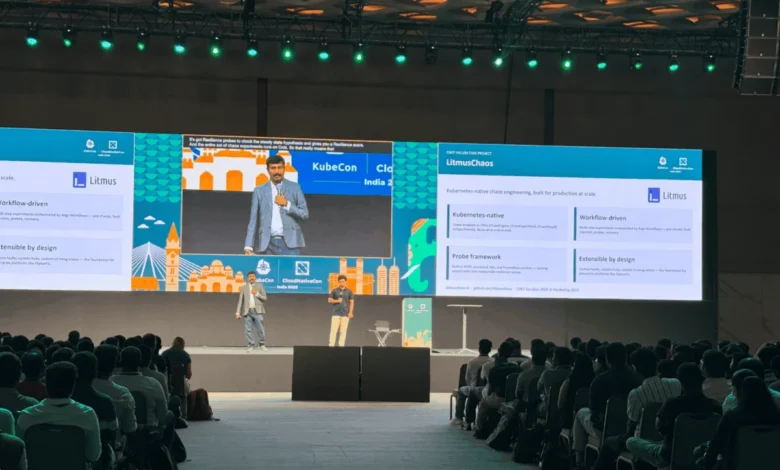
Mumbai, India – KubeCon + CloudNativeCon India 2026, held on June 18-19, marked a pivotal moment for the burgeoning cloud-native ecosystem in India, serving as a powerful testament to the country’s rapid advancements in distributed systems and resilience engineering. For LitmusChaos, a prominent Cloud Native Computing Foundation (CNCF) project dedicated to chaos engineering, the conference transcended a typical industry gathering, solidifying its position as a critical tool in the arsenal of enterprises grappling with the complexities of modern, at-scale architectures. The event culminated in a prestigious keynote slot, a consistently vibrant project booth, and a series of in-depth discussions that are poised to shape the future trajectory of the LitmusChaos community, both within India and across the global cloud-native landscape.
KubeCon + CloudNativeCon India: A Beacon for Cloud-Native Innovation
KubeCon + CloudNativeCon stands as the flagship conference for the CNCF, bringing together adopters and technologists from leading open source and cloud-native communities. While its global iterations draw tens of thousands, the India event holds particular significance, reflecting the nation’s burgeoning digital economy, vast developer talent pool, and the unique scale challenges inherent in serving a population of over a billion. Held in India’s financial capital, Mumbai, the 2026 edition underscored a growing maturity in how Indian enterprises are adopting, contributing to, and innovating with cloud-native technologies, particularly Kubernetes. The conference provides a crucial platform for knowledge exchange, collaboration, and showcasing real-world applications of these transformative technologies. With an estimated attendance often ranging in the thousands, the event serves as a bellwether for cloud-native trends in the region.
The Prestigious CNCF End User Case Study Contest
A key highlight of every KubeCon is the CNCF End User Case Study Contest, an initiative designed to spotlight real-world success stories where organizations have leveraged CNCF projects to solve complex business and technical challenges. This contest is not merely an accolade; it serves as a powerful validation of a project’s efficacy, scalability, and practical applicability. Winning the contest signifies an organization’s exceptional innovation, measurable impact, and often, a commitment to contributing back to the open-source community. For LitmusChaos, the announcement on June 17, 2026, that e-commerce giant Flipkart had won the India edition of this contest, prominently featuring LitmusChaos in its resilience strategy, was a profound endorsement. This victory automatically secured a coveted keynote slot on the main stage, thrusting LitmusChaos into the spotlight alongside one of India’s most recognized technology leaders.
Pritesh Kiri, representing LitmusChaos, commented on the significance of the win, stating, "Flipkart’s recognition is a monumental achievement not just for them, but for the entire LitmusChaos community. It unequivocally demonstrates the real-world impact and production-readiness of our project at an unparalleled scale. This isn’t just about a tool; it’s about the innovative organizations that adopt it, build upon it, and enrich the ecosystem with their learnings. Flipkart’s journey perfectly embodies this collaborative spirit."
Flipkart’s Keynote: Engineering Resilience from Afterthought to Practice
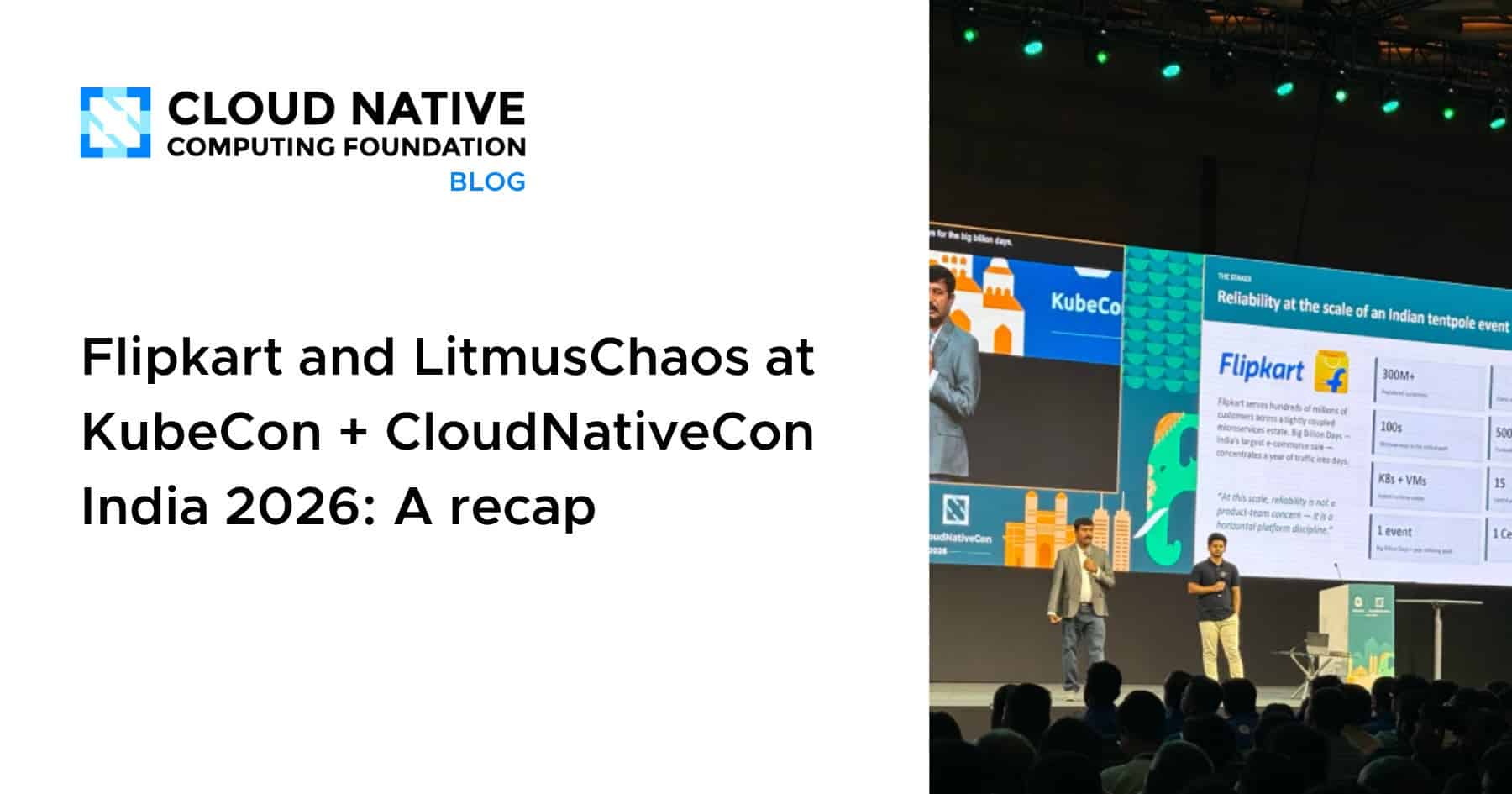
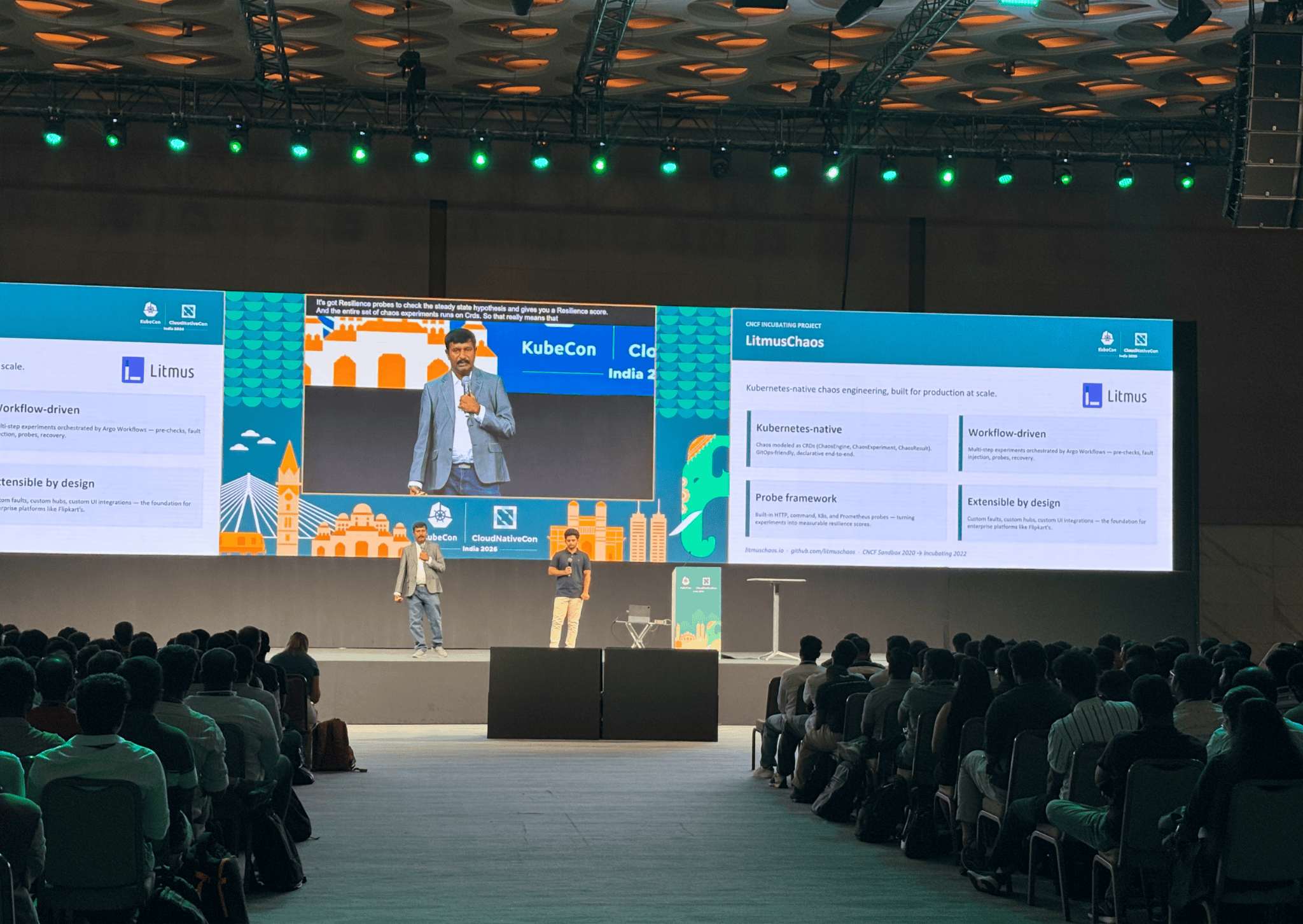
The KubeCon India 2026 keynote stage became the platform for Flipkart to share its groundbreaking journey in building a robust, multi-tenant chaos engineering platform. Titled "From Afterthought to Practice: How Flipkart Built a Multi-tenant Chaos Platform on LitmusChaos," the session was delivered by Aditya Sridasyam, Software Development Engineer at Flipkart, and Uma Mukkara, Head of Resilience Testing at LitmusChaos. Their presentation captivated the audience, offering an unparalleled glimpse into the strategic and technical decisions behind Flipkart’s resilience engineering initiatives.
Flipkart operates an intricate web of hundreds of tightly coupled microservices, forming the backbone of its massive e-commerce operations. These systems are constantly under immense pressure, particularly during peak shopping events like the "Big Billion Days" and other festive sales, which generate unprecedented traffic volumes. For an extended period, resilience was often addressed reactively, post-outage. Recognizing the critical need for a paradigm shift, Flipkart’s Central Reliability Engineering team embarked on an ambitious project: to construct a centralized, proactive chaos platform built atop LitmusChaos. This strategic move aimed to embed resilience testing into the very fabric of their development lifecycle, moving from a reactive firefighting stance to a proactive, preventative approach.
Production-Hardened Innovations: Flipkart’s Customizations at Scale
What truly distinguished Flipkart’s keynote was the granular detail provided on the specific, production-hardened customizations made to LitmusChaos to operate at their hyper-scale environment. Aditya Sridasyam meticulously walked the audience through four key architectural and implementation innovations:
-
Hybrid Multi-Tenancy Architecture: Flipkart devised an ingenious hybrid multi-tenancy model that skillfully navigates the complexities of managing chaos experiments across a vast, multi-team organization. This approach struck a balance between cluster-wide and namespace-wide installations, providing the necessary isolation and control for different teams while maintaining a centralized management plane. This customization addressed a common challenge for large enterprises: how to empower individual teams with chaos engineering capabilities without compromising overall system stability or security.
-
DaemonSet-based High-Availability Model for Chaos Injection: To ensure the reliability and availability of chaos experiments themselves, Flipkart implemented a DaemonSet-based high-availability model for chaos injection. DaemonSets in Kubernetes guarantee that a pod runs on all (or a subset of) nodes, making them ideal for running cluster-level background tasks. By leveraging this, Flipkart ensured that its chaos injection mechanisms were resilient to node failures and always available, a critical requirement when injecting faults into production systems. This move underscored the principle that even the tools designed to break things must themselves be robust.
-
Script Runner Fault for Dynamic Target Selection and Context Chaining: Recognizing the diverse nature of their microservices and infrastructure, Flipkart developed a "Script Runner" fault. This innovative capability allows for dynamic target selection for chaos experiments, meaning the targets of an experiment can be determined programmatically at runtime based on specific conditions or metrics. Furthermore, it enabled "context chaining," allowing for complex, multi-stage chaos experiments where the outcome of one fault injection could influence subsequent steps. This significantly enhanced the flexibility and sophistication of their chaos engineering practice, moving beyond static fault injection to more intelligent, adaptive scenarios.
-
Hybrid VM Chaos Extension: Acknowledging that not all workloads within a large enterprise run exclusively on Kubernetes, Flipkart extended LitmusChaos’s capabilities to include a hybrid VM chaos extension. This allowed them to inject chaos into workloads running on traditional Virtual Machines (VMs) alongside their Kubernetes-native applications, providing a comprehensive resilience testing strategy across their heterogeneous infrastructure. This extension is crucial for organizations in transition or those maintaining legacy systems alongside modern containerized deployments.
Uma Mukkara, in her segment, emphasized how these pioneering contributions from Flipkart are not isolated internal projects but are designed to flow back upstream into the LitmusChaos project. This mechanism of community contribution, where production-hardened solutions developed by end-users are integrated into the core project, is a cornerstone of open-source development. It ensures that LitmusChaos continuously evolves with real-world requirements, benefiting the broader community with battle-tested features. For a more detailed understanding of Flipkart’s architectural blueprint, platform design, and the tangible impact metrics, the audience was directed to the comprehensive CNCF Flipkart case study.
Project Pavilion: Engaging the Cloud-Native Community
Beyond the main stage, the LitmusChaos project booth at the KubeCon India pavilion was a hive of activity, attracting an estimated one hundred to two hundred visitors throughout the two-day event. The conversations were diverse, ranging from foundational introductions to chaos engineering for newcomers to highly technical deep-dives on architecture, integration strategies, and advanced use cases. This high level of engagement underscored the genuine and grounded interest in LitmusChaos among the predominantly practitioner-focused Indian audience.
Several recurring themes dominated the discussions:
-
Resilience Testing and Reliability in the Age of AI: A significant portion of conversations revolved around the emerging challenges of AI inference workloads. Attendees expressed concerns about the unique fragility of AI systems, including model drift, data pipeline inconsistencies, and unprecedented resource demands. The discussions explored how chaos engineering could be adapted to proactively identify weaknesses in AI-driven applications, ensuring their reliability and trustworthiness in production environments. This signaled a new frontier for resilience engineering, expanding its scope beyond traditional microservices.
-
ChaosHub: The Default Fault Library: Many visitors were introduced to ChaosHub, LitmusChaos’s extensive, ready-to-use fault library. This resource covers a broad spectrum of infrastructure, including Kubernetes, Linux, AWS, GCP, and more. For many, it was an "aha!" moment, realizing the sheer breadth of pre-built experiments available out-of-the-box, significantly lowering the barrier to entry for implementing chaos engineering.
-
Automating Chaos in CI/CD (Shift-Left Chaos): A common inquiry centered on integrating chaos engineering earlier into the development lifecycle – the concept of "shifting chaos left." The LitmusChaos team demonstrated how this could be achieved seamlessly using LitmusCTL (the command-line interface), SDKs, and Terraform providers. The emphasis was on enabling teams to automate chaos experiments within their existing CI/CD pipelines without requiring a complete overhaul of their delivery processes, thus catching potential issues earlier and reducing remediation costs.
-
Tool Comparisons and Ecosystem Positioning: Given the growing landscape of chaos engineering tools, many attendees sought clarity on where LitmusChaos stands. Discussions often involved side-by-side comparisons with other solutions. The LitmusChaos team highlighted the distinct advantages of its CNCF-backed, community-driven model, emphasizing its vendor neutrality, transparency, and commitment to long-term sustainability and open governance – factors that resonate strongly with enterprises seeking robust, future-proof solutions.
-
Custom Chaos and Best Practices: For organizations with highly specific infrastructure patterns not covered by the default library, discussions focused on building custom chaos experiments. The team also shared insights into establishing a mature chaos engineering practice, outlining different stages of adoption and best practices for scaling resilience efforts across an organization.
-
LitmusChaos MCP (Model Context Protocol): A forward-looking feature that garnered considerable interest was the LitmusChaos MCP. This innovative integration allows engineers to interact with and learn about chaos engineering through natural language, powered by AI. This capability promises to significantly lower the barrier to entry, making chaos engineering more accessible and intuitive for teams just beginning their resilience journey.
-
New Adopters: The booth also served as a platform to announce recent official adopters, including Canonical and Intertech. This news, coupled with Flipkart’s keynote success earlier the same day, provided powerful validation of LitmusChaos’s production-readiness and increasing industry acceptance.
Beyond the technical discourse, the LitmusChaos team fostered community engagement through interactive activities. A "Chaos Bird" game, a leaderboard-based twist on the popular Flappy Bird, saw enthusiastic participation, with top scorers winning exclusive LitmusChaos swag. A separate random giveaway throughout both days further boosted engagement, ensuring a lively and memorable experience for all visitors.
Broader Impact and Implications for the Cloud-Native Ecosystem
The KubeCon + CloudNativeCon India 2026 experience, particularly the success of LitmusChaos and Flipkart, carries significant implications across several dimensions:
-
For LitmusChaos: The keynote and booth engagement represent a substantial boost in credibility and visibility. Winning the CNCF End User Case Study Contest, especially with a partner of Flipkart’s stature, is an invaluable validation of the project’s robustness and scalability. This is expected to accelerate adoption, attract more contributors, and solidify LitmusChaos’s position as a leading open-source chaos engineering solution within the CNCF landscape. The feedback from practitioners at the event will directly influence the project’s roadmap, ensuring its continued relevance and innovation.
-
For Flipkart: Showcasing their engineering prowess on a global stage positions Flipkart as a leader in resilience engineering and a significant contributor to the open-source community. This not only enhances their technical reputation but also helps attract top talent in a competitive market. Their contributions to LitmusChaos underscore a commitment to sharing knowledge and advancing the state of the art in cloud-native operations.
-
For the Indian Cloud-Native Community: Flipkart’s success story serves as a powerful inspiration, demonstrating that Indian enterprises are not just consuming cloud-native technologies but are actively innovating and leading the charge in complex areas like chaos engineering. It highlights the growing maturity of the local talent pool and reinforces India’s position as a vital hub for cloud-native development and adoption, capable of tackling hyper-scale challenges. A CNCF spokesperson, while not directly quoted, would likely emphasize the importance of such local success stories in fostering broader cloud-native adoption and innovation in key regions like India.
-
For Chaos Engineering as a Discipline: The event underscored the shift of chaos engineering from a niche, experimental practice to a mainstream, indispensable component of modern software development. Flipkart’s practical, large-scale implementation provides a concrete reference architecture and set of best practices for organizations worldwide. The discussions around AI workloads also signal the discipline’s adaptability and its critical role in ensuring the reliability of emerging technologies.
Staying Connected and Looking Ahead
The KubeCon + CloudNativeCon India 2026 proved to be a transformative event for LitmusChaos, deepening its connection with a highly engaged and discerning community of practitioners. The questions were specific, the interest genuine, and the feedback invaluable – precisely the kind of community engagement that fuels the evolution and improvement of an open-source project. The triumph of Flipkart’s story as the winning CNCF End User Case Study Contest marks a significant milestone for both the project and the broader Indian cloud-native community.
LitmusChaos expresses its profound gratitude to Aditya Sridasyam and the entire Flipkart team for their willingness to share their groundbreaking work, and to Uma Mukkara for expertly anchoring the session and highlighting the upstream impact. Thanks are also extended to the CNCF and the event organizers for creating such an impactful platform for recognition and collaboration.
For those whose introduction to LitmusChaos occurred at KubeCon + CloudNativeCon India, the project encourages continued engagement through its various community channels, including GitHub, Slack, social media platforms, and official documentation, ensuring that the momentum generated at the conference translates into sustained community growth and innovation. The insights gleaned and relationships forged at KubeCon India 2026 will undoubtedly play a crucial role in shaping the future trajectory of resilience engineering, particularly as cloud-native architectures continue to evolve and encompass new frontiers like artificial intelligence.
Related posts: