Zipline Secures $1.5 Billion in Massive Funding Round and Expands Strategic Partnership with Walmart to Scale Autonomous Drone Delivery

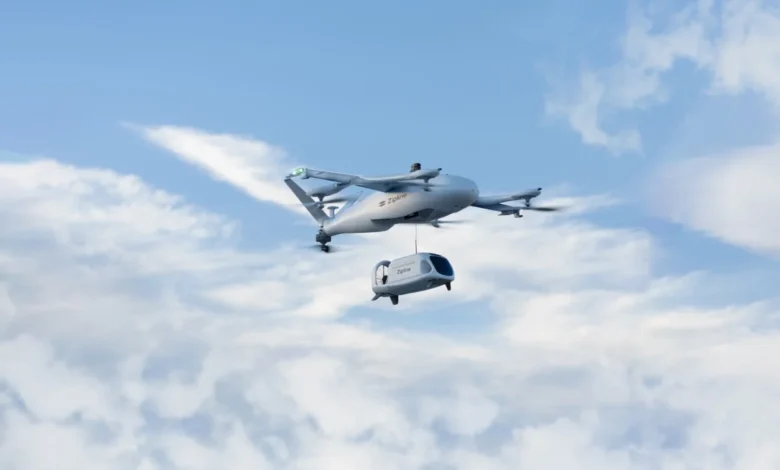
The autonomous logistics sector witnessed a seismic shift this week as Zipline, the industry-leading drone delivery startup, announced a massive $1.5 billion funding round. This capital injection, which brings the company’s total valuation to an impressive $21.5 billion, arrives in lockstep with the announcement of a major expansion of its partnership with retail giant Walmart. The deal will see the deployment of 300 new drone delivery sites across the United States, representing a more than tenfold increase from the 21 sites currently operational.
This dual development marks a turning point for the California-based company, signaling a transition from localized pilot programs to the construction of a robust, nationwide logistics infrastructure. With the backing of major institutional investors and the logistical reach of the world’s largest retailer, Zipline is positioning itself to become the backbone of "last-mile" automated delivery.
The Path to Global Leadership: A Chronological Overview
Zipline’s trajectory is a study in methodical expansion. Founded in 2014, the company initially focused on high-stakes, life-saving logistics in challenging environments.
- 2014–2016 (The Foundation): Zipline launched its operations in Rwanda, focusing on the autonomous delivery of blood and medical supplies. By operating in regions with limited ground infrastructure, the company proved the reliability of its flight systems under extreme conditions.
- 2017–2019 (Scaling in Africa): Following its success in Rwanda, Zipline expanded its footprint to Ghana and Nigeria, refining its logistics software and autonomous flight patterns.
- 2020 (U.S. Entry): The company made its American debut in North Carolina, partnering with Novant Health to deliver critical medical equipment, navigating the complex regulatory environment of the Federal Aviation Administration (FAA).
- 2021 (The Walmart Partnership): Zipline entered a landmark agreement with Walmart, beginning the integration of drone delivery into retail supply chains.
- 2022 (Regulatory Breakthrough): A defining moment occurred when Zipline secured the FAA’s Part 135 air carrier certification. This credential was the "gold standard" requirement for long-range, commercial beyond-visual-line-of-sight (BVLOS) operations in the United States.
- 2023–2024 (Integration and Expansion): The company expanded its ecosystem to include partnerships with food delivery platforms like Uber Eats and furthered its reach into Japan and additional African nations.
Financial Backing and Institutional Confidence
The $1.5 billion funding round was co-led by Paradigm, WCM Investment Management, and Layer Global, reflecting deep confidence from both technology-focused venture capital and traditional asset management firms. Other notable participants include Valor Equity Partners, Fidelity Management & Research Company, Uber, Tiger Global, J.P. Morgan, ARK Invest, and Salesforce Ventures.
This influx of capital is earmarked for three primary strategic pillars: expanding U.S.-based manufacturing capacity, aggressive talent acquisition to support a nationwide network, and the continued refinement of its proprietary drone ecosystem. The participation of firms like J.P. Morgan and Salesforce suggests that Zipline is being viewed not merely as a hardware manufacturer, but as an essential logistics software provider that could integrate into the broader enterprise resource planning (ERP) systems of global retailers.
The Technological Ecosystem: Platform 1 vs. Platform 2
Zipline’s ability to secure such significant funding is largely attributed to its diversified hardware approach. Unlike competitors that rely on a "one-size-fits-all" drone, Zipline utilizes two distinct platforms:
- Platform 1 (The Long-Haul Workhorse): These larger aircraft are designed for enterprise, business, and government applications. They possess a range capable of covering 120 miles on a round trip, making them ideal for connecting regional distribution hubs to satellite locations or remote medical facilities.
- Platform 2 (The Last-Mile Specialist): Designed for high-density, residential delivery, these drones are optimized for carrying payloads of up to eight pounds. They are specifically engineered to navigate the "last 10 miles" of the delivery chain, providing rapid, low-cost fulfillment for retail, agricultural, and health products.
By maintaining this dual-platform strategy, Zipline is able to offer a comprehensive "delivery-as-a-service" model that spans from central distribution centers directly to the consumer’s doorstep.
Market Impact and Revenue Metrics
The business case for Zipline’s expansion is supported by accelerating adoption metrics. According to data provided by the company, its share of total delivery revenue—a key performance indicator in the logistics sector—surged from 10.8% in March to 34.9% by October of this year.
This rapid growth suggests that the market for autonomous delivery is no longer theoretical. Retailers are actively seeking to offload the rising costs of last-mile ground delivery—which is often the most expensive component of the supply chain—to automated, aerial alternatives. With the addition of 300 new Walmart sites, the scale of Zipline’s network will likely trigger a "network effect," where the density of operations reduces per-unit costs, further incentivizing other retailers to adopt the platform.
Broader Implications: The Future of Urban and Rural Logistics
The expansion of Zipline’s partnership with Walmart carries significant implications for the retail sector. As e-commerce expectations continue to skew toward "same-hour" delivery, traditional ground-based logistics are struggling with traffic congestion, fuel costs, and labor shortages.
Autonomous drones offer a solution that is carbon-efficient, immune to traffic, and capable of operating 24/7. However, the move to 300 sites also highlights the necessity for continued regulatory cooperation. The FAA, while having granted the initial Part 135 certification, must now manage the integration of hundreds of drones into low-altitude airspace. The success of this rollout will likely serve as the blueprint for other autonomous aviation companies.
Furthermore, Zipline’s success signals a shift in the investment landscape. During a period of economic uncertainty, a $1.5 billion raise for a hardware-intensive company demonstrates that investors are prioritizing firms with proven regulatory compliance and tangible, real-world utility over speculative technology.
Challenges Ahead
Despite the momentum, Zipline faces several hurdles. Expanding to 300 sites requires not only the drones themselves but also the establishment of localized "nests" or launch-and-landing infrastructure. Integrating these systems into existing retail footprints requires significant operational coordination with store management.
Additionally, the company must maintain its stellar safety record as flight frequency increases. In the eyes of the public and regulators, any high-profile accident involving an autonomous drone could lead to increased scrutiny or a tightening of operating permissions. Zipline has managed this risk thus far by prioritizing reliability in its software-defined flight controls, but the transition from a niche provider to a ubiquitous utility brings with it a higher profile and increased accountability.
Conclusion
The partnership between Zipline and Walmart, bolstered by $1.5 billion in new funding, represents the most significant push yet toward the mainstream adoption of drone delivery. By leveraging a proven, two-tier hardware ecosystem and securing the necessary regulatory framework, Zipline has moved past the experimental phase of its business.
As the company begins the construction of its nationwide network, the retail and logistics industries will be watching closely. If Zipline can successfully scale to these 300 new sites while maintaining its efficiency metrics, the model could fundamentally change how goods—from groceries to life-saving medication—are transported, effectively turning the sky into the next great frontier for commerce.