Quince Secures Massive 500 Million Dollar Series E Funding Round Reaching a Ten Billion Dollar Valuation

In a market landscape currently dominated by astronomical valuations for artificial intelligence startups, Quince, the direct-to-consumer retail disruptor, has achieved a rare feat: a significant valuation step-up for a traditional e-commerce platform. On Wednesday, the company announced the closure of a $500 million Series E funding round, which has propelled its market valuation to $10.1 billion. This milestone represents a more than doubling of the company’s valuation in less than a year, underscoring investor confidence in the brand’s unique "manufacturer-to-consumer" business model despite ongoing legal headwinds regarding its product designs.
The funding round was led by Iconiq, a prominent investment firm that has now demonstrated a strong commitment to the company’s long-term trajectory. Iconiq previously led Quince’s $200 million Series D round in early 2025, which at the time placed the company at a $4.5 billion valuation. The rapid appreciation in value—moving from $4.5 billion to $10.1 billion in roughly eight months—signals that institutional investors are betting heavily on the sustainability of Quince’s supply chain efficiencies and its ability to scale beyond its initial viral success.
A Chronology of Rapid Expansion
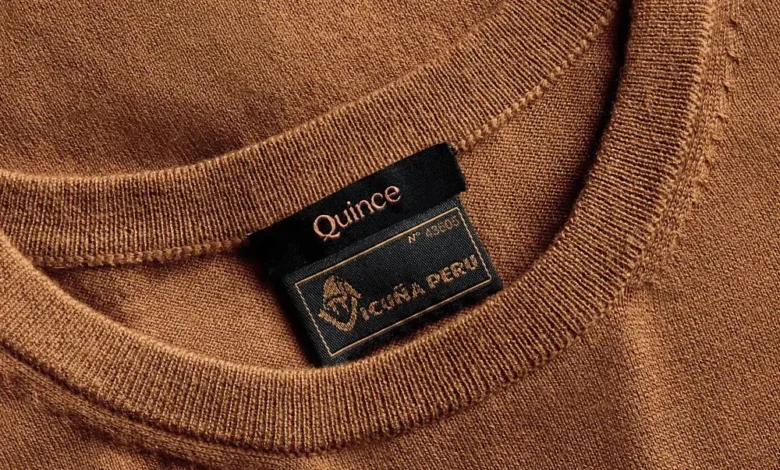
Quince first entered the public consciousness as an Instagram-native brand, gaining significant traction through its promotion of a $50 cashmere sweater. By stripping away traditional retail layers—such as wholesalers, storefronts, and brand markups—the company positioned itself as a provider of "luxury for less." Following its launch out of beta in 2020, Quince systematically expanded its inventory. While apparel remains a cornerstone of the business, the platform has diversified into home goods, premium accessories, beauty, and wellness products.
The company’s growth trajectory has been marked by strategic milestones:
- 2020: Official launch out of beta, introducing the manufacturer-to-consumer model.
- Early 2025: Quince secures $200 million in Series D funding at a $4.5 billion valuation, led by Iconiq.
- January 2026: Quince officially expands its operations into the Canadian market, signaling international scaling ambitions.
- Mid-2026: The company confirms that its top-line annual revenue has officially surpassed the $1 billion threshold, a key psychological and operational milestone for retail startups.
- Current: The completion of a $500 million Series E round, bringing total valuation to $10.1 billion.
The Manufacturer-to-Consumer Advantage
At the core of Quince’s success, and the primary driver for investor interest, is its proprietary tech stack. Unlike traditional retailers that rely on third-party manufacturers and distributors, Quince integrates directly with the factories that produce its goods. According to insights shared by lead investor Iconiq, this vertical integration allows Quince to exert granular control over the design, manufacturing, and shipping processes.
This model provides a distinct competitive edge in demand forecasting. By owning the data pipeline from the factory floor to the consumer’s doorstep, Quince can engage in smaller-batch manufacturing. This approach significantly reduces excess inventory—a perennial problem for retail giants that often leads to deep discounting and waste. By aligning production closely with real-time consumer demand, the company maintains higher margins while simultaneously offering consumers lower price points than traditional luxury competitors.
Navigating Legal Challenges and Design Disputes
Despite its financial success, Quince’s business model has drawn significant scrutiny from established retail brands. The company has found itself embroiled in a series of legal battles centered on allegations of intellectual property infringement. Major corporations, including Coach parent company Tapestry and home goods giant Williams Sonoma, have filed lawsuits against Quince, alleging that the platform sells "dupes" or unauthorized copies of their proprietary designs.
These legal conflicts have fueled a perception in some corners of the retail industry that Quince operates as a high-end copycat platform. However, the company has shown a willingness to contest these claims in court. In a notable victory for the brand, a court recently ruled in favor of Quince in a lawsuit brought by footwear company Deckers, which had alleged design infringement. The court’s decision affirmed that the specific designs in question were "classic" in nature rather than direct copies of protected intellectual property.
For the company, these legal challenges are an expected byproduct of its disruptive nature. By challenging the traditional price-to-quality ratio, Quince inevitably creates friction with legacy brands that rely on high-margin branding. To date, the legal friction has not appeared to hinder consumer acquisition or the company’s ability to attract top-tier capital.
Institutional Support and Market Implications
The Series E round saw participation from an array of blue-chip investors, reflecting a broad consensus on the company’s potential. Beyond lead investor Iconiq, the round included participation from Basis Set Ventures, Wellington Management, WndrCo, MarcyPen Capital Partners, Baillie Gifford, Notable Capital, and DST Global. The presence of these firms suggests that the investment community views Quince not merely as an e-commerce storefront, but as a technology-enabled supply chain company.
The broader implications of this $10.1 billion valuation are significant for the retail sector. The capital infusion provides Quince with the runway to invest heavily in its logistics infrastructure, expand its product categories further, and potentially explore more aggressive international growth. Furthermore, the round serves as a validation of the direct-to-consumer model in an era where customer acquisition costs (CAC) on social media platforms have reached historic highs. Quince’s ability to maintain high growth while lowering the cost of goods sold (COGS) provides a roadmap that other startups may attempt to emulate.
Looking Ahead: The Billion-Dollar Reality
With annual revenues now exceeding $1 billion, Quince has transitioned from a high-growth startup to a significant player in the global retail ecosystem. The company’s ability to maintain its "luxury for less" brand promise while scaling its operations remains its primary challenge. As it expands its footprint in Canada and potentially other international markets, the complexity of its supply chain will grow exponentially.
Furthermore, the company must continue to navigate the thin line between "classic design" and intellectual property infringement. While the recent court ruling in its favor provided a degree of legal validation, ongoing litigation from entities like Tapestry and Williams Sonoma will continue to be a focal point for industry observers.
For now, the capital markets have signaled their verdict. In an investment climate where AI often dominates headlines, Quince has proven that fundamental improvements in retail logistics, supply chain transparency, and consumer value propositions remain highly attractive to global investors. The company’s $10.1 billion valuation is not just a reflection of its past success, but a bet on its capacity to fundamentally rewrite the rules of modern retail manufacturing. As Quince continues to integrate its tech-first approach into the traditional world of apparel and home goods, the retail industry will be watching closely to see if the company can maintain its rapid pace of growth while managing the regulatory and competitive pressures that come with being a ten-billion-dollar unicorn.