Skild AI Unveils S1 Foundation Model to Revolutionize Industrial Robotics Through Video-Based Learning

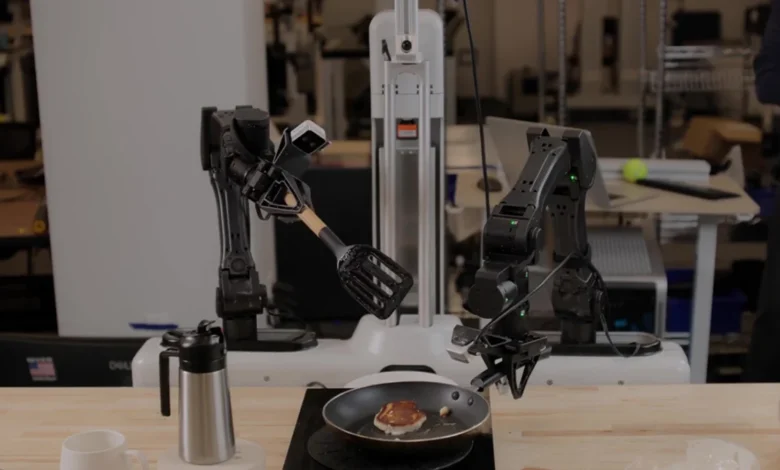
The modern manufacturing landscape is defined by constant flux. Production lines are rarely static; they are characterized by shifting layouts, the introduction of novel product SKUs, and the ever-present need for increased throughput. For decades, the primary hurdle in deploying autonomous robotics has been the rigidity of the software controlling them. Traditional industrial robots require exhaustive reprogramming, extensive data labeling, and months of validation for every minor adjustment. This paradigm is shifting with the launch of the S1 robot foundation model from Skild AI, a system designed to observe a task once via video and execute it autonomously without the need for manual retraining or weight updates.
This breakthrough, announced last week, leverages a technique known as in-context learning. By utilizing video as a direct input, the S1 model interprets intent, identifies the necessary objects, and sequences the required motor actions to complete long-horizon tasks. The implications of this technology are significant, potentially reducing the time required to onboard new robotic tasks from weeks to mere minutes.
A Chronology of Rapid Expansion
Skild AI’s ascent has been marked by a series of rapid milestones that underscore the industry’s appetite for adaptable intelligence. Founded on the principle that robots should learn by experience rather than through rigid preprogramming, the company has transitioned from research to commercial viability in record time.
The company reached a $100 million annual revenue run rate just 10 months after its first commercial deployment. This fiscal velocity is matched by its operational footprint: Skild AI has secured more than 60 deployment partnerships. These collaborations span a diverse array of sectors, including high-volume manufacturing, logistics, automated inspection, facility security, and food preparation. The trajectory suggests that the transition from lab-based theoretical robotics to real-world industrial utility is occurring faster than many industry analysts initially projected.
The Mechanism of Video-Driven Autonomy
The core innovation of S1 lies in its departure from task-specific post-training. In a traditional robotics workflow, an engineer must collect thousands of manual examples—often taking 50 to 100 hours—to train a model for a specific movement or sequence. S1 simplifies this to a single demonstration.
During internal testing, the Skild AI team documented a dramatic shift in efficiency. In one instance, the team moved from recording a plant-potting demonstration to autonomous execution on physical hardware in 11 minutes. Beyond speed, the model exhibits a surprising degree of resilience. It can recover from errors, adjust to dynamic changes in the environment—such as a misplaced component—and synthesize skills in sequences that were never explicitly defined in its pretraining dataset.
Statistical analysis of the model’s performance further validates this approach. In multi-step tasks, the S1 system achieved a 66% success rate per step, a significant leap over the 9% success rate observed in comparable AI systems. This sevenfold improvement represents a tipping point for companies that previously found the cost of robot maintenance to be prohibitively high due to frequent changeovers.
Collaborative Infrastructure and NVIDIA’s Role
The development of S1 was conducted on a foundation of NVIDIA AI infrastructure. This collaboration extends beyond simple compute resources, encompassing a full stack of synthetic data generation, simulation, and real-world deployment technologies.
Deepak Pathak, cofounder and CEO of Skild AI, has noted that the "step change" in robotics is defined by the move away from preprogramming. By utilizing NVIDIA Isaac Lab and NVIDIA Cosmos technologies, Skild AI has been able to generate the diverse, scalable experiences necessary to train robots across various physical embodiments.
The integration of NVIDIA’s ecosystem allows for a cohesive pipeline. NVIDIA Cosmos models assist in diversifying training data, while the Cosmos Curator tool facilitates the large-scale annotation and organization of information. Before any code touches a physical robot, the S1 model undergoes rigorous validation within NVIDIA Isaac Sim and Omniverse, which provide physically accurate virtual environments to stress-test behaviors and explore edge cases without the risk of damaging expensive hardware.
High-Precision Assembly at Scale
The practical utility of this technology is currently being demonstrated in one of the most demanding environments in the tech industry: the production of NVIDIA Blackwell systems. In a partnership involving Skild AI, NVIDIA, and Foxconn, the "Skild Brain" is being deployed on dual-arm manipulators tasked with high-precision assembly.
The assembly process is complex, involving the installation of busbars and limit blocks, followed by the fastening of 16 individual screws. This task requires more than simple movement; it demands contact-aware control and the ability to recover from disturbances in real-time. The success of this deployment highlights the model’s ability to maintain precision in high-stakes, high-value manufacturing environments where the cost of a single error could be substantial.
Technical Foundations and Physics Engines
A critical component of the S1 model’s success is its ability to model physical interaction. Through the use of the Newton physics engine within Isaac Lab, Skild AI engineers can simulate forces, friction, contact, and pressure with high fidelity. This reduces the "sim-to-real" gap—the discrepancy between how a robot performs in a virtual simulation versus how it behaves in the physical world.
Furthermore, Skild and NVIDIA are co-developing new GPU-accelerated simulation solvers. These tools are designed to model how robots touch, grip, and manipulate solid objects, and will be integrated into the broader Newton framework for the benefit of the global developer community. By leveraging tools like NVIDIA Nsight for performance profiling and TensorRT for optimized inference, Skild AI ensures that the model is not only intelligent but also responsive enough for the millisecond-latency requirements of a busy factory floor.
Broader Economic and Industrial Implications
The ability to "teach" robots via video, rather than code, carries profound implications for the global economy. For years, the "automation gap" has persisted because small and medium-sized enterprises (SMEs) could not afford the engineering overhead required to maintain industrial robots. If a company has to hire a team of robotics engineers to move a robot from one station to another, the return on investment often vanishes.
S1 effectively democratizes this capability. By allowing a plant manager to demonstrate a task using a camera, the barrier to entry is lowered significantly. This could lead to a rapid acceleration in the adoption of robotics in sectors that have historically been resistant to automation, such as small-batch manufacturing, customized food preparation, and specialized logistics.
However, the transition is not without challenges. The integration of foundation models into physical hardware requires a robust approach to safety, reliability, and data privacy. Skild AI’s strategy of using commercial deployment data—where permitted—to inform future model iterations creates a "flywheel effect." As more robots are deployed, the model learns more about diverse environments, which in turn makes the next generation of robots even more capable.
The Path Forward
As the robotics industry moves toward a future defined by general-purpose, adaptable systems, the success of the S1 model serves as a bellwether. We are witnessing a transition from "robots as machines" to "robots as intelligent agents."
The collaboration between Skild AI and NVIDIA provides a blueprint for how this transformation will likely occur: a tight coupling of high-performance compute, high-fidelity simulation, and an intuitive, vision-based approach to learning. As the technology matures, the focus will likely shift toward increasing the duration and complexity of the tasks these robots can perform autonomously.
For now, the evidence suggests that the era of the fixed, inflexible factory robot is nearing its end. In its place, we are seeing the emergence of a more fluid, adaptive workforce—one that can be trained as easily as a human apprentice, simply by watching and learning from the work being done around them. Whether this leads to a total reconfiguration of global supply chains remains to be seen, but the technological foundation for that shift is clearly already in place.
Related posts: