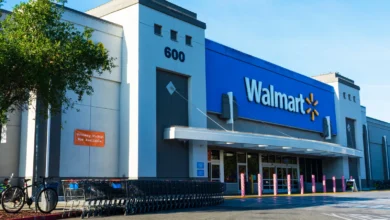
Retail Stores Emerge as Pivotal Hubs for Everyday Money Movement, Reshaping Consumer Finance.

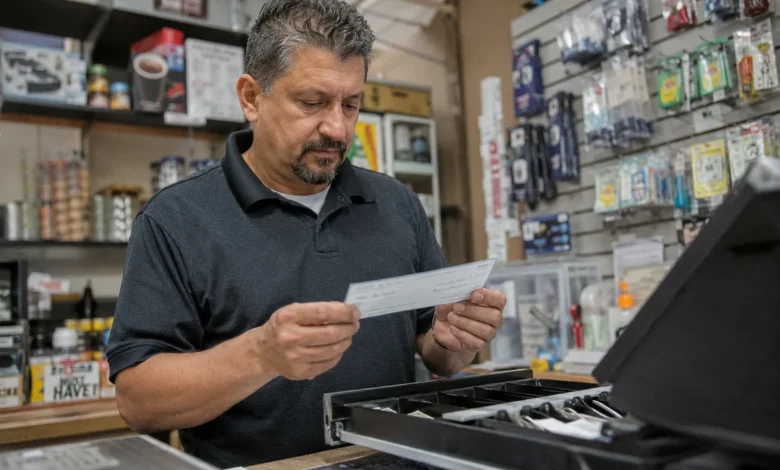
A fundamental transformation is underway in the retail sector, moving beyond the traditional exchange of goods for money. Stores, once solely defined by their product offerings, are rapidly evolving into multi-functional financial hubs, offering an array of essential money movement services alongside their core retail operations. This shift, highlighted by leading figures in the financial technology and payments industry, signals a profound redefinition of the consumer experience, where the local grocery store or pharmacy becomes as much a destination for managing finances as it is for purchasing household necessities.
This convergence of retail and financial services is not merely an incremental change but a strategic imperative driven by evolving consumer behaviors, technological advancements, and the pursuit of new revenue streams. Consumers, increasingly accustomed to the instantaneity and convenience of digital finance, are now seeking similar ease and accessibility for their cash-based and in-person financial transactions. Retailers, in turn, are recognizing the immense potential in becoming the "front door to the digital economy" for a significant segment of the population, thereby fostering deeper loyalty and expanding their commercial footprint.
The Evolution of Retail as a Financial Front Door
For centuries, the primary function of a retail establishment has been transactional: customers enter, select products, and complete a purchase. Financial services, by contrast, were largely confined to dedicated institutions like banks, credit unions, or specialized money transfer agents. The advent of the internet and mobile technology began to decentralize financial activities, allowing consumers to bank, pay bills, and transfer funds from the comfort of their homes. However, a critical gap remained: the need for physical touchpoints for cash-centric transactions, bill payments requiring physical tenders, or simply for individuals who prefer or require in-person interactions for certain financial tasks.
This gap is precisely where retail stores are stepping in. What began with simple services like ATM access or gift card sales has expanded significantly. Today, many retailers facilitate cash loading onto digital wallets, utility bill payments, money transfers to family members, and even account funding. These services, once necessitating a separate trip to a bank branch or a check-cashing outlet, are now seamlessly integrated into the regular shopping routine. This evolution reflects a broader trend of "embedded finance," where financial services are integrated directly into non-financial platforms, making them contextually relevant and effortlessly accessible.
The shift is particularly impactful for the millions of unbanked or underbanked individuals globally who rely heavily on cash. For these consumers, traditional banking infrastructure may be inaccessible, too costly, or simply not aligned with their daily financial habits. Retail stores, with their ubiquitous presence and extended operating hours, offer a convenient and trusted alternative, serving as crucial on-ramps to the digital financial system.
Insights from Industry Leaders on the Cash Paradox
Crystal Bryant-Minter, Senior Vice President and General Manager of Green Dot’s Consumer Division, articulated a key insight during a recent PYMNTS roundtable: "Cash isn’t dying. Cash only is." This statement underscores a critical nuance often overlooked in discussions about the move towards a cashless society. While many consumers are embracing digital payment methods, a substantial segment continues to rely on cash for various reasons, including budgeting, privacy, or simply a lack of access to traditional banking services. These cash-reliant consumers are not inherently resistant to digital finance; rather, they are actively seeking accessible entry points that align with their everyday lives. Bryant-Minter emphasized that the retail store, being a natural part of daily errands, perfectly fulfills this role.
Boris Goykhman, Director of Consumer Financial Services at PayPal, echoed this sentiment, highlighting PayPal’s strategic integration of physical retail into its digital infrastructure. Despite building its business on digital commerce, PayPal recognizes that certain financial tasks still originate with cash. Goykhman described neighborhood retailers as "their front door to the digital economy" for many consumers, acknowledging that some actions simply cannot be replicated by an app alone. This perspective from a digital-first giant like PayPal underscores the indispensable role physical locations continue to play in a hybrid financial ecosystem.
These expert observations collectively point to a powerful conclusion: physical stores are not being replaced by digital finance but are acquiring a new, enhanced value proposition. They are becoming essential nodes where the physical and digital financial worlds seamlessly converge, offering trusted, convenient locations for consumers to initiate or complete transactions that bridge these two realms.
The Imperative of a Frictionless Checkout Experience
The success of embedded finance within retail hinges critically on the customer experience at the point of transaction. In an era where consumers compare every service interaction to the ease of ordering food, booking travel, or making a purchase through a mobile app, any unnecessary friction can quickly erode confidence and adoption. Steve Kramer, Vice President of Product at PayNearMe, captured this expectation succinctly: "Why isn’t it just that easy?"
This demand for simplicity extends to all parties involved. Customers should not have to navigate complex menus or search for obscure barcodes. Cashiers, who are primarily trained for retail sales, should not be burdened with memorizing intricate financial procedures or switching between multiple, unfamiliar systems. If either the customer or the cashier encounters hesitation, confusion, or delays, the perceived value of the service diminishes rapidly. Kramer’s ideal outcome is "the sound of silence," indicating a transaction so smooth and intuitive that it requires no explanation, no complaints, and simply "just kind of works."
Achieving this level of simplicity requires a clear division of responsibilities within the financial ecosystem. Bryant-Minter stressed that retailers should focus on their core competency: serving customers and managing the in-store experience. Infrastructure providers, on the other hand, are tasked with the complex backend operations, including compliance, fraud controls, banking relationships, and secure money movement. FinTech providers, leveraging this infrastructure, can then concentrate on designing intuitive, user-friendly customer experiences, rather than expending resources on reconstructing regulated banking frameworks. This collaborative model allows each entity to leverage its strengths, ensuring a seamless and compliant service delivery.
The Commercial Opportunity and Broader Implications for Retailers
The benefits for retailers extending beyond mere transaction fees. Integrating financial services creates compelling reasons for customers to visit stores more frequently throughout the month, not just for shopping but also for recurring tasks like bill payments, wallet funding, and cash deposits. These repeat visits significantly enhance customer engagement and provide additional touchpoints for strengthening loyalty programs. For instance, a customer paying a utility bill might then browse the aisles, leading to an impulse purchase, or discover new retail services. This increased foot traffic and extended engagement offer retailers another powerful avenue for building lasting customer relationships and gathering valuable insights into consumer behavior.
PayPal, for instance, evaluates these services not just on the volume of transactions but on their ability to attract consumers who might not otherwise visit a physical store. Goykhman emphasized that the objective is to cultivate routines that encourage customers to return consistently over time, thereby transforming transient shoppers into loyal patrons.
The broader implications for retailers are substantial. By becoming financial service providers, stores can diversify their revenue streams, reduce reliance on traditional retail margins, and create a more resilient business model. They can also leverage the data generated from financial transactions (within strict privacy guidelines) to better understand their customer base, tailor promotions, and offer more personalized experiences, blurring the lines between commerce and personalized financial management.
The Catalytic Role of Artificial Intelligence and Digital Wallets
The ongoing evolution of artificial intelligence (AI) and digital wallets is set to further reinforce and accelerate the trend of stores as financial hubs. These technologies are not merely facilitating the current integration but are actively driving new possibilities for personalized and proactive financial management within the retail environment.
Goykhman envisioned AI-powered digital wallets that could intelligently identify when a customer’s balance is low, proactively direct them to a nearby participating retailer to deposit cash, and even present relevant merchant offers or loyalty incentives before the visit begins. This predictive capability transforms the financial transaction from a reactive chore into a convenient, guided experience that integrates seamlessly with both financial needs and shopping opportunities.
Bryant-Minter foresaw a future where loyalty programs extend beyond traditional purchases, treating financial activities like bill payments or account funding as reward-earning events. This innovative approach would further incentivize consumers to utilize in-store financial services, deepening their engagement with the retailer’s ecosystem and blurring the lines between financial loyalty and brand loyalty.
Kramer added that AI can initiate the customer journey digitally, providing information, context, and preparation, while the physical store remains the crucial location where the transaction is ultimately completed. This synergy between digital initiation and physical execution maximizes convenience and accessibility, catering to different consumer preferences and needs.
In essence, AI and digital wallets are enabling a more intelligent, personalized, and integrated financial experience within retail spaces. They empower consumers with greater control over their finances, make financial services more accessible, and provide retailers with unprecedented opportunities to understand and serve their customer base.
Challenges and the Path Forward
While the prospects are promising, the journey is not without challenges. Data privacy and security remain paramount concerns. Retailers venturing into financial services must adhere to stringent regulatory compliance standards, which can be complex and costly. Ensuring robust fraud prevention mechanisms is also critical to maintaining consumer trust. Furthermore, the seamless integration of diverse technologies and the training of retail staff to confidently handle financial transactions require significant investment and strategic planning.
Despite these hurdles, the trajectory is clear. Retail stores are acquiring another vital function, complementing rather than replacing their existing roles. They will continue to be places where consumers purchase goods, but they are increasingly becoming integral parts of the everyday financial landscape. This convergence offers a win-win scenario: greater convenience and accessibility for consumers, particularly for the cash-reliant population, and new revenue streams, enhanced loyalty, and deeper customer relationships for retailers.
As the financial ecosystem continues its rapid evolution, the physical store is cementing its position as a dynamic, multi-faceted hub. It is not just a point of sale, but a crucial intersection where commerce, community, and personal finance seamlessly intertwine, shaping the future of how individuals manage their money and interact with their favorite brands. The retail store is truly becoming the new front door for everyday money movement, a trend that will undoubtedly redefine consumer finance for decades to come.