Paramount and Warner Bros Discovery Settlement Faces Intense Scrutiny in Landmark Antitrust Hearing

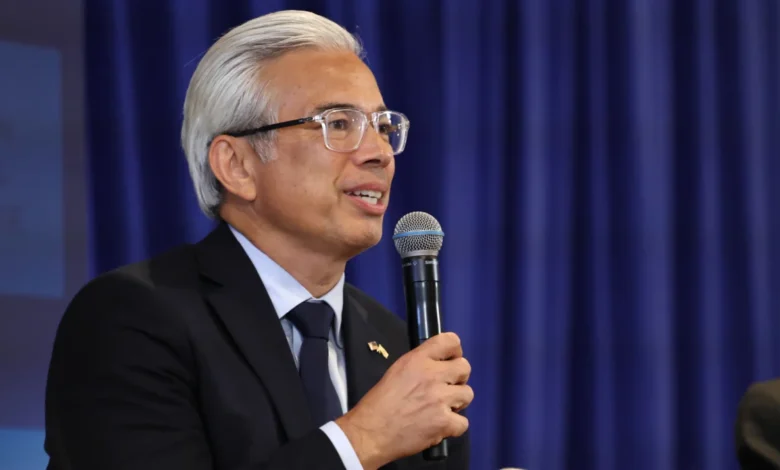
The future of the American media landscape reached a critical juncture this week as a virtual courtroom became the epicenter of the largest leveraged buyout in entertainment history. During a high-stakes hearing, attorneys representing Paramount and the State of California, led by California Attorney General Rob Bonta’s office, sought to convince U.S. District Judge Araceli Martinez-Olguin that their proposed antitrust settlement is both fair and in the public interest. The proceeding, attended by hundreds of industry stakeholders and observers, underscored the growing tension between corporate consolidation and the preservation of a competitive marketplace.
As the legal teams navigated the complexities of the settlement, the backdrop remained the impending merger between Paramount and Warner Bros. Discovery—a deal that promises to reshape Hollywood but has sparked significant concern regarding market power, debt sustainability, and the future of creative content.
A Chronology of the Mega-Merger
The path to this week’s hearing has been defined by rapid corporate maneuvering and shifting regulatory stances. The saga began in earnest earlier this year when Paramount, under the leadership of CEO David Ellison, signaled its intent to acquire Warner Bros. Discovery. The move was immediately viewed as a defensive play, designed to consolidate assets against the overwhelming influence of streaming giants like Netflix.
By mid-year, the deal had hit a wall of regulatory opposition. California and several other states filed antitrust lawsuits, alleging that the merger would lead to a monopolistic concentration of power, particularly in cable distribution and content creation. The case appeared headed for a protracted trial until the settlement was announced—a move that surprised many observers who expected a much harder line from the Attorney General’s office.
The decision to settle, according to court documents, was heavily influenced by the support of the nation’s three largest movie theater chains. These exhibitors, fearing the potential consequences of a failed merger or an alternative acquisition by a platform like Netflix, publicly backed the Paramount-led deal. Their endorsement provided the political and economic cover necessary for state regulators to pivot toward a negotiated consent decree.
The Dynamics of the Settlement
Paula Blizzard, the lead attorney for the California Attorney General, anchored the state’s defense of the settlement during Thursday’s hearing. Addressing the virtual gallery, Blizzard emphasized that the agreement was carefully crafted to protect theater owners—a demographic she described as the “voices that carry weight” in the ongoing effort to maintain exhibition access.
Central to the settlement is a series of annual film quotas intended to ensure that independent and small-scale theaters are not squeezed out by the new, combined entity. Blizzard pushed back against criticism that the settlement was a capitulation, specifically addressing allegations that Paramount had threatened to relocate its operations out of California if the antitrust concerns were not resolved by the end of the month.
“Some voices carry less weight,” Blizzard stated, dismissing the claims of corporate blackmail. “Those are the ones who are threatening and blackmailing us that they’d pull out of California; that doesn’t affect the antitrust case.” Her remarks were a clear attempt to decouple the state’s legal strategy from the political and economic pressures applied by the studio’s leadership.
Financial Engineering and the $80 Billion Question
Beyond the legal arguments, the financial structure of the merger remains a source of intense industry anxiety. Paramount has announced plans to raise $44.4 billion in additional secured debt to facilitate the buyout, which, when combined with Warner Bros. Discovery’s existing obligations, pushes the total debt burden for the new entity beyond $80 billion.
The scale of this leverage is unprecedented in the entertainment sector. Paramount executives argue that the merger creates an economy of scale that will ultimately lower costs, increase cash flow, and allow for a more robust content strategy. According to recent securities filings, the company anticipates generating approximately $69 billion in revenue by 2026, with free cash flow exceeding $10 billion.
However, financial analysts remain skeptical. Morgan Stanley reports indicate that the company faces an estimated $6.4 billion in interest expenses by 2027 alone. Maintaining this trajectory requires not only the successful integration of massive assets but also a significant improvement in streaming performance. Paramount’s stated goal is to reach 240 million subscribers by 2030, a figure that would place it in direct, and likely expensive, competition with Netflix.
The reliance on high-interest debt creates a "feeding cycle" that necessitates continuous growth. If the studio fails to meet its aggressive revenue targets, refinancing current debt could become prohibitively expensive, potentially forcing the sale of high-value assets. While executives have touted the divestiture of Miramax as a potential safeguard, critics argue that this is a relatively minor asset compared to the broader risks inherent in the deal.
Antitrust Concerns and Market Power
Judge Martinez-Olguin spent much of the hearing focused on the technicalities of the consent decree, specifically the provisions governing the distribution of basic cable channels. The current settlement requires separate negotiations for these channels to prevent Paramount from "bundling" its entire catalog of 50 channels at prices that force distributors into unfavorable deals.
Industry insiders, however, have questioned whether these protections go far enough. A common concern is that the settlement fails to address the "halo effect" of flagship properties like CBS, which holds the rights to high-value NFL broadcasts. Competitors worry that Paramount could leverage these must-have assets to force the inclusion of lower-tier channels in carrier packages, effectively maintaining the very market power the antitrust lawsuit sought to dismantle.
The Rise of Opposition
The hearing also highlighted the growing list of external groups attempting to intervene in the proceedings. The Freedom of the Press Foundation, the Future Film Coalition, and the International Documentary Association are among the organizations that have filed briefs challenging the adequacy of the consent decree.
Perhaps more notably, the opposition has expanded to include civil rights groups, such as the League of United Latin American Citizens, and various religious organizations. These groups have raised concerns that the merger could negatively impact minority representation in media and limit the diversity of news programming. The court has permitted these friend-of-the-court briefs to be filed, ensuring that the final judgment will be informed by a broad spectrum of social and political perspectives.
Implications for the Future of Hollywood
The outcome of this settlement will serve as a bellwether for how the federal government and state regulators handle media consolidation in the streaming age. If the court accepts the settlement, it will effectively endorse a "regulation by consent" model, where companies are permitted to merge so long as they agree to specific, often limited, behavioral remedies.
If, conversely, the court finds the settlement insufficient, the implications could be seismic. A rejection would likely force the parties back to the negotiating table or into a full-scale trial, a prospect that would cast significant doubt on the viability of the entire transaction.
As David Ellison and his team continue to court potential investors—with reports circulating of interest from figures like Elon Musk—the pressure remains on the judiciary to ensure that the public interest is not sacrificed for the sake of corporate efficiency. For now, the industry watches and waits, recognizing that the decision rendered in this California courtroom will dictate the competitive landscape for decades to come.
The hearing served as a stark reminder that while the boardrooms of Hollywood may operate on the language of synergy and scale, the legal system remains the final arbiter of whether such immense power can exist within the bounds of American antitrust law. Whether this merger becomes the engine of a new media era or a cautionary tale of over-leverage, the process has undeniably changed the way Hollywood views its own future.