Netflix Co-CEOs Address M&A Strategy Partnerships and the Future of FAST Channels Amid Q2 Earnings Volatility

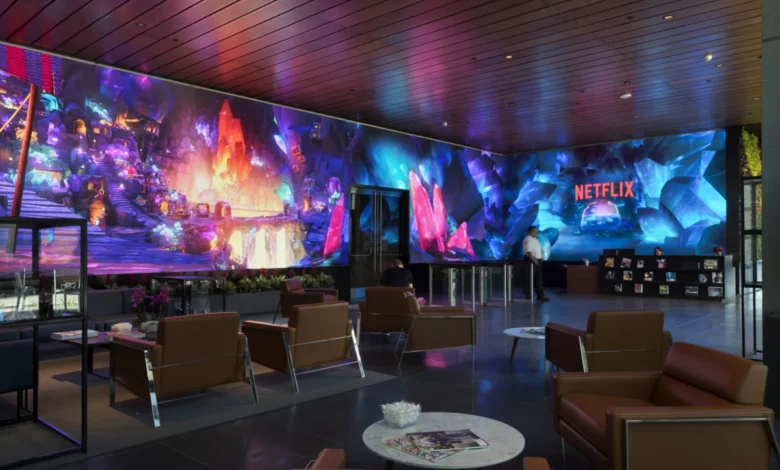
Netflix co-CEOs Ted Sarandos and Greg Peters utilized the company’s second-quarter earnings interview to provide a definitive stance on the streaming giant’s long-term corporate strategy, specifically addressing persistent rumors regarding mergers and acquisitions, the evolution of strategic partnerships, and the potential for Free Ad-supported Streaming TV (FAST) channels. The executives sought to clarify Netflix’s position as the entertainment industry undergoes a period of intense consolidation, characterized by shifting alliances and a renewed focus on profitability over pure subscriber growth.
The earnings call followed a report of mixed financial results for the second quarter, which, coupled with a forecast of decelerating growth for the third quarter, prompted a sharp reaction from the financial markets. Netflix shares experienced a decline of nearly 9% in after-hours trading, reflecting a broader sense of trepidation among investors. Over the past twelve months, the company’s stock has depreciated by more than 40%. This volatility has been exacerbated by the company’s recent history in the M&A space, most notably its abandoned pursuit of Warner Bros. Discovery (WBD), a move that eventually saw the asset go to Paramount, leaving Netflix with a $2.8 billion breakup fee but also leaving analysts questioning the company’s future scale and competitive moat.
The Core Philosophy: Builders Rather Than Buyers
Addressing questions about the possibility of acquiring major studios such as Lionsgate or NBCUniversal—both of which have been the subject of industry speculation—Ted Sarandos emphasized that Netflix remains committed to its foundational "core philosophy." He asserted that the company possesses multiple avenues to achieve its objectives, including internal production, strategic licensing, and external partnerships. Sarandos was clear in his messaging to Wall Street: Netflix is not looking to solve its growth challenges through massive, dilutive acquisitions.
"We’re primarily builders, not buyers," Sarandos stated, echoing sentiments previously shared by Greg Peters during the previous autumn. "That remains the case today. Others will speculate about our intentions because they have their own reasons for that, but our track record is clear that we have a very high bar to do any big M&A."
This stance is a significant point of interest for analysts who have watched Netflix’s rivals, such as Disney and Amazon, spend tens of billions of dollars to acquire legacy libraries and intellectual property. Netflix’s pivot away from the WBD deal was seen by some as a missed opportunity to secure a massive trove of content, but Sarandos’s comments suggest the company believes its capital is better spent on its own production pipeline and refining its technological infrastructure.
Strategic Partnerships and the TF1 Model
While Netflix is hesitant to engage in traditional corporate mergers, it is increasingly open to deep-level strategic partnerships. Greg Peters highlighted the company’s recent collaboration with French broadcaster TF1 as a blueprint for future international and domestic arrangements. The partnership, which officially integrated TF1 content into the Netflix interface in France last month, represents a shift in how the streamer interacts with local market leaders.
Peters noted that the primary driver for these partnerships is the consumer’s desire for a more comprehensive entertainment offering. By integrating third-party content or forging distribution bundles, Netflix aims to increase the "relevance and value" of its service. He pointed to the company’s global footprint of 330 million households as a powerful lever, suggesting that Netflix can help other services and producers maximize the value of their content by providing access to a massive, highly engaged audience.
"Since the very beginning when we launched our streaming service, we’ve always sought to expand the entertainment offering," Peters said. "Our members consistently tell us that they want more from us. We see that in the usage behavior."
The success of the TF1 venture is currently being monitored as a "test case." While it is still in its early stages, Peters described the initial member reaction and interaction levels as "very promising." This openness to collaboration extends to the domestic U.S. market as well. Although Netflix has historically avoided the complex "bundles" common in the cable era, it recently joined Comcast’s Xfinity StreamSaver package. Rumors have also circulated regarding a potential partnership with NBCUniversal’s Peacock, though no formal agreements have been announced. Peters indicated that if future deals serve the interests of members and partners alike, Netflix would "certainly consider them."
The FAST Channel Dilemma: Balancing Reach and Revenue
One of the most discussed topics in the streaming landscape is the rise of FAST channels—free, ad-supported television streams that mimic the traditional linear TV experience. Competitors like Paramount (Pluto TV), Fox (Tubi), and Amazon (Freevee) have seen significant growth in this sector, capturing audiences who are increasingly price-sensitive.
For Netflix, the prospect of entering the FAST market remains a complex calculation. Greg Peters acknowledged the potential benefits of a free offering, particularly in terms of accessibility and expanding into new customer segments in emerging markets. However, the primary concern for the company is "cannibalization." Netflix has spent years cultivating a high-ARPU (Average Revenue Per User) subscriber base, and the introduction of a free tier could entice existing paying members to downgrade, potentially hurting overall revenue.
"A free offering could make sense in some markets, but we have to be thoughtful about cannibalization of pay tiers," Peters explained. "We’ve got to ensure that we’ve got the right offering, the right differentiation of that offering."
Furthermore, the economics of a FAST service rely heavily on a mature, scaled advertising business. Netflix only recently expanded its ad-supported tier beyond its initial 12-country footprint. The company believes that its advertising infrastructure needs further maturation before it can support a purely free, ad-funded model. Consequently, while the company continues to evaluate the space, Peters confirmed there are "no near-term plans" to launch a Netflix FAST service.
Financial Context and Market Reaction
The cautious tone from the co-CEOs comes at a time when Netflix is navigating a "new normal" in the streaming industry. The era of "growth at any cost" has been replaced by a focus on free cash flow and operating margins. In the second quarter, while Netflix added subscribers, the revenue guidance for the upcoming quarter fell slightly short of the most optimistic Wall Street projections.
The 9% drop in after-hours trading reflects investor anxiety over whether Netflix can maintain its dominant position without the help of major acquisitions. The $2.8 billion breakup fee received after the failed WBD/Paramount saga provided a temporary cash cushion, but it did not alleviate concerns regarding the long-term content costs required to compete with diversified conglomerates.
To combat rising costs, Netflix is increasingly looking toward technological efficiencies. Ted Sarandos revealed that the company has integrated generative AI into the production workflows of over 300 projects. This move is intended to accelerate content spend efficiency and reduce the time-to-market for original programming. The streamer is betting that technological superiority and data-driven content creation will ultimately be more cost-effective than acquiring legacy studios with high overhead and aging infrastructure.
Timeline of Recent Strategic Shifts
The current strategic positioning of Netflix is the result of several key events over the last 24 months:
- Mid-2022: Netflix reports its first subscriber loss in over a decade, leading to a massive stock sell-off and the realization that the "pure-subscription" model has limits.
- Late 2022: The company launches its "Basic with Ads" tier, marking a historic reversal of its long-standing anti-advertising stance.
- 2023: Netflix initiates a global crackdown on password sharing, which successfully drives a surge in new sign-ups but also reaches a saturation point in mature markets.
- Late 2023 – Early 2024: Reports emerge of Netflix’s interest in Warner Bros. Discovery. The company ultimately withdraws, and the assets are linked to Paramount Global.
- June 2024: The TF1 partnership launches in France, signaling a new era of cooperation with traditional broadcasters.
- July 2024: Q2 earnings call confirms a "builders not buyers" approach and a cautious stance on FAST channels.
Analysis of Implications
Netflix’s current trajectory suggests a company that is doubling down on its identity as a technology-first media entity. By rejecting the current wave of M&A, Netflix is betting that its internal "hit-making" machine—responsible for global phenomena like Squid Game, Stranger Things, and Bridgerton—is more valuable than the back catalogs of older studios.
However, this strategy is not without risk. As Disney+, Max, and Hulu continue to bundle and consolidate, they create a formidable "one-stop-shop" for consumers. Netflix’s reliance on partnerships like the one with TF1 or Comcast indicates that even the industry leader recognizes it cannot exist in a vacuum. The "re-cable-ization" of streaming is well underway, and Netflix’s challenge will be to remain the "anchor" of the consumer’s entertainment bundle without owning all the underlying assets.
The decision to delay a FAST channel launch also highlights a conservative approach to brand management. Unlike its competitors, Netflix views itself as a premium service. Introducing a free, lower-quality linear experience could risk diluting the brand’s prestige. For now, the company appears content to focus on its "Standard with Ads" tier, which offers a middle ground between the high-cost premium experience and the low-margin FAST model.
As the third quarter approaches, all eyes will be on Netflix’s ability to convert its technological investments and strategic partnerships into sustained revenue growth. With a stock price that has yet to recover to its pandemic-era highs, the pressure on Sarandos and Peters to prove that "building" is superior to "buying" has never been greater.