From First-Time Attendee to Stage Speaker: Shreyas Mocherla’s Journey at KubeCon + CloudNativeCon India 2026

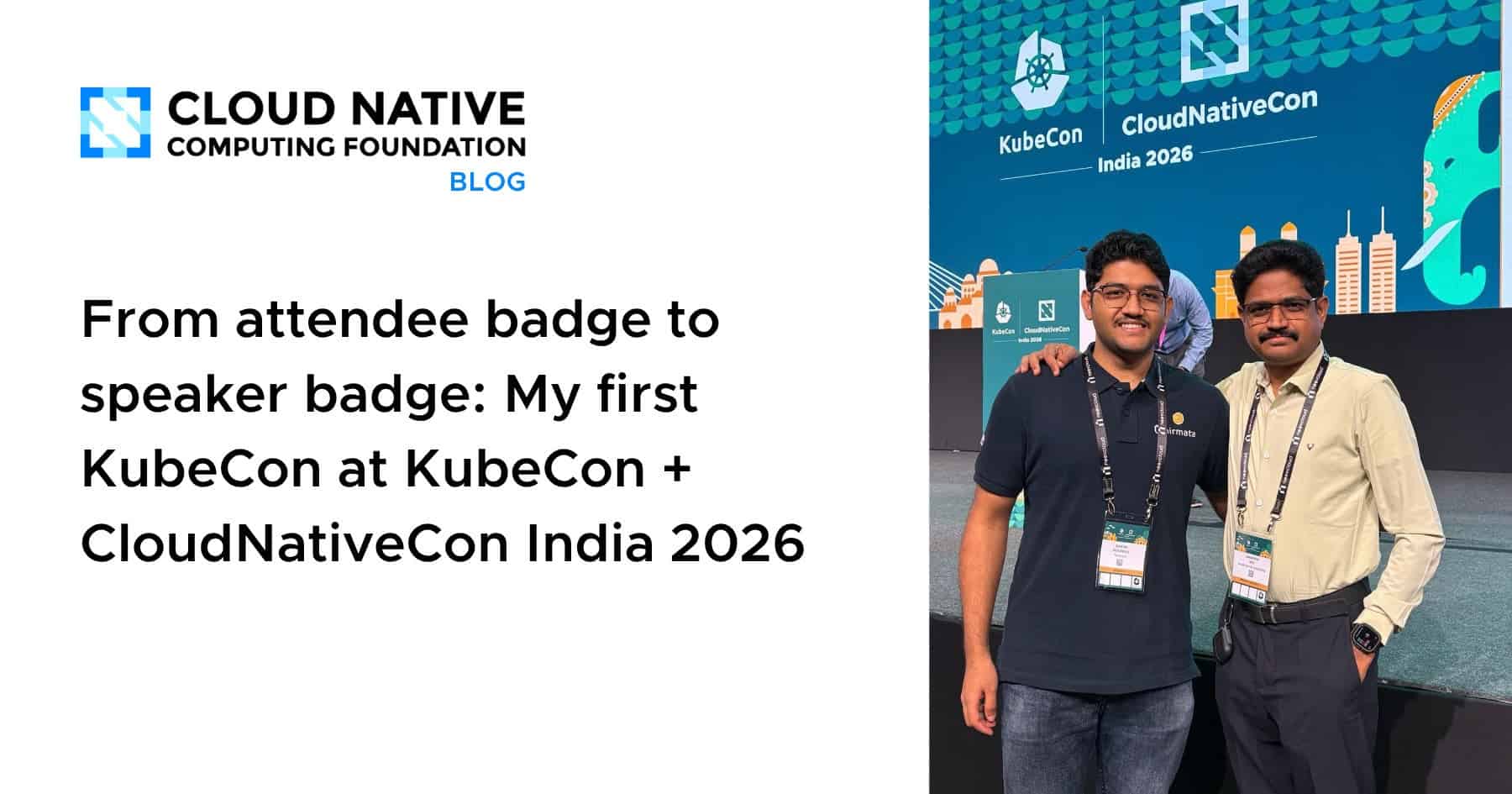
The Cloud Native Computing Foundation (CNCF) solidified its footprint in South Asia this past September, hosting KubeCon + CloudNativeCon India 2026 in Mumbai. The event served as a critical nexus for the global open-source community, bringing together thousands of developers, architects, and industry leaders. Among the notable participants was Shreyas Mocherla, a Software Engineer at Nirmata and a recognized Kubestronaut, who experienced the conference from a unique vantage point: that of a first-time attendee and a featured technical speaker. His journey underscores the evolving landscape of cloud-native talent in India and the democratization of technical expertise through open-source education.
Technical Innovation in the AI Era
The centerpiece of Mocherla’s involvement was a technical session titled "Run Your Own AI Cluster on a DGX Spark: Kubernetes, GPUs, and DRA," which he co-presented with industry veteran Janakiram MSV. The session addressed a growing demand in the enterprise sector: the need for private, scalable infrastructure capable of supporting large-scale artificial intelligence workloads.
As AI models continue to grow in complexity, the hardware requirements—specifically the integration of high-performance GPUs into Kubernetes environments—have become a significant bottleneck for many organizations. The presentation provided a technical roadmap for utilizing NVIDIA’s DGX Spark, a compact AI supercomputing platform, within a Kubernetes-orchestrated environment. The duo detailed the process of exposing GPU resources to workloads and leveraging Dynamic Resource Allocation (DRA), a feature within Kubernetes designed to streamline how resources are requested and managed.
For the broader cloud-native ecosystem, this presentation served as a proof-of-concept for "sovereign AI infrastructure," enabling companies to maintain control over their hardware and data security rather than relying exclusively on public cloud AI services. The technical feasibility of self-hosting such complex stacks highlights a broader trend: the movement toward sophisticated, hybrid-cloud AI architectures that are increasingly manageable through standard Kubernetes primitives.
The Rise of the Kubestronaut: A Milestone in Certification
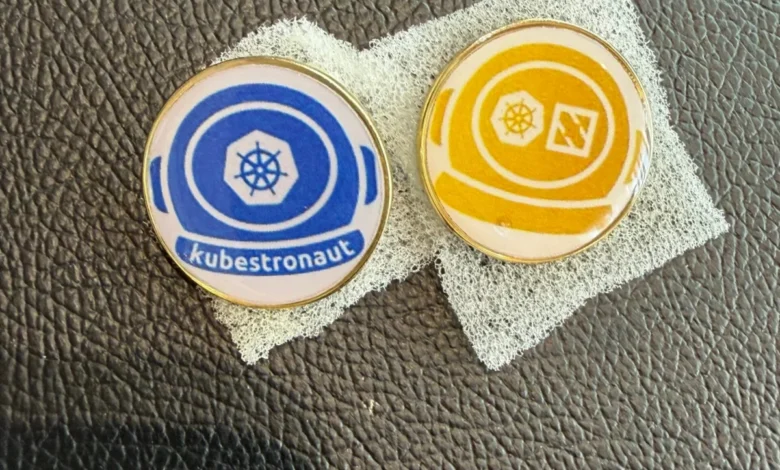
Concurrent with his speaking duties, Mocherla was recognized as a "Golden Kubestronaut." This distinction is awarded by the CNCF to individuals who successfully complete the full suite of cloud-native certifications, including the Certified Kubernetes Administrator (CKA), Certified Kubernetes Application Developer (CKAD), and Certified Kubernetes Security Specialist (CKS), among others.
Data from the CNCF indicates that the Kubestronaut program has seen an uptick in participation as enterprises prioritize standardized skill sets in an increasingly fragmented tooling landscape. Achieving the "Golden" status requires a rigorous demonstration of mastery across the entire Kubernetes lifecycle—from deployment and security to networking and specialized application development.
Mocherla’s achievement is notable not only for the depth of technical knowledge required but for its demographic significance. As the youngest individual in India to secure this designation, his path reflects a shift in how the next generation of engineers is entering the workforce. By utilizing accessible, community-driven educational platforms like KodeKloud, engineers in emerging tech hubs are bypassing traditional institutional barriers to gain industry-recognized credentials.
The "Hallway Track" and Community Dynamics
While formal sessions provide the technical backbone of KubeCon, the "hallway track"—the informal networking that occurs between presentations—remains the primary driver of community cohesion. For first-time attendees, the scale of KubeCon can be daunting, yet the structure of the Mumbai event proved effective at fostering collaboration.
Mocherla’s experience highlights the accessibility of the cloud-native community. Interactions with figures such as Saiyam Pathak, a prominent advocate in the space, and Mumshad Mannambeth, founder of KodeKloud, emphasize the symbiotic relationship between content creators, educators, and practitioners. These interactions are not merely social; they are professional exchanges that influence the trajectory of open-source development. By facilitating direct access between industry leaders and emerging talent, the conference functions as a talent incubator, where the mentorship loop is closed and professional networks are cemented.
Implications for the Indian Cloud-Native Ecosystem
The hosting of KubeCon in Mumbai is a reflection of India’s growing importance in the global technology sector. According to recent CNCF surveys, India consistently ranks among the top contributors to the cloud-native ecosystem by headcount. The energy observed during the 2026 event suggests that this region is transitioning from being a destination for outsourced technical labor to becoming a hub for high-level architectural innovation.
The demographic composition of the attendees—heavily skewed toward students and early-career engineers—indicates a sustained pipeline of talent. This, paired with the rapid adoption of Kubernetes and AI-native tooling, suggests that India will likely play a pivotal role in shaping the next decade of cloud-native development.

The success of the event also highlights the efficacy of the "Open Source Model" of professional development. By providing free access to documentation, community study groups, and affordable training modules, the CNCF has successfully lowered the barrier to entry for high-end cloud infrastructure roles. This has created a self-sustaining cycle of innovation where knowledge is shared, verified through certification, and applied to real-world problems.
Institutional Perspective and Future Outlook
For organizations like Nirmata, the value of participating in such global forums is two-fold: brand visibility and the ability to contribute to the collective knowledge base. When engineers engage with the community, they bring back insights that inform internal development cycles, specifically regarding policy-as-code and AI agent orchestration.
Looking ahead, the trajectory for the cloud-native community in India appears robust. As organizations move beyond simple container orchestration into the more complex realms of AI/ML, edge computing, and serverless architectures, the demand for verified, high-level expertise will continue to rise. Events like KubeCon + CloudNativeCon act as a benchmark for this progress.
For prospective speakers and attendees, the lesson from this year’s event is clear: the community prioritizes technical contributions over traditional status. The barrier to entry for participation is the willingness to engage with the technical challenges of the day and share those solutions with the wider community. As evidenced by the record-breaking interest and the professional milestones achieved in Mumbai, the infrastructure for success is already in place. The task for the upcoming year will be to continue scaling these educational and networking opportunities to meet the demands of an increasingly complex and interconnected digital landscape.
The convergence of AI, hardware-level optimization, and global community collaboration suggests that the next phase of cloud-native evolution will be driven by those who can bridge the gap between low-level hardware control and high-level application deployment. As the industry moves toward this synthesis, the contributions of individual developers will remain the primary engine of progress.
Related posts: