David Harbour Explores the Intersection of Fame Mental Health and Creative Autonomy in Transition from Stranger Things to DTF St. Louis

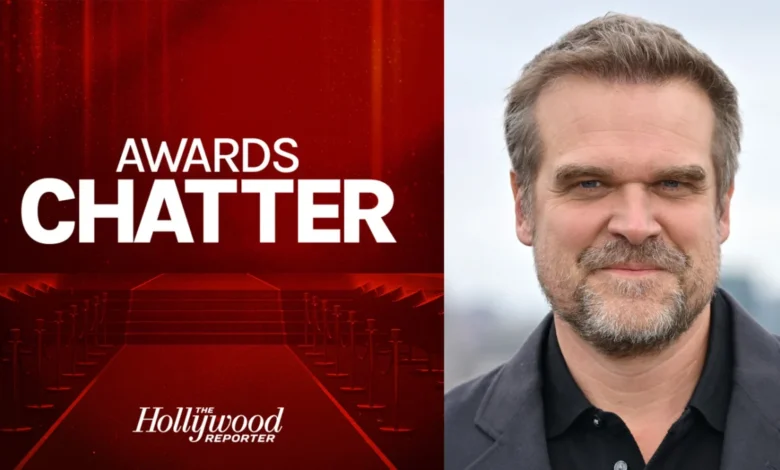
David Harbour, the Emmy and Tony-nominated actor whose portrayal of Jim Hopper on Netflix’s Stranger Things has become a cornerstone of modern prestige television, recently provided an expansive look into his career trajectory during an appearance on The Hollywood Reporter’s Awards Chatter podcast. The conversation, recorded at the publication’s Los Angeles headquarters, served as a comprehensive retrospective of Harbour’s three-decade journey from a struggling New York theater performer to a global household name. As Harbour prepares for the conclusion of Stranger Things, he is currently navigating a significant creative pivot, marked by his dual role as producer and star of the HBO limited series DTF St. Louis. This transition reflects a broader shift in his professional philosophy, prioritizing grounded, character-driven narratives over the high-concept genre productions that defined his mid-career surge.
The 51-year-old actor’s recent accolades underscore the success of this strategic shift. In June, Harbour secured two additional Emmy nominations for his work on DTF St. Louis—one for his performance and another as a producer. The series, which pairs Harbour with Jason Bateman, explores the existential crises of two friends in middle America. Its critical reception, including 13 total Emmy nominations across various categories, indicates a strong industry appetite for Harbour’s foray into darker, more nuanced comedic territory.
The Chronology of a Late-Blooming Career
Harbour’s path to stardom was neither linear nor rapid. For much of his 20s and 30s, he operated within the ecosystem of the New York theater scene, earning critical respect but limited financial security. He famously received a Tony nomination in 2005 for his role in Who’s Afraid of Virginia Woolf?, yet he noted that Hollywood remained largely indifferent to his work during this period. Harbour reflected on the psychological disconnect between his success on the stage and his perceived lack of "marketability" in Los Angeles, admitting that he long felt he did not possess the conventional aesthetic required for film stardom.
The turning point occurred when Harbour was 40 years old. At the time, he was coming off the cancellation of the NBC series State of Affairs and found himself in a precarious financial position. It was in this state of professional uncertainty that he received the script for the first season of Stranger Things. Harbour recalled his initial skepticism, assuming that the strength of the material would lead the Duffer Brothers to cast a more established "A-list" star rather than a veteran character actor.
The eventual success of Stranger Things was not immediately anticipated, even by Netflix. Harbour recounted the low-key nature of the Season 1 premiere, which took place at a small bar in Los Feliz. He noted that the streaming giant’s marketing strategy at the time felt modest, suggesting that the company did not fully grasp the cultural phenomenon they had on their hands until the show debuted in July 2016. The ensuing "overnight" fame was a jarring experience for Harbour, who described seeing the crowd at his theater stage door grow from a single fan to dozens in the span of 48 hours following the show’s release.
Socioeconomic Factors and Mental Health in the Arts
A significant portion of Harbour’s reflection centered on the relationship between financial instability and mental health. Having experienced decades of "barely making ends meet" before his Stranger Things breakthrough, Harbour offered a candid assessment of how poverty masquerades as or exacerbates mental illness. He posited that the "greatest sin in America is poverty," suggesting that the chronic stress of being unable to afford rent in cities like New York inflicts a tangible toll on the human nervous system.
Harbour challenged the romanticized notion of the "tortured artist," a concept he debated with his father as a teenager using Vincent van Gogh as a case study. While Harbour acknowledged that he still considers himself to have a "recidivist condition" regarding his mental health, he noted that wealth has altered the context of his struggles. His analysis suggests that for many in the creative industries, what is diagnosed as clinical illness may often be a rational response to systemic economic precarity. This perspective adds a layer of social commentary to his professional narrative, framing his eventual success not just as a career milestone, but as a release from the physiological pressures of the "struggling actor" archetype.
The Shift Toward Creative Autonomy and DTF St. Louis
As Stranger Things approaches its fifth and final season, Harbour has begun to exert more control over his professional output. His involvement in DTF St. Louis as a producer marks a definitive move toward creative autonomy. Harbour explained that after a decade of working within the constraints of high-budget genre franchises—including his roles in the Marvel Cinematic Universe and the Hellboy reboot—he felt a profound need to return to "ordinary" stories.
DTF St. Louis was born out of a desire to work with adult peers and explore themes of modern masculinity and middle-age malaise. Harbour expressed a weariness with "world-ending events" and "monsters," opting instead for a narrative framework that finds the extraordinary within the mundane. He cited the first season of HBO’s The White Lotus as a major influence, particularly its ability to dissect the absurdities of American civilization and human behavior within a confined, realistic setting.
The success of DTF St. Louis has validated Harbour’s instincts. The show’s 13 Emmy nominations serve as a formal "embrace" by the Television Academy, a gesture that Harbour admitted is deeply moving. While the series was initially conceived as a limited project, its success has prompted discussions about its future. Harbour hinted at the possibility of an anthology format, similar to The White Lotus, though he clarified that no official decisions have been reached by HBO.
Sustaining Partnerships: The Millie Bobby Brown Spy Thriller
Perhaps the most significant revelation from Harbour’s recent discourse is the announcement of a new collaboration with his Stranger Things co-star Millie Bobby Brown. The duo has sold a spy-thriller series to Netflix, written by Jack Thorne. Thorne, known for his work on the Enola Holmes films and the stage play Harry Potter and the Cursed Child, is expected to bring a sophisticated narrative edge to the project.
Harbour described his relationship with Brown as a "partnership" that has evolved significantly over the ten years they have known each other. Having played her "fake dad" (Jim Hopper to her Eleven) for a decade, Harbour noted that they have developed a deep mutual understanding that they wish to leverage in a more mature context. The project, which was developed in conjunction with A24, represents a move for Brown to establish herself as a serious artist beyond her "brand" as a global teen icon.
This upcoming series is emblematic of a broader trend in the industry where established talent from hit franchises leverage their "star power" to produce and star in their own intellectual property. For Netflix, the project ensures that two of its most valuable assets remain within the company’s ecosystem even after their flagship show concludes.
Broader Implications and Industry Analysis
Harbour’s career trajectory offers a blueprint for the modern character actor in the age of streaming. His transition from a "working actor" to a "producer-star" reflects the shifting power dynamics in Hollywood, where the traditional gatekeepers of the film industry are increasingly bypassed by talent who can command direct-to-consumer audiences.
Furthermore, Harbour’s candidness regarding mental health and the "weirdness" of his own appearance on film signals a shift toward more authentic, less polished public personas among leading men. By rejecting the "pretty boy" archetype of Hollywood and embracing the "strange" and "ordinary," Harbour has carved out a unique niche that resonates with an audience increasingly fatigued by hyper-stylized celebrity culture.
The implications of Harbour’s success with DTF St. Louis also point to a resurgence of the "adult drama" on television. In an era dominated by franchises and reboots, the critical and awards-season success of a show about existential crises in middle America suggests that there is still a significant market for high-quality, original storytelling. As Harbour moves forward with his spy thriller and the final season of Stranger Things, he stands as a testament to the longevity and adaptability required to survive and thrive in the volatile landscape of 21st-century entertainment.
In conclusion, David Harbour’s current professional standing is the result of a calculated move away from the safety of genre conventions toward the risks of creative production. His journey underscores the importance of artistic agency, the psychological complexities of fame, and the enduring value of collaborative partnerships in the television industry. Whether through his continued exploration of middle-age angst or his upcoming foray into the spy genre, Harbour remains a central figure in the dialogue surrounding the evolution of the modern actor.