CSIRO Unveils Serverless Beacon sBeacon to Transform Secure Genomic Data Sharing on AWS

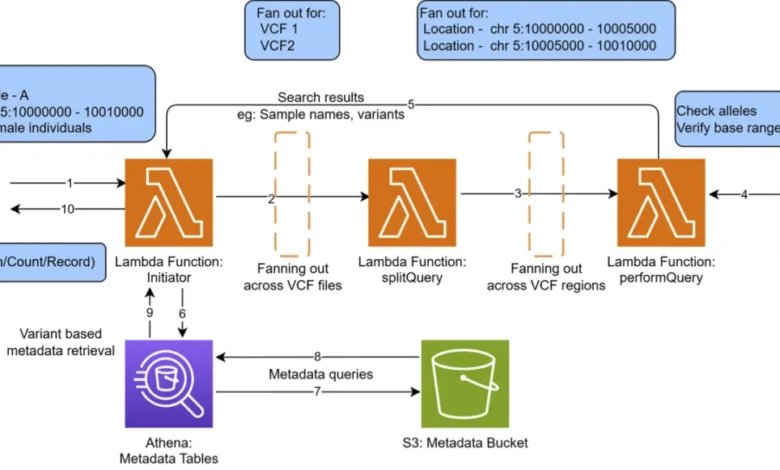
Researchers at the Commonwealth Scientific and Industrial Research Organisation (CSIRO), Australia’s national science agency, in collaboration with the Amazon Web Services (AWS) ASP Prototyping and Scaling Team, have developed and released Serverless Beacon (sBeacon). This production-grade, highly scalable serverless solution is designed to securely query genomic variant data across massive datasets. The launch addresses long-standing bottlenecks in clinical research and international medical data exchange by bridging the gap between high-performance computing demands and stringent data privacy requirements.
Background Context and Industry Standards
The global scientific community has long struggled with the secure, efficient exchange of genomic and phenotypic data. Traditional methods often require centralized data repositories that introduce severe administrative overhead, high infrastructure costs, and complex compliance hurdles regarding patient privacy. To solve this interoperability crisis, the Global Alliance for Genomics and Health (GA4GH) developed the Beacon protocol.
The Beacon protocol serves as a universally accepted standard for exchanging genomic variant data via standardized Application Programming Interfaces (APIs). Its core objective is to enable authorized researchers and clinicians to perform efficient, secure data discovery across international clinical networks without exposing underlying raw genetic sequences. Building upon this foundation, CSIRO engineered sBeacon to function as a turnkey, production-ready implementation of the GA4GH standard entirely native to cloud-based serverless architectures.
Architectural Framework and Technology Stack
Unlike legacy systems that mandate expensive data duplication and centralized warehousing, sBeacon relies on foundational AWS serverless services—including Amazon Simple Storage Service (Amazon S3), AWS Lambda, Amazon DynamoDB, and Amazon Athena—to create an elastic, event-driven infrastructure.
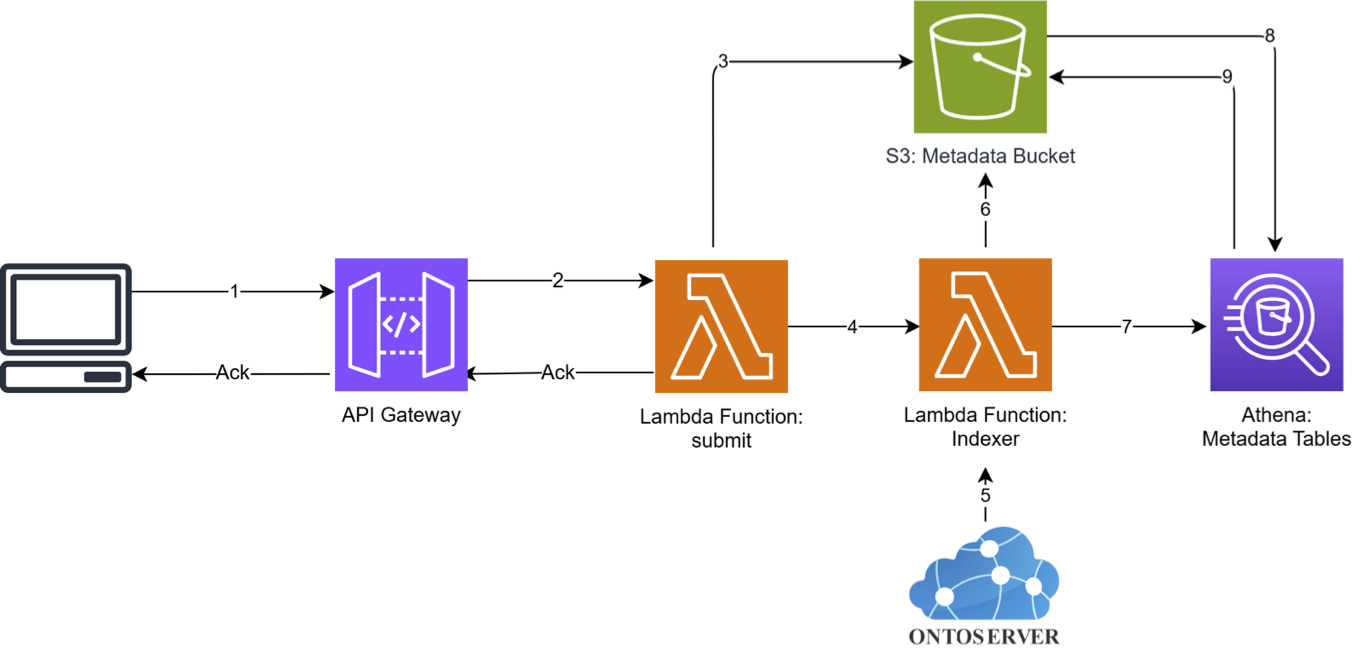
The platform separates its operational mechanics into two primary workflows: data onboarding and data querying. During the data onboarding phase, genetic variant files stored in Variant Call Format (VCF) remain in their original S3 locations. SBeacon does not duplicate these large genomic files; instead, it registers their URIs and builds lightweight index files (such as tabix indexes) that permit rapid, random access. Metadata regarding diseases, demographics, and sample locations is extracted and indexed using optimized formats like ORC in Amazon S3 alongside ontology servers like CSIRO’s Ontoserver, which complies with the Ensembl OLS V4 specification.
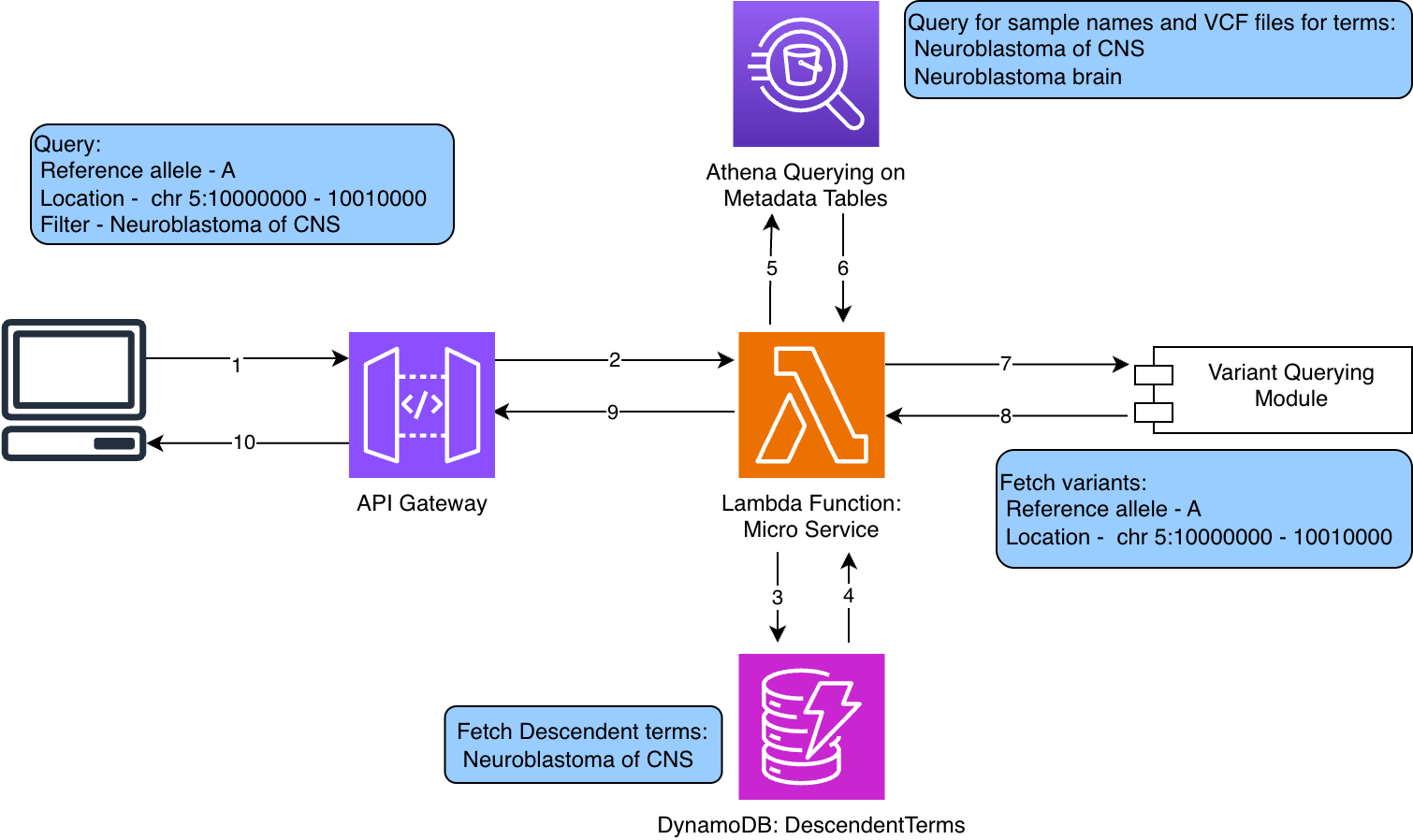
Data querying is handled through a modular microservice architecture. When a user issues a query via an Amazon API Gateway endpoint, an initial Lambda function validates user permissions and routes the request through specialized submodules. Genomic variant queries utilize the Variant Querying Module, where an initiator Lambda function dynamically fans out requests across targeted VCF files stored in S3. Using standard bioinformatics tools like bcftools powered by htslib, the system issues HTTP byte-range requests. This ensures that only the precise, indexed genomic region of interest—often just a single kilobyte out of a multi-gigabyte file—is queried, preventing raw sequence data from traversing internal memory unnecessarily.
Case Study Performance: The 1000 Genomes Project
To evaluate operational efficiency, ingestion speed, and financial viability, CSIRO benchmarked sBeacon using chromosome 1 (chr1) of the 1000 Genomes Project. Comprising 2,504 multi-sample individual genomes, this dataset represents roughly eight percent of the human genome and totals approximately 1.1 gigabytes of compressed data.
The ingestion of chromosome 1 for all 2,504 individuals was completed in just 18 seconds at a negligible cost of $0.00052 USD. Because the framework avoids copying the underlying genetic sequences, storage expenditures are primarily driven by metadata management. Maintaining the indexed metadata for the dataset costs approximately $0.000025 per month, while storing the genomic data itself scales predictably to roughly $0.032 for chromosome 1 or approximately $0.425 for an entire human genome in the AWS Asia Pacific (Sydney) region.
Query performance matched the ingestion efficiency, consistently delivering near real-time responses. Querying a 10,000 base pair region across all 2,504 individuals took an average of 1.52 seconds, generating a compute cost of roughly $0.00013 USD per query. Crucially, empirical testing demonstrated that query execution times remained stable regardless of the number of variant matches returned, confirming the architecture’s suitability for population-scale genomic discovery.
Zero-Trust Security and Privacy Framework
Security and data governance are embedded directly into the sBeacon architecture through a rigorous zero-trust model. In alignment with the AWS Shared Responsibility Model, deploying institutions retain absolute ownership of their data within their own isolated AWS accounts. There is no centralized data lake, shared infrastructure, or cross-account trust requirement.
User authorization is strictly enforced at the Lambda layer via JSON Web Tokens (JWT) integrated with Amazon Cognito. The architecture establishes granular access tiers through defined user groups:
- sbeacon-boolean-access-user-group: Restricted to basic binary existence queries (exists: true/false).
- sbeacon-count-access-user-group: Limited to aggregate statistical counts.
- sbeacon-record-access-user-group: Permitted to retrieve full variant details and sample names.
- sbeacon-admin-group: Granted full dataset management capabilities alongside record access.
By evaluating user claims within the query Lambda functions, the system calculates and returns only the requested data granularity. If a user possesses boolean-tier access, sample-level details are mathematically excluded from computation, ensuring absolute adherence to data minimization principles. Furthermore, decentralized storage mechanisms allow performQuery operations to execute byte-range requests directly against S3 buckets owned by collaborating external organizations, ensuring that raw genetic material never leaves its authoritative home.
Deployment, Operational Considerations, and Implications
Deployed via Terraform containers using code publicly accessible through GitHub, sBeacon offers research institutions a standardized pathway to modernize their bioinformatic pipelines. However, system administrators must navigate specific operational parameters. Architects note that while AWS Lambda offers superior flexibility and payload handling compared to AWS Step Functions, administrators must actively monitor account-level concurrency limits during large-scale fan-out operations to prevent function throttling. Implementing CloudWatch alarms for throttle metrics and configuring provisioned concurrency can mitigate cold-start latency and maintain high query availability.
The introduction of sBeacon marks a significant milestone for translational medicine and genomics. By dramatically reducing infrastructure costs, eliminating data duplication barriers, and enforcing uncompromised cryptographic and role-based security, CSIRO and AWS have provided the global medical community with a viable blueprint for secure, federated biobank collaboration. As clinical research increasingly relies on cross-border genetic insights to diagnose rare diseases and develop targeted therapies, serverless implementations like sBeacon pave the way for scalable, privacy-first scientific discovery.
Related posts: